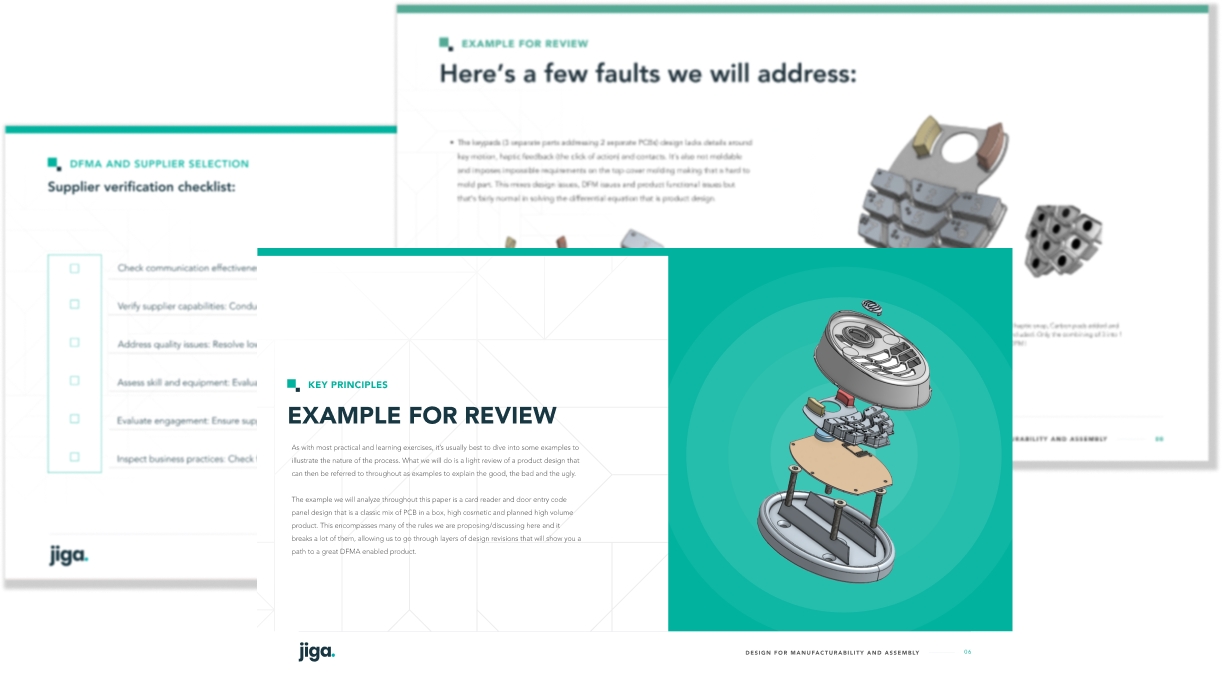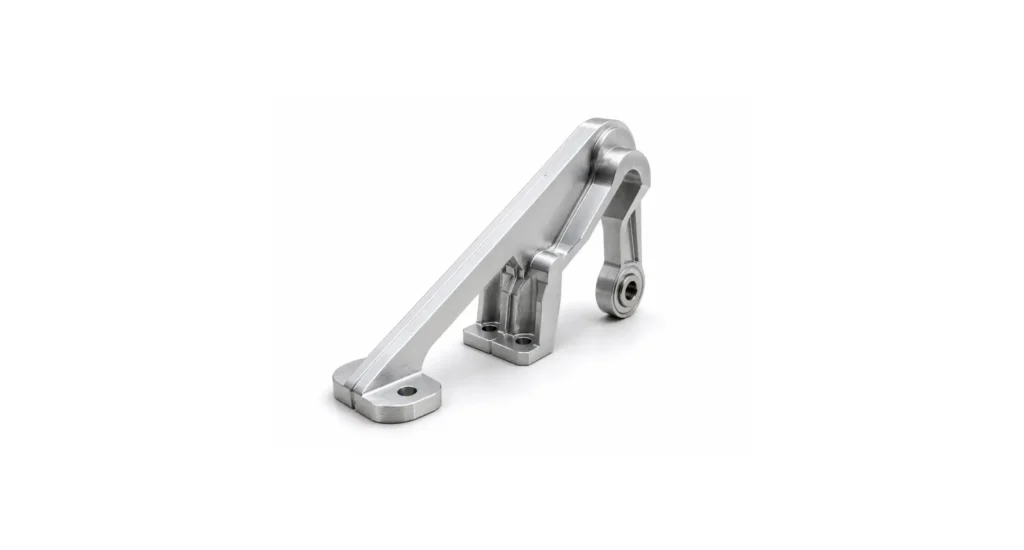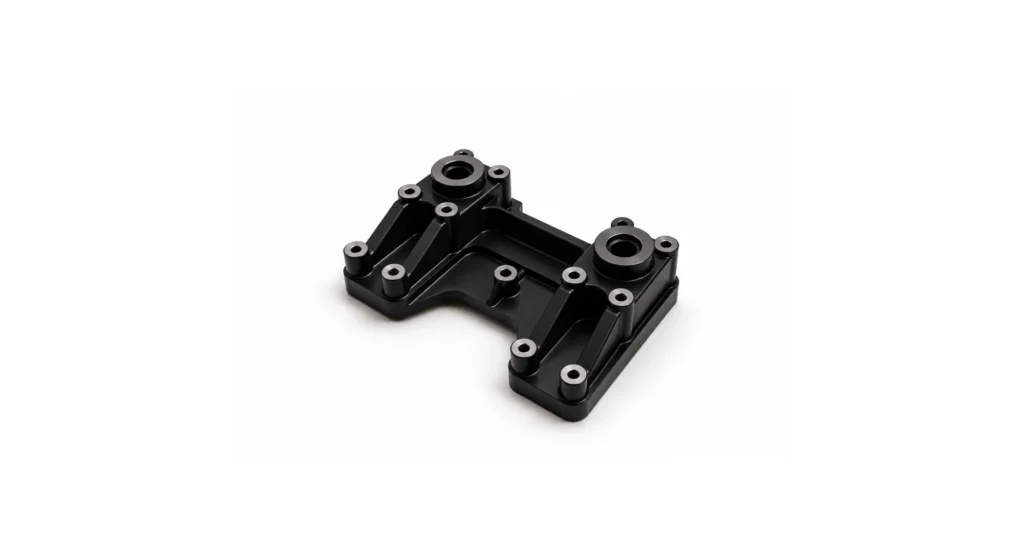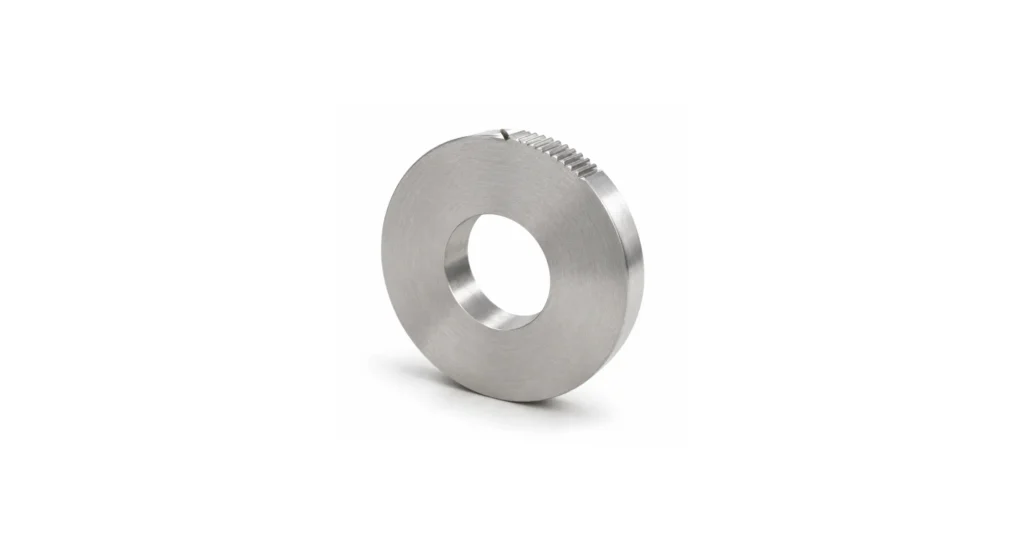
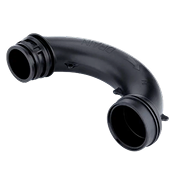
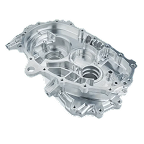
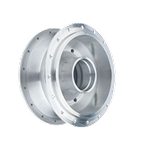

CNC machining and injection molding are equally proven manufacturing methods for producing plastic and metal components. They are suited to divergent needs, but with considerable overlap in many applications.
They present fundamentally different cost structures and design constraints, so the selection of suitability for a part/assembly is affected by a matrix of characteristics. The most appropriate process for manufacture of a part depends on volume, geometry, material, tolerances, timing, and budget.
Engineers who default to injection molding without considering alternatives may incur unnecessary tooling costs and program delays. Those who opt for CNC can find they’ve overspent significantly, once at scale.
This guide seeks to provide a practical, reasoning-driven and agnostic framework through which to determine the ideal process. This should minimize total cost and reduce schedule/technical risks for your specific application.

Key takeaways
- CNC machining has no tooling cost, it can entail moderate to high fixturing costs, and typically higher per-part costs for volume production.
- Injection molding involves high upfront tooling cost and time, but this results in low per-part costs, at scale.
- The process selection hinges on required volume and part specification.
- Break-even often occurs between 300 and 2,000 units, depending on tooling costs, and geometry.
- Hybrid strategies can be shown to deliver good outcomes
What is the difference between CNC machining and injection molding?
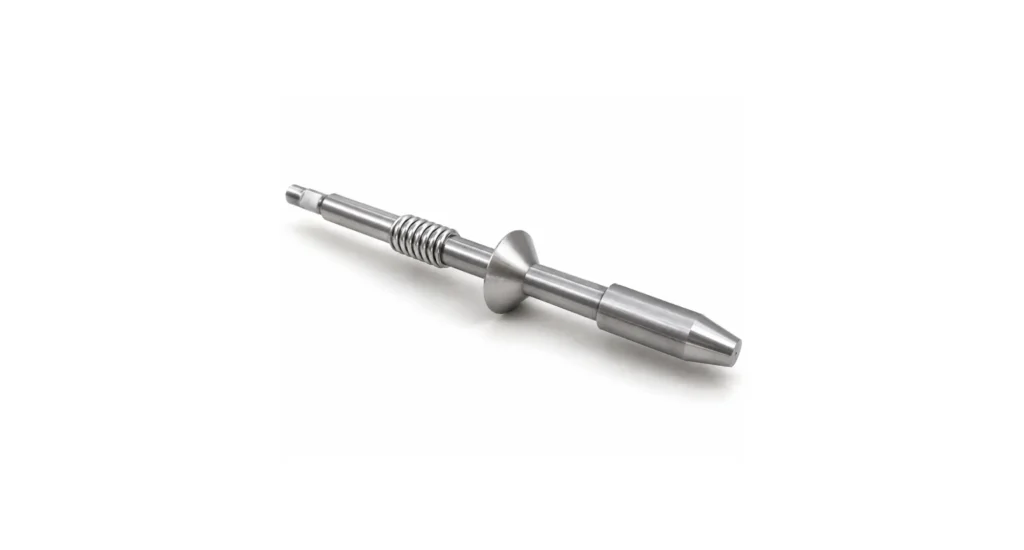
CNC machining is the main subtractive process, in which material is ablated from a solid block using a combination of static tool/rotating part (lathe) and rotating tool/static part (mill) and pre-programmed cutting tool motion paths.
Injection molding is a net-shape formative process whereby molten plastic is injected into a mold cavity and then cooled/solidified, to create a faithful impression of the cavity.
The key differences are:
- CNC entails no upfront tooling, costs are driven by programming, machine time, and material.
- Injection molding requires high cost tooling upfront, then delivering a low cost per part thereafter.
The remaining, and significant cost variations between the processes are lead time and scalability. Both of these flow from this initial cost distinction.
The decision framework reduces to two essential variables:
- Production volume
- Part specification requirements (material, tolerance, geometry)
The price per part flows from this simple equation:
Total Cost = Tooling Cost + (Unit Cost × Volume)
This underlines the effectiveness tooling on overall cost, CNC requiring none.
CNC machining
CNC machining is a diverse group of processes; milling, turning, drilling, grinding, multi-axis, and hybrid operations. A G-code programmed toolpath and part motion cuts or abrades material from stock, to extract the required geometry. No tooling is required – though fixturing may be needed. Lead times can be as low as one day, with simpler parts and well established supply chain.
What is CNC machining best for?
- It is generally more cost-effective in low-volume production (1 to 1,000 units), although special circumstances/requirements can affect this threshold.
- Functional prototypes are generally made using CNC processes, as this allows near production-standard materials to be used, delivering better performance than additive processes.
- Metal components are typically made by CNC machining, although an increasing trend towards metal additive manufacturing – and to a lesser extent metal injection molding (MIM) – is influencing this paradigm.
- Tight tolerance features typically require CNC machining, as molding tolerances are generally lower. It is in this area that a CNC-molding hybrid can deliver good results, taking the strengths if both process options to improve overall outcomes.
Advantages of CNC machining
- The avoidance of the heavy tooling investment of injection molding makes CNC manufacturing an attractive option, even at moderate volumes.
- Fast iteration cycles are possible, as rapid and even on-the-fly adjustments are both practical and low cost.
- Excellent dimensional accuracy (±0.005″ typical, ±0.0005″ achievable) is a primary benefit of CNC processing. By reducing material removal rates and optimizing tool sharpness, extreme finishes and precision are within relatively easy reach.
- Broad material compatibility in basic metals, exotic alloys, engineering plastics, ceramics and composites make CNC processes among the most flexible and adaptive.
Disdvantages of CNC machining
- High per-part costs make even moderate-scale production costly, for price-sensitive products.
- Material waste (subtractive process) is considered a down-side, although purity of scrap in larger volume production can reduce the environmental impact, through highly selective recycling.
- Limited capability for complex internal geometries is often considered a weakness of CNC processing. This can be countered through use of hybrid processing by CNC finishing of more processes that can deliver internal details.
- Surface finish consistency varies with setup, as materials respond in a range quality levels, material removal rates and cut depths are programming choices, coolants can greatly affect cut smoothness, and tool condition is a commercially sensitive variable.
Injection molding
Injection molding produces parts by injecting molten thermoplastic into a precision mold at high pressure (10,000–30,000 PSI), cooling the charge, and then opening the tool and ejecting the now resilient part. Cycle times vary by part weight, generally ranging from 5–60 seconds or longer. This speed, and very low material cost AND weight make it the ideal process for high-volume production.
What is injection molding best for?
- It is typically best for medium-to-high volume production (1,000+ units), in order to amortize the high initial cost of tooling.
- Plastic parts offer consistent geometry, very high repeatability, and a wide range of materials from basic/low cost, through to exotic and additive-rich engineering polymers with special characteristics to suit diverse uses.
- Consumer, medical and tool-products and enclosures are the most common use of injection molded components by part-count. Single use applications such as injection-blow-molded packaging bottles dominate by weight.
Advantages of injection molding
- Extremely low per-part costs apply, once at scale. Part costs drop very close to material cost, when volumes are high and tooling costs have been recouped.
- High repeatability and consistency of parts results from stable processing conditions and material properties.
- Complex geometries achievable (where effective DFM and good quality tooling are used).
- Minimal post processing and material waste results from additional tooling features such as self-clipping sprues a hot runner feeders.
Disadvantages of injection molding
- Tooling costs are high, often rising to $100,000 and higher, for large or high volume (multi cavity) tooling.
- Lead times for tooling manufacture, trials and adjustments often exceed 8 weeks, even for basic tooling of relatively simple parts.
- Design changes can be extremely expensive, after tools are made – up to and including complete replacement tools.
- The process is limited to moldable materials, and a tool is limited in its ability to mold alternate materials due to different flow and shrinkage properties.
Key comparisons: CNC machining vs injection molding
Cost comparison
CNC costs remain relatively flat per unit, not falling significantly with rising volumes, once an initial price-break volume is reached. Injection molding costs drop sharply with volume, particularly once tooling is amortized.
| Volume | CNC Cost/Part | Injection Molding Cost/Part | Lower Cost |
|---|---|---|---|
| 1 | $50–$500 | Not viable | CNC |
| 100 | $20–$100 | $50–$500 | CNC |
| 1,000 | $15–$50 | $5–$20 | Depends |
| 10,000 | $10–$40 | $0.50–$5 | Injection |
| 100,000+ | $10–$40 | $0.05–$1 | Injection |
The CNC/IM breakeven volume results from this simple formula:
Tooling Cost ÷ (CNC unit cost – IM unit cost)
For example:
- Where a basic mold tool costs $10,000
- The CNC machined parts cost $30 each
- And the IM parts cost $2 each
A breakeven of around 360 parts applies, making injection molding a surprisingly accessible option for quite modest volume of product.

Lead time comparison
| Factor | CNC Machining | Injection Molding |
|---|---|---|
| Initial parts | 1–3 days | 2–8 weeks |
| Iteration speed | Very fast | Slow (tool changes required) |
| Production scaling | Linear | Immediate after tooling |
CNC pays early; injection molding pays better once tooling is ready.

Material compatibility
| Material | CNC | Injection Molding | MIM (metal injection molding) |
|---|---|---|---|
| Aluminum | ✓ | ✗ | ✓ |
| Stainless Steel | ✓ | ✗ | ✓ |
| Titanium | ✓ | ✗ | ✓ |
| ABS | ✓ | ✓ | ✗ |
| Polycarbonate | ✓ | ✓ | ✗ |
| PEEK | ✓ | ✓ | ✗ |
| Nylon | ✓ | ✓ | ✗ |
| TPU | Limited | ✓ | ✗ |
For plastics, and to a more limited extent metals, both processes are viable, so the selection decision shifts to volume, geometry, supplier capability, cost, and timing.
Tolerances and precision
- CNC tolerances are highly predictable and can be selected from these typical ranges – where higher quality = slower machining, resulting in higher per-part cost and increased fixturing/equipment complexity:
- Standard: ±0.005″ (±0.13 mm)
- Precision: ±0.002″ (±0.05 mm)
- High precision: ±0.0005″ (±0.0127 mm)
- Standard: ±0.005″ (±0.13 mm)
- Injection molding tolerances are of a lower standard, but highly predictable and repeatable across large production runs:
- Typical: ±0.005″–±0.010″
- Dependent on shrinkage and tool quality
- Typical: ±0.005″–±0.010″
CNC processing offers higher precision, whereas injection molding offers higher consistency.
When to choose CNC machining
Prototyping and design iterations
CNC machining excels in the early stages of product development, where designs are evolving. Not requiring tooling means:
- Rapid iterations are easily achieved, with good supply chain.
- Design changes entail limited (or no) sunk cost.
- Immediate feedback on manufacturability results from each part execution, accelerating DFMA optimization.
For EVT/DVT stages, CNC enables fast learning and iteration cycles, reducing net development time, time to market, and cost.
Precision and metal components
If your part:
- Requires metal (Aluminum, medium Carbon steel, stainless, Titanium)
- Has tight tolerances
- Includes critical interfaces
CNC is often the most viable option. For small parts (below 100g), MIM can be a viable option – but the same cost/time burdens as injection molding of polymers apply. Additionally, precision of outcome requires highly skilled processing due to the shrinkage/sintering stages which carry additional error risk.
When to choose injection molding
Mass production
Injection molding (and to a lesser extent MIM) becomes the dominant option when:
- Volume exceeds ~1,000 units
- Geometry is stable
- Cost per unit becomes critical
At scale, injection molding reduces cost by one to two orders of magnitude per part, making its selection both obviously better and impractical to avoid, at high volumes.
Design for manufacturing (DFM)
Injection molding requires strict DFM alignment. It is highly beneficial to undertake DFM reviews at several points in a typical development process. Opportunities for product improvement, eased assembly, and tooling simplification are likely to present repeatedly through the design process.
- Draft angles of 1 – 2° for smooth line-of-draw, 3° for blanking (sealing) faces, and 3+° for textured surfaces enable clean, scuff free part ejection.
- Uniform wall thickness (1.5 to 3.0 mm) prevents warping – take care at feature functions that this rule is followed for all directions.
- Gate placement, type, and size affects flow and cosmetics, weld lines, turbulence and cycle time.
- Undercuts require costly side actions – where they’re necessary, try make best use of the tool features by combining undercuts onto fewer, stronger side-actions.
DFM must be solved before tooling, not afterwards! Tooling changes are time consuming, expensive and high risk.
Material efficiency
Injection molding produces essentially finished parts, in a single manufacturing operation. It makes near-net-shape parts, and offers various levels/types of part texturing, to improve cosmetics and function:
- Minimal scrap results from well designed/operated tooling – particularly in high volume tools with material optimizations such as hot runners.
- High material utilization results in part cost closely correlating with material weight, in high volume manufacturing.
- Reduced material waste delivers lower cost for components made from high-price engineering polymers.
Hybrid strategy: Using both CNC machining and injection molding
Hybrid strategies marry the best capabilities of various processes to deliver optimum outcomes that are out of reach for any process as a standalone. For best-in-class results, sequence both processes strategically:
1. CNC prototypes → mold validation
Validate geometry, function, and tolerances before committing to tooling.
2. Bridge Tooling
Use Aluminum molds for low-volume production before scaling to hardened steel, volume capable tooling.
3. CNC Post-Machining
Machine high-criticality features after molding, to improve tolerance or finish if molded parts.
4. Mixed Assemblies
Combine molded housings with machined inserts or structural components, to integrate high precision into limited areas of lower cost, moderate precision parts. Examples such as high-strength, multi-threaded hard point inserts, overmolded into a structural/housing part can add small cost while guaranteeing localized precision.
This approach balances:
- Precision (from a CNC component)
- Cost (injection molding with the CNC part overmolded)
- Risk (phased commitment, and the ability to alter the CNC part with modest tooling impact)
Bottom line
- CNC machining delivers flexibility, speed, precision, easy iteration.
- Injection molding delivers scale capability, consistency, low unit cost.
The optimal strategy doesn’t result from choosing one process, but from knowing when to switch.
And that decision should always be based on:
Realistic volume expectations, realistic costings, and valid and tested design constraints, not assumptions or guesswork