



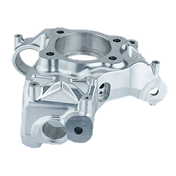
Global vetted network delivers high-quality CNC parts to your specs, every time.
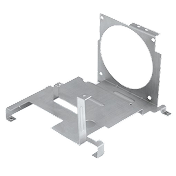
Precise custom sheet metal components, advanced techniques, global network.
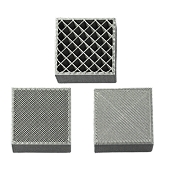
Cutting-edge rapid prototyping & production, accurate custom parts from digital designs.
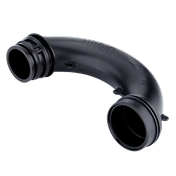
Global network, precise & efficient custom injection molded components, exceptional quality.
CNC Machining Service
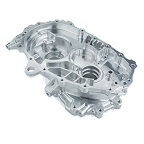
Multi-axis precision milling for complex geometries
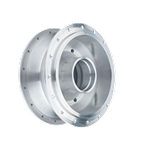
High-accuracy turning for cylindrical components
Sheet Metal Service
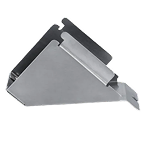
Custom brake-formed profiles, consistent angles
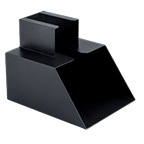
Laser & waterjet cutting for precise contours
3D Printing
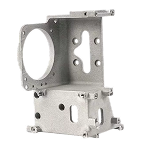
Rapid thermoplastic prototypes, fast turnaround
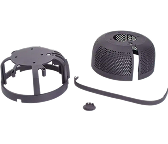
Complex nylon parts, no supports required
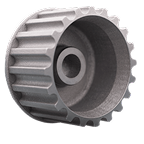
Ultra-smooth, high-detail resin models
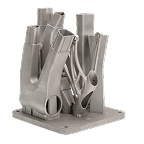
Production-grade parts, uniform properties
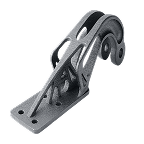
Full-density metal parts, structural integrity
Injection Molding
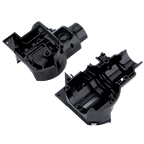
High-volume plastic parts, repeatable precision
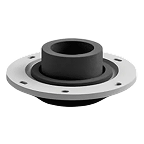
Rigid substrate with soft-touch outer layer

Metal inserts encapsulated for reinforcement
Qualified US network delivering mission-critical parts from prototype to full-rate production.
Custom parts from weekly prototypes through to reliable volume production.
Consistent suppliers, costs that drop every lot, programs that hold.
Upload files. Get quotes. Connect with vetted manufacturers.
Track orders, monitor suppliers, and control revisions – all in one place.
Collaborate on quotes and orders with suppliers and your team.
End-to-end service removing supply chain friction from onboarding to delivery.
How Vertiq scaled component supply for its Blue UAS-approved propulsion modules as the US drone industry reshored its supply chain – with no capex on Vertiq’s side.
Motor + ESC combination approved to DIU’s Blue UAS Framework
Propeller range in inches across the module lineup
Capex on Vertiq’s side to scale its component supply
Vertiq builds propulsion modules for American and allied drones, integrating a motor, ESC, embedded position sensor, and proprietary control firmware into a single unit. Vertiq spun out of the University of Pennsylvania’s GRASP Lab and designs and builds its products in Philadelphia, PA. Vertiq’s 81-08 G2 was the first motor-and-ESC combination approved for the Defense Innovation Unit’s Blue UAS Framework, and its work on underactuated propulsion has been supported by AFWERX SBIR awards.
For years, the US drone industry relied heavily on Chinese components because there was little pressure to source elsewhere. That has changed rapidly. The Treasury Department sanctioned T-Motor, the world’s largest drone motor manufacturer, over sales to Russia. The FCC has added foreign-made drones and components to its Covered List, with the Blue UAS and Buy American carve-outs set to expire January 1, 2027, while DoD compliance requirements increasingly extend to the subcomponent level. As US drone OEMs reshore their propulsion supply chains, there is a short list of suppliers that can fulfill the demand. Vertiq is one of them.
That pressure is now moving one tier down the supply chain. A propulsion module carries its own bill of materials: machined housings, wound stators, covers, shrouds, mounts, arms, connectors, and propellers. As the industry reshores motor production, motor manufacturers must reshore and scale their component supply chains alongside it, while meeting expected lead times and navigating frequent design changes.
Vertiq’s supply chain is therefore focused on two priorities:
Priority 01
Priority 02
Suppliers hold dedicated machine capacity on Vertiq’s material and nest its part families to protect lead time. Quick-turn machine shops carry first articles, production shops take the lots as customer programs convert. Jiga is the single supplier of record on one set of terms, and Vertiq’s engineers and quality team talk directly with the people running their parts.
Some of Vertiq’s parts refuse to inspect like a machined billet. A flexible printed cover conforms when installed on the motor, so calipers and even laser scans flag arc deviation the assembly never sees. First articles get measured, production gets gated by fit, and inspection cost stays out of the piece price.
“Engineering comes to me and says, we want prototypes for this product, these are our requirements. Go do what you do and come back to us with quotes and it feels like we have that information in front of us at the snap of a finger.”
Its component supply grows shop by shop with no capex on Vertiq’s side.
Qualified alternates stand behind each part family.
The supplier of record, terms, and quality criteria stay constant from first article through production release.
Quotes standing before POs exist, capacity sized before the surge, US content deepening as the 2027 requirements arrive.
“The relationship we have with Jiga is fantastic, to be flat out honest.”


Source reliable, cost-effective custom parts with Jiga. Sign up for free – pay only for what you order.
