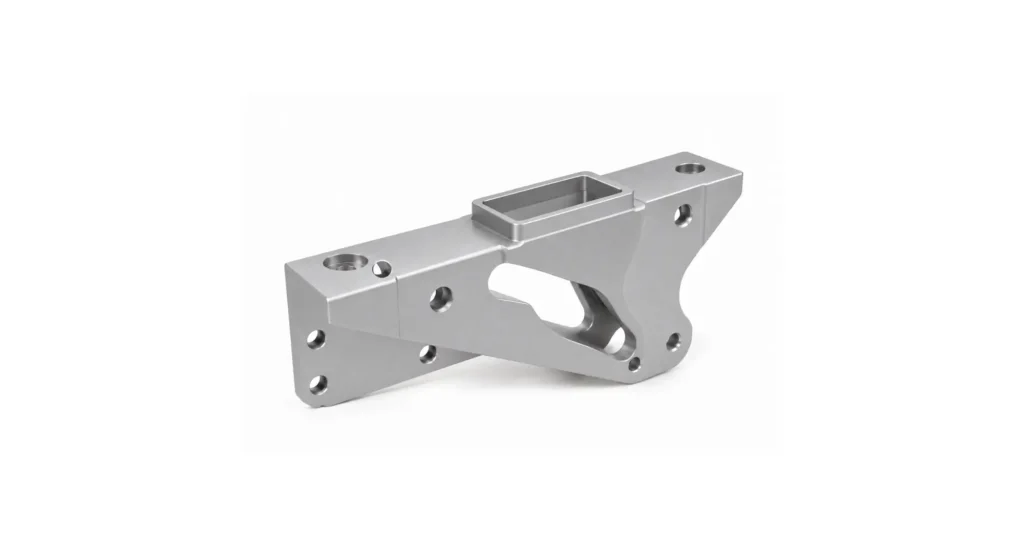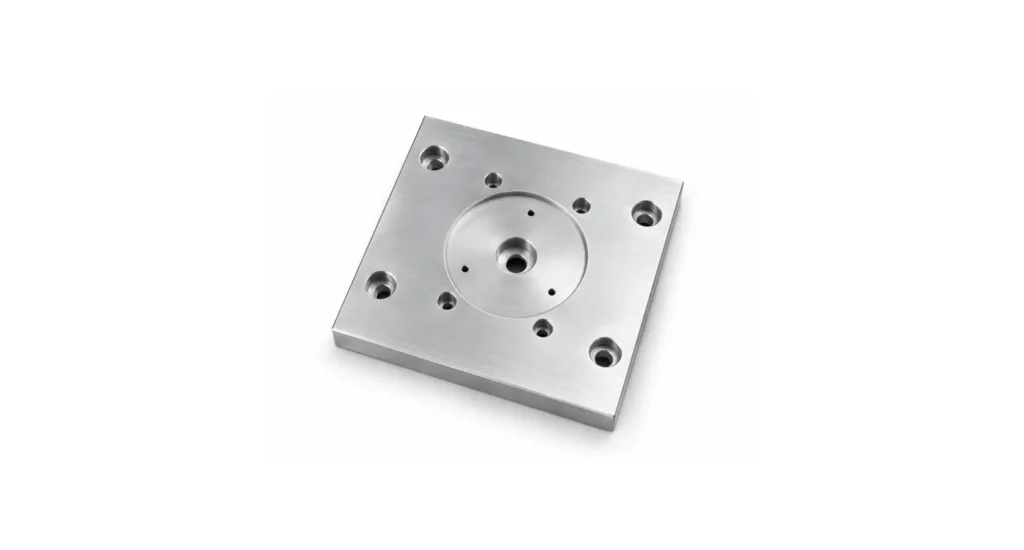

Internal machining operations are essential in CNC manufacturing for creating precise holes, threads, and internal features. Boring, reaming, and tapping each serve distinct roles: boring enlarges pre-existing holes to exact dimensions, reaming improves hole accuracy and surface finish, and tapping cuts internal threads. Selecting the correct operation affects tolerances, surface quality, and production efficiency, particularly in high-precision industries such as aerospace, automotive, and medical device manufacturing. Understanding the nuances of each process allows engineers to design parts effectively, optimize CNC machining workflows, and reduce scrap or rework.
These operations often work sequentially, for example, drilling a pilot hole, boring to size, reaming to tolerance, and then tapping threads. Mastery of these techniques is a key design driver and ensures that internal features meet stringent dimensional, functional, and material requirements. For a deeper understanding of CNC machining principles, see our CNC machining guide.
Key Takeaways
- Boring: Enlarges existing holes with precision, typically achieving ±0.05 mm tolerances.
- Reaming: Finishes holes to tight tolerances and smooth surfaces, often ±0.01 mm.
- Tapping: Creates internal threads in pre-drilled holes, following standardized thread specifications.
- Relationship: Drilling → boring → reaming → tapping is a common sequence for high-precision internal features.
- Application context: Boring is used for accurate diameters and concentricity; reaming for hole finish and tolerance; tapping for threaded fasteners or assembly integration. Material hardness, thread size, and hole depth influence operation selection.
What is boring in CNC machining?
The process of boring is an internal machining operation that enlarges and refines pre-drilled holes to achieve precise diameters, alignment, and surface finish. Unlike drilling, which creates a hole from solid material, boring is initiated from an existing opening formed by other means, typically improving its dimensional accuracy and straightness. Boring is performed on manual and CNC lathes and milling machines, and also on specialized CNC boring mills, and can be applied to external cylindrical surfaces in specialized cases.
Boring allows for tight tolerances, high concentricity, and cylindricity control, making it critical in components like engine cylinders, valve guides, and precision housings. Tool selection, spindle speed, feed rate, and coolant choice are critical in minimizing vibration and deflection during boring operations. CNC boring uses single-point boring bars or multi-insert heads to remove material efficiently and accurately.
Boring is often the first internal machining step after drilling, preparing the hole for reaming or tapping.


What is reaming in CNC machining?
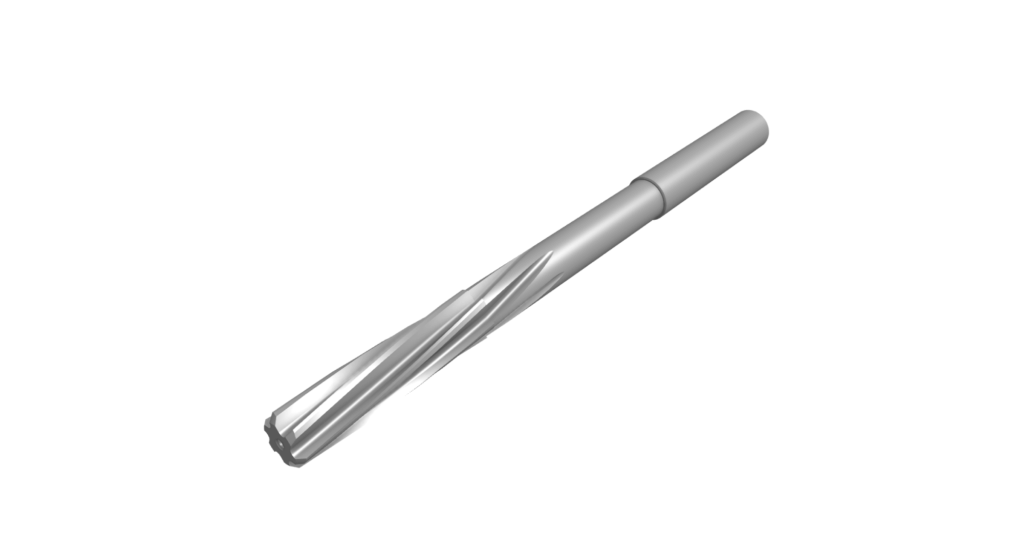
Reaming is a finishing/sizing operation used to improve hole (diametral) accuracy, roundness and surface finish beyond that which drilling, laser drilling, or boring can achieve. It is often used in guide hole and sleeve ejector holes in mold tools. Reamers have multiple, elongated cutting edges designed to remove small amounts of material uniformly, producing holes with precise diameters, smooth walls, and consistent roundness. The tools are typically formed with straight, or slightly helical cutting edges that are ground to a high level of concentricity, with no run-out.
Reaming can correct minor irregularities from previous operations, such as undersized, non cylindrical, or tapered holes. Tolerances achievable with reaming are typically ±0.01 mm, and surface finishes can reach Ra 0.4 to 0.8 μm, depending on tool quality and feed conditions. Reaming is performed with rigid CNC setups to minimize deflection, particularly in deep holes. Both hand reaming and CNC reaming are widely used, though CNC is preferred for repeatability and integration into automated workflows.
Common applications include precision bushings, bearing housings, and dowel pin holes. Reaming complements boring; boring establishes the approximate diameter, and reaming finishes it to exact specifications. Selecting the correct reamer material, coating, and cutting speed is key in hard or abrasive materials, to avoid excessive wear or risk of chatter.



What is tapping in CNC machining?
Tapping is the process of cutting internal threads into the wall of pre-drilled holes, allowing threaded fasteners to engage securely in assemblies. Tapping can be performed with hand taps, machine taps, or CNC tapping heads. The latter method improves control of the process, to produce accurate threads with better surface finish and lower risk of deviation, duplication and tearing.
CNC tapping allows for high precision, repeatability, and integration into multi-operation workflows, particularly for standard threads of small and medium diameter (typically below 25mm or 1 inch diameter). Tapping involves matching the pre-drilled hole diameter to the tap size, accounting for thread pitch, material, and depth. It is commonly used for screw threads, bolt holes, and mechanical assemblies, where tapping is often critical for functional fastening and alignment in aerospace, automotive, and industrial components.
Tapping can be through-hole or blind. Specialized operations such as thread milling or form tapping are used for harder materials or custom thread forms. Effective tool selection, lubrication, and spindle control prevent tap breakage, deliver required thread quality, and extend tool life. Tapping follows drilling, boring, and reaming in high-precision internal machining sequences and can also be applied to as-cast holes in die-cast and investment-cast parts – though a drilling or boring process is typical in lower precision cast parts from sand casting.


Key differences between boring, reaming, and tapping
Boring, reaming, and tapping differ in purpose, tolerances, surface finish, and material removal. They often operate sequentially, complementing each other in high-precision internal machining.
| Property | Boring | Reaming | Tapping |
|---|---|---|---|
| Purpose | Enlarges and aligns pre-existing holes to precise diameters | Finishes holes to exact size and smooth surface finish | Cuts internal threads for fastener engagement |
| Input requirement | Requires a pre-drilled or cast hole | Requires a drilled or bored hole at near-final size | Requires a correctly sized pilot hole (tap drill diameter) |
| Typical tolerance | ±0.05 mm Specialized setups can reach ±0.01 mm | ±0.01 mm Tightest of the three for hole diameter | ±0.05 mm (thread class dependent) e.g. ISO 6H for metric; tolerance rises with diameter |
| Surface finish | Ra 1.6–3.2 µm Improves with fine passes or coated boring bars | Ra 0.4–0.8 µm Smoothest of the three operations | Ra 1.6–3.2 µm Dependent on lubrication and tap geometry |
| Material removal rate | Medium Rapidly enlarges holes by significant amounts | Very low Removes only fine surface irregularities | Minimal Cuts thread profile only; removal depends on pitch and depth |
| Concentricity control | Excellent Primary strength; corrects drill wander and misalignment | Good Follows existing hole axis; cannot correct significant misalignment | Follows pilot hole Thread axis determined by pilot hole; no correction capability |
| Tooling | Single-point boring bar or multi-insert head | Multi-flute reamer (straight or helical); hand or CNC | Hand tap, machine tap, form tap, or thread mill |
| Suitable hole types | Through and blind; large and deep holes | Through and blind; standard and tapered | Through-hole and blind; standard and custom thread forms |
| Key advantages | Corrects drill inaccuracies; handles large diameters; suits hard and soft materials | Highest surface quality; low cutting forces; excellent for production runs | Fast thread production; high repeatability in CNC; suits blind and through holes |
| Key limitations | Deflection risk in thin-walled or deep holes; surface may need post-processing | Cannot remove large amounts of material; sensitive to vibration and misalignment | Tap breakage risk; limited depth-to-diameter ratio; blind holes need careful chip control |
| Typical applications | Engine cylinders, valve guides, precision housings, large-diameter bores | Dowel pin holes, bearing seats, bushings, mold tool guide holes | Fastener holes in aerospace, automotive, and industrial assemblies |
| Position in sequence | Step 2 — after drilling, before reaming | Step 3 — after boring, before tapping | Step 4 — final operation in the sequence |
Operation purpose and objectives
- Boring: Enlarges pre-existing holes, ensures concentricity, and prepares holes for finishing or threading.
- Reaming: Finishes holes to tight diameters with smooth-bore surfaces, correcting minor errors from drilling or boring.
- Tapping: Cuts internal threads to precise specifications for fastener engagement and assembly.
Tolerance capabilities
- Boring: ±0.05 mm for standard CNC operations; specialized setups can reach ±0.01 mm.
- Reaming: ±0.01 mm; excellent for high-precision fits.
- Tapping: Tolerance depends on thread class (e.g., ISO 6H for metric), generally ±0.05 mm at best, for small hole diameters, rising with diameter.
Surface finish characteristics
- Boring: Ra 1.6–3.2 μm typically; can improve with fine passes or coated bars.
- Reaming: Ra 0.4–0.8 μm, often the smoothest of the three.
- Tapping: Ra 1.6–3.2 μm; dependent on lubrication and tap design.
See more on surface finish.
Material removal rates
- Boring: Medium; rapidly removes significant material to enlarge holes.
- Reaming: Very low; only removes fine surface irregularity to achieve tight tolerance.
- Tapping: Depends on thread profile/depth; cuts threads gradually, with as-required material removal.
| Operation | Purpose | Typical Tolerance | Surface Finish | Material Removal |
|---|---|---|---|---|
| Boring | Enlarge and align holes. | ±0.05 mm | Ra 1.6–3.2 µm | Medium |
| Reaming | Finish and smooth holes. | ±0.01 mm | Ra 0.4–0.8 µm | Low |
| Tapping | Cut internal threads. | ±0.05 mm (thread class) | Ra 1.6–3.2 µm | Very Low |
| Process | Advantages | Limitations |
|---|---|---|
| Boring |
|
|
| Reaming |
|
|
| Tapping |
|
|
Applications for each operation
Boring Applications
- Engine cylinders, valve guides, and precision housings.
- Large-diameter holes where drilling alone cannot achieve required tolerances.
- Holes requiring concentricity correction before finishing.
Reaming Applications
- Precision dowel pin holes, bearing seats, and bushings.
- Holes require smooth finishes and exact diameters.
- High-volume runs where consistency across multiple holes is critical.
Tapping Applications
- Fastener holes in automotive, aerospace, and industrial components.
- Internal threaded holes for assembly, alignment, or mechanical fastening.
- Moderate size blind or through holes requiring threads.
Material considerations for in-hole machining
Machining soft materials (Aluminum, brass)
- Low cutting forces allow high-speed boring, reaming, and tapping.
- Lubrication improves surface finish and prevents chip welding.
- Reamers and taps must be sharp to avoid burr formation.
- See Aluminum machining guide
Machining hard materials (steel, Titanium)
- Higher cutting forces require carbide tooling and controlled feeds.
- Boring bars must resist deflection; reamers must be coated to prevent wear.
- Tapping requires careful speed control to prevent breakage.
- Reference: Titanium vs Aluminum.
Difficult-to-machine materials (stainless steel, Inconel)
- Reduced material removal rates; use rigid setups and coolant.
- Reaming and tapping require specialized geometries, materials, or coatings.
- Minimize chatter and excessive heat to maintain tolerances.
- Critical in aerospace or high-performance components.
Conclusion
Boring, reaming, and tapping together form the foundation of precision internal machining for cylindrical and tapered cylindrical surfaces, each serving a distinct but complementary role in achieving accurate, variously-functional holes.
In CNC machining, these operations are interdependently sequenced operations, not interchangeable. Selecting the right sequence and tooling depends on part geometry, tolerance requirements, and material properties. Softer metals may allow faster reaming and tapping, while harder alloys demand optimized feeds, speeds, and coolant application to maintain accuracy and tool life.
Advances in tool coatings, digital process monitoring, and adaptive cutting strategies continue to push the precision limits of these machining processes. Whether producing aerospace components, medical devices, or high-performance automotive parts, understanding how boring, reaming, and tapping interact allows maximum efficiency, repeatability, and surface integrity. When applied strategically, these operations elevate hole-making from a routine step to a defining factor in product quality and performance.