









Supplier intelligence has evolved from a competitive advantage exploited by a few forward looking organizations, into an operational necessity that very few successful companies fail to optimize.
Over recent years, manufacturers have faced an unprecedented sequence of disruptions: pandemic shutdowns, raw material shortages, logistics bottlenecks, geopolitical instability, sanctions, labour shortages, and the failure of critical single-source suppliers. There is reason to believe that this prolonged period of overlapping challenges may be the new norm.
These recent events exposed a common weakness across procurement organisations: decisions were often being made using outdated or insufficient supplier assessments, at best recent, but in many cases annual reviews, and poor or blocked visibility into supplier performance.
Research from SpendHQ suggests nearly 80% of manufacturers have not invested in supplier performance tracking software, with around ¾ of respondents keeping a few notes and perhaps a spreadsheet. Lacking actionable insights is perhaps ok under normal operations – but in those critical few moments of difficulty it can be (commercial) life and death. To bridge this gap, it is high time that the companies adopt AI-powered supplier intelligence.
Effective supplier intelligence platforms aim to close that gap. Rather than relying on static scorecards and reactive crisis management, these systems provide near real-time monitoring, predictive risk insights, supplier performance analytics, and increasingly AI-driven overview and sourcing recommendations. Procurement teams can identify emerging risks earlier, evaluate alternative suppliers faster, and make sourcing decisions based on current conditions rather than outdated and ill-informed assumptions.
However, “supplier intelligence platform” is a broad category covering multiple software types, designed to address various and matrix-overlapping procurement challenges. Some focus on financial and operational risk. Others specialise in ESG compliance, spend analytics, supplier discovery, or sourcing automation.
This guide explains what supplier intelligence platforms do, how the major categories differ, and which capabilities manufacturing procurement teams should prioritise in 2026.
Key takeaways
- Supplier intelligence platforms integrate external risk signals and internal supplier performance data to provide continuous tactical and operational visibility across the supply base.
- The market includes four primary categories: risk monitoring, sustainability intelligence, spend analytics, and AI-driven sourcing platforms.
- Portfolio-level supplier intelligence helps identify supplier risk, but manufacturing procurement often requires highly detailed, transaction-level intelligence to prevent quality, delivery, and manufacturability issues.
- Agentic AI, predictive risk modelling, and automated sourcing workflows are rapidly becoming the defining capabilities of next-generation procurement software.
What are supplier intelligence platforms?
Supplier intelligence platforms are software systems that collect, aggregate, analyse, and monitor information about suppliers and the environments in which those suppliers operate. Their purpose is to help procurement teams make better sourcing decisions, reduce supply chain risk, improve supplier performance, and build operational resilience.
Unlike traditional supplier management systems, which primarily store supplier information and documentation, supplier intelligence platforms continuously gather and evaluate new information from both internal and external sources. It is in this regard that an AI agent’s continuous and wide-scoped vigilance can be pivotal.
Three capabilities distinguish supplier intelligence platforms from basic supplier management tools.

- Monitor/reduce supply chain disruption risk
- Improve sourcing decisions
- Identify cost reduction opportunities
- Support ESG reporting requirements
Various other tasksets are required, but no existing solutions look to solve the whole puzzle in one platform – which is a considerable weakness in current offerings, as clients necessarily will use multiple tools to cover their required range.
Continuous monitoring
Traditional supplier reviews may occur annually, quarterly, perhaps monthly during stress periods. Supplier intelligence platforms monitor supplier conditions continuously, and update in near real-time.
Financial performance, compliance status, operational disruptions, geopolitical events, environmental incidents, cybersecurity breaches, sanctions exposure, and ownership changes can all be tracked, for optimal outcomes. This allows procurement teams to respond proactively rather than discovering problems after production schedules are already affected.
External data integration
Supplier intelligence platforms incorporate external data sources such as:
- Credit and financial reports
- Legal and regulatory databases
- Trade and customs records
- ESG performance databases
- Sanctions and restricted party lists
- News and media monitoring
- Geopolitical risk indicators
- Industry benchmarking data|
This broad perspective equips procurement teams to understand not just supplier performance, but supplier health – and the micro-and-macro influences of wider geopolitical events.
Actionable alerts
Information alone has little value.
The most effective platforms convert data into alerts and recommended actions, based on analysis and preset – but dynamically adjusted – operation scope. Rather than simply reporting a supplier’s declining financial position, they identify increasing risk and notify procurement teams before disruption occurs – ideally even learning to analyse and react to barely human-detectable trends-in-the-noise. AI enabled Machine learning, with a data-ocean to analyse, is the key to turning jumbled information waterfalls into deep analysis.
The result is a shift from reactive to strategic procurement.
Organisations that successfully make this transition often describe it as moving from managing supplier relationships to understanding supplier chain health in real time.
Companies adopt supplier intelligence platforms for a number of divergent, but overlapping reasons:
- Reducing supply chain disruption risk
- Improving sourcing decisions
- Identifying cost reduction opportunities
- Supporting ESG reporting requirements
- Maintaining regulatory compliance
- Increasing supplier diversification
- Improving resilience against geopolitical shocks
Importantly, supplier intelligence platforms represent an umbrella category rather than a single software type. Different platforms specialise in supplier discovery, risk monitoring, quality management, sustainability, performance analytics, or supply chain visibility, making platform selection a critical part of procurement strategy. While several enterprise suites (SAP Ariba, Coupa, Jaggaer, Ivalua) attempt to provide end-to-end coverage, advanced-user organisations still tend to rely on a combination of specialist tools. Single platforms that claim to deliver best-in-class intelligence across every supplier management domain typically fall short in some regards.
The black-box problem: supplier transparency as an intelligence gap
Many manufacturers still operate with limited visibility beyond their direct supplier relationships. A supplier may consistently meet delivery commitments while simultaneously experiencing financial distress, workforce turnover, regulatory investigations, raw material shortages, or sustainability compliance issues. Procurement teams often discover these problems only after they affect production.
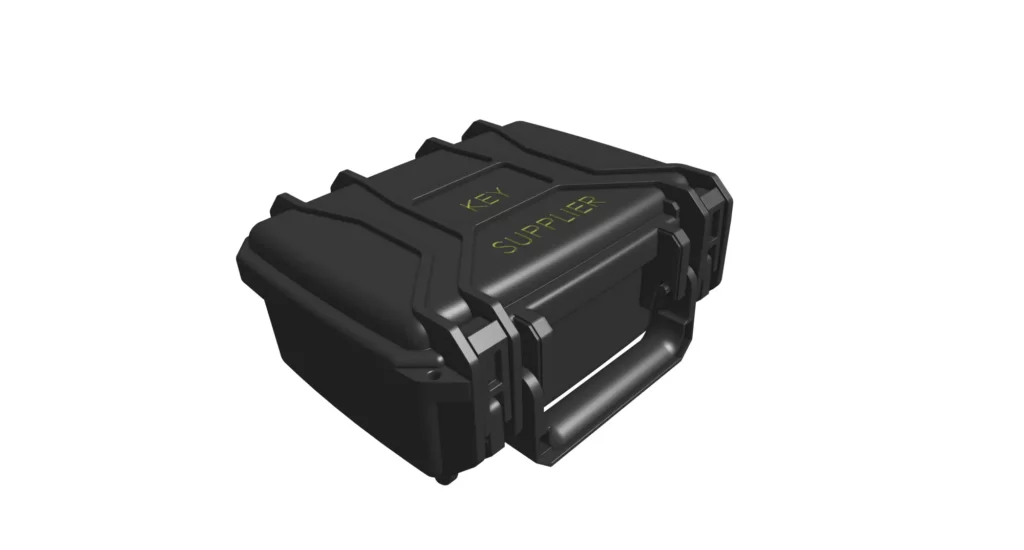
This lack of visibility creates what many procurement leaders call the black-box problem. Suppliers become black boxes where purchase orders enter, products emerge, and little is known about the operational realities in between.
The challenge becomes even more severe in complex manufacturing supply chains where tier-two and tier-three suppliers influence delivery performance, quality outcomes, and business continuity.
A machining supplier may depend heavily on a single casting source. An electronics contract manufacturer may rely on a single semiconductor distributor. A fabrication partner may depend on a specific steel mill experiencing production constraints.
Without visibility into these intricate dependencies, procurement teams can easily underestimate risk exposure.
Supplier intelligence platforms aim to shed light on these hidden vulnerabilities, by providing transparency beyond the basic and direct supplier interactions.
However, visibility alone does not necessarily create actionability.
A portfolio-level risk score may indicate that a supplier faces elevated risk, but it cannot answer critical manufacturing questions such as:
- Can they hold required tolerances?
- Do they understand the application?
- Can they meet the requested lead time?
- Have they identified manufacturability concerns?
- Are they experiencing capacity constraints today?
This is where transaction-level intelligence becomes particularly important for manufacturing procurement.
- Risk scores identify potential problems.
- Direct engagement identifies actual problems.
Why supplier intelligence matters
The business case for increasing supplier intelligence investment is no longer theoretical. Procurement leaders can easily point to well-documented and public-profile examples of production stoppages, supply chain disruptions, missed customer commitments, quality failures, and regulatory penalties that originated from supply chain related issues.
The question is no longer whether supplier intelligence creates value.
The question is which intelligence capabilities generate the greatest value for a specific organisation.
Supply chain disruption reduction
Supply chain disruptions remain one of the largest sources of operational risk in manufacturing.
Single-source dependencies, transportation interruptions, geopolitical conflicts, natural disasters, labour disputes, and financial insolvencies can all disrupt production schedules. Recent years have been a hard teacher in this regard.
Supplier intelligence platforms help identify vulnerabilities before they become crises by monitoring risk indicators continuously rather than periodically.
- Early warning creates response time.
- Response time creates resilience.
Cost savings opportunities
Procuring teams historically have focused heavily on purchase price, while overlooking broader cost drivers.
Supplier intelligence platforms can reveal:
- Category consolidation opportunities
- Supplier rationalisation opportunities
- Market pricing trends
- Spend leakage
- Contract compliance issues
- Alternative sourcing options
Greater visibility enables more informed negotiations and more effective category management strategies.
Compliance and risk management
Regulatory expectations continue to expand. Manufacturers increasingly face compliance requirements associated with:
- Modern slavery legislation
- Conflict minerals reporting
- ITAR and export controls
- Anti-bribery regulations
- Environmental reporting
- Supplier due diligence requirements
Supplier intelligence platforms automate much of the monitoring and documentation required to maintain compliance across large supplier networks.
ESG reporting demands
Environmental, Social, and Governance (ESG) reporting has moved from voluntary disclosure to business necessity. Investors, customers, regulators, and supply chain partners increasingly expect evidence-backed reporting.
This creates significant challenges, because many sustainability metrics originate within supplier networks. Supplier intelligence platforms help collect, verify, and monitor this supplier-level ESG data, reducing reliance on estimates and improving reporting accuracy.
For many organisations, ESG visibility is becoming as important as financial visibility.
Core categories of supplier intelligence platforms
The term supplier intelligence platform integrates a diverse range of software solutions. Understanding the major categories is key to effective selection and use of the tools, because they address overlapping procurement challenges and typically serve different stakeholders within an organisation.
For excellent intelligence and wide coverage, most mature procurement organisations harness the capabilities of multiple categories of service/tool.
The key is identifying which intelligence gap currently creates the greatest commercial risk.
Risk and financial monitoring
Risk monitoring platforms focus on supplier viability and resilience.
They aggregate financial, operational, legal, geopolitical, and compliance data to identify suppliers that may be vulnerable to disruption.
Typical capabilities include:
- Financial health monitoring
- Credit risk analysis
- Bankruptcy prediction
- Sanctions screening
- Cybersecurity risk monitoring
- News and event monitoring
- Geographic risk assessment
Primary buyers are typically procurement leaders, supply chain risk managers, and compliance teams.
Their goal is straightforward: identify problems before they interrupt operations.
Diversity and sustainability intelligence
These platforms focus on supplier diversity, ESG performance, sustainability reporting, and responsible sourcing.
Capabilities commonly include:
- Carbon footprint reporting
- Supplier sustainability assessments
- Diversity certification verification
- Modern slavery monitoring
- ESG benchmarking
- Scope 3 emissions support
- Sustainability performance tracking
Ramping regulatory requirements are making this category increasingly important across manufacturing industries, from both a public perception perspective, and increasingly in regulated aspects of regional requirements.
Spend and category analytics
Spend analytics platforms help organisations understand where procurement dollars are being spent and identify opportunities for improvement.
Capabilities include:
- Spend classification
- Category analysis
- Supplier consolidation opportunities
- Cost trend analysis
- Savings tracking
- Procurement benchmarking
- Contract compliance monitoring
For large organisations, spend analytics often delivers some of the fastest measurable ROI among supplier intelligence investments. In reality, the cost-benefit of this type of activity is the easiest to justify – but the benefits can then serve to justify/fund areas of importance where returns are less directly tangible.
AI sourcing and supplier discovery
AI-driven sourcing platforms represent the fastest-growing category in procurement technologies, with a pace of change that is accelerating as AI service capabilities expand. Costs associated with these tools are currently low, but changes in payment relationships and the advent of token based payments are likely to alter this field considerably, in the near term
These systems help buyers identify suppliers, compare capabilities, automate RFQs, analyse responses, and recommend sourcing decisions.
Capabilities often include:
- Supplier discovery
- Automated RFQ workflows
- AI-assisted supplier matching
- Quotation analysis
- Capacity visibility
- Market intelligence
- Supplier recommendation engines
For manufacturing procurement, this category increasingly overlaps with execution platforms such as Jiga, where intelligence is generated from actual supplier interactions, manufacturability feedback, production communication, and completed jobs rather than solely from external databases.
The distinction is significant.
A risk-monitoring platform may identify a supplier as financially healthy.
An execution-focused sourcing platform can reveal whether that supplier can actually manufacture a part successfully, deliver on schedule, and maintain quality requirements.
For manufacturers, that transaction-level intelligence often determines sourcing success.
Supplier performance management
Supplier intelligence is only valuable if it improves supplier performance.
Most procurement organisations track five core KPI categories:
| KPI Category | What It Measures | Typical Warning Threshold |
|---|---|---|
| On-Time Delivery (OTD) | Delivery reliability | <95% OTD |
| Quality and/or Defect Rate | Conformance to specifications | Increasing defect trend |
| Lead Time Variance | Schedule consistency | >15 to 20% variation |
| Cost Performance | Price stability and competitiveness | Repeated cost escalation |
| Responsiveness | Communication and issue resolution | Slow response to RFQs or quality issues |
Historically, these metrics were (variably) maintained through manual scorecards, quarterly reviews, and spreadsheet-based reporting. The problem is that manual systems are labour-intensive and lag reality by weeks or months, rendering them essentially useless under the high-risk, dynamic conditions where accurate intelligence is most needed..
Supplier intelligence platforms automate KPI collection by integrating with ERP systems, sourcing platforms, logistics systems, quality databases, and production workflows. Performance trends can be monitored continuously rather than waiting for formal review cycles.
For manufacturing organisations, transaction-level performance data is often the most valuable intelligence available. A supplier may score highly on financial health and ESG metrics while simultaneously delivering parts late, missing critical tolerances, or responding slowly to engineering changes.
This is where Jiga’s model differs from portfolio-level intelligence systems. Rather than relying primarily on external assessments or supplier questionnaires, performance intelligence is generated from actual manufacturing jobs. On-time delivery, quotation responsiveness, manufacturability feedback, communication quality, and defect performance are measured through real transactions rather than self-reported surveys.
The result is a more accurate picture of supplier capability under real operating conditions.
How to choose supplier intelligence software
The most successful supplier intelligence implementations begin with clarity of understanding as to the business problem being addressed.
Far too many organisations have started this process with analyst reports, feature comparisons, or vendor rankings. The more effective approach is to identify the intelligence gap creating the greatest commercial risk, and evaluate platforms based on that clarity of vision.
The following criteria provide a practical framework for supplier intelligence software selection.
Connect intelligence directly to spend
The most useful supplier intelligence is that which influences procurement decisions, in real time.
Many organisations accumulate risk data, ESG scores, and supplier profiles that remain disconnected from actual sourcing activity, as if the data was the purpose – rather than the return on investment in gathering the intel.
The best platforms connect intelligence directly to spend decisions by allowing buyers to:
- Compare suppliers during sourcing events
- Identify emerging supplier risks before purchase orders are issued
- Evaluate alternatives quickly
- Prioritise mitigation actions based on spend exposure
If intelligence cannot influence purchasing behaviour, its value is limited.
Integration with ERP systems
Supplier intelligence must enhance existing procurement workflows rather than create parallel processes, if it is to be used effectively in momentary and planning decisions.
Key integrations typically include:
- ERP systems
- Procurement suites
- Quality management systems
- Supplier portals
- Logistics platforms
- Manufacturing execution systems
Without such integration, supplier intelligence risks becoming a disconnected data source, requiring manual maintenance, and providing no actual bottom-line benefit.
The stronger the integration architecture, the higher the likelihood of sustained adoption.
Match platform strengths to business goals
Various intelligence platforms solve divergent problems.
- A manufacturer concerned about supplier insolvency may prioritise financial risk monitoring.
- An organisation facing sustainability reporting obligations may prioritise ESG intelligence.
- A procurement team struggling with fragmented supplier networks may benefit most from AI-powered supplier discovery and sourcing automation.
Before evaluating vendors, procurement leaders should clearly identify whether their primary objective is:
- Risk reduction
- Cost optimisation
- Compliance management
- ESG reporting
- Supplier diversification
- Sourcing acceleration
- Performance improvement
The best platform is not necessarily the platform with the most features. It is the platform that addresses the organisation’s most expensive problem.
Avoid data silos
Many enterprises already possess large amounts of supplier information. The challenge is that the information exists across disconnected systems.
Supplier intelligence platforms should act as information aggregators/interpretors rather than simply creating another silo.
Evaluation criteria should include:
- Data accessibility
- Open APIs
- Integration flexibility
- Reporting capabilities
- Cross-functional visibility
Procurement, engineering, quality, compliance, and operations teams should be able to work from a shared view of supplier performance and risk.
Preferred supplier networks and relationship continuity
Supplier intelligence tools must strengthen supplier relationships, rather than constantly encourage supplier-jumping.
The most resilient supply chains are built on trusted supplier relationships supported by transparent performance data.
Leading platforms increasingly help organisations:
- Develop preferred supplier networks
- Benchmark suppliers objectively
- Improve supplier collaboration
- Resolve issues earlier
- Share performance insights constructively
For manufacturing procurement, relationship continuity often matters as much as supplier discovery.
Replacing a supplier is expensive.
Improving an existing supplier relationship is frequently the better outcome.
Future trends in supplier intelligence
The supplier intelligence market is evolving faster than at any previous point in its history.
Procurement leaders who experienced the disruptions of the early 2020s are now investing aggressively in resilience, visibility, and decision automation.
Four trends are likely to define the next several years.
Agentic AI procurement
AI is moving beyond analytics and recommendation engines.
Next-generation platforms are increasingly capable of autonomously gathering information, evaluating sourcing options, monitoring supplier changes, and initiating procurement workflows with human oversight.
The cost-and-usefulness equation of these tools is in need of steady reanalysis, as the capabilities are evolving at a faster pace than software-purchasing and subscription decisions are generally taken. Live assessment and evaluation will pay dividends.

Predictive risk modelling
Supplier intelligence is shifting from monitoring current conditions to forecasting future conditions.
Machine learning models are increasingly capable of identifying patterns associated with disruption before traditional indicators become visible.
Real-time supplier visibility
Procurement teams increasingly expect continuous visibility into supplier performance, capacity, quality, and operational status.
Periodic reporting is giving way to live intelligence environments, reports morphing towards dashboards.
Transaction-level intelligence
The market is gradually recognising that supplier risk does not exist solely at the supplier level. It lies throughout the process – at the order level, project level, manufacturing execution level, and logistics level.
The next generation of manufacturing procurement platforms will increasingly combine portfolio intelligence with transaction intelligence, providing visibility into both supplier health and supplier execution.
Digital twinning
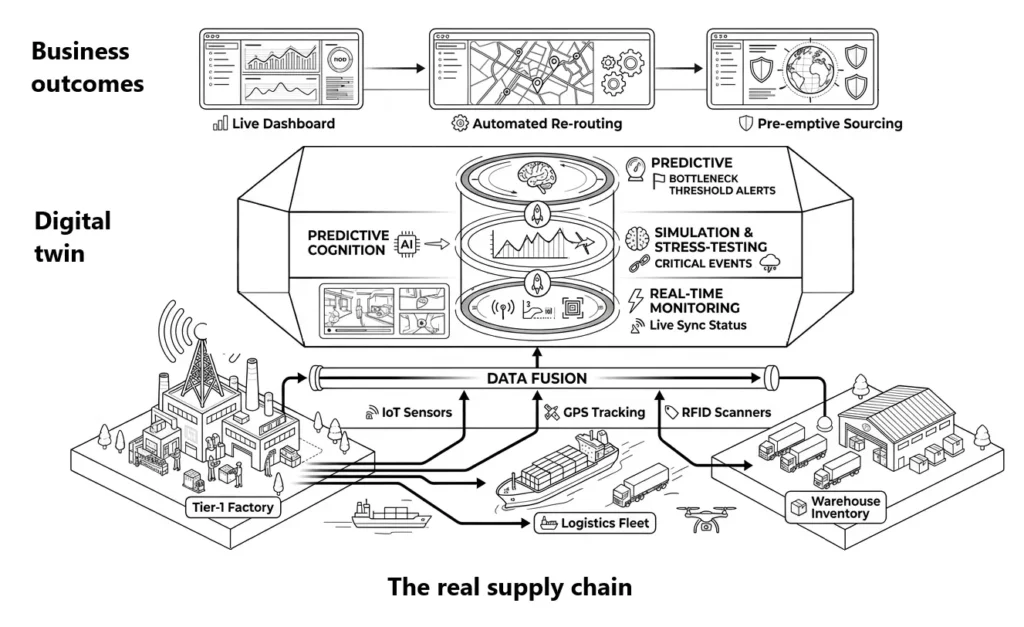
The profound effects of digital twins as analytical tools are beyond doubt – when they are fully constructed to reflect the reality they are intended to mirror. The use of digital twins as supplier intelligence tools is early stage, but the efficacy of these tools in many other complex analysis citations strongly supports their integration into supplier intelligence platforms.
Conclusion
Supplier intelligence platforms have become a critical component of modern procurement strategy.
As supply chains become more complex and external risks become more frequent, procurement organisations can no longer rely on annual reviews, static scorecards, and fragmented supplier data. Continuous intelligence has become essential for maintaining resilience, controlling costs, supporting compliance obligations, and improving supplier performance.
However, supplier intelligence is not a single technology category. Risk monitoring, sustainability intelligence, spend analytics, and AI-powered sourcing platforms each solve different problems and serve different stakeholders.
The most effective procurement organisations increasingly combine multiple intelligence sources while ensuring those insights influence actual sourcing decisions.
For manufacturers, this means balancing portfolio-level visibility with transaction-level execution intelligence. Financial health, ESG performance, and geopolitical exposure matter. But so do manufacturability feedback, supplier responsiveness, quality performance, and delivery reliability.
Ultimately, the strongest procurement decisions are made when both perspectives are available.
Frequently Asked Questions
What is the difference between a supplier intelligence platform and supplier management software?
Supplier management software primarily stores supplier information and supports administrative processes such as onboarding, documentation, and performance reviews. Supplier intelligence platforms continuously collect and analyse supplier-related data from internal and external sources to provide ongoing visibility into risk, performance, compliance, and sourcing opportunities.
How much does a supply chain disruption actually cost a manufacturer?
The cost varies significantly depending on industry and disruption severity. Direct costs can include expedited freight, production downtime, quality failures, inventory shortages, contractual penalties, and lost sales. For many manufacturers, a single supplier-related disruption can result in costs ranging from tens of thousands to millions of dollars, particularly when critical production lines are affected.
How should procurement teams prioritise between financial risk monitoring, ESG, spend analytics, and AI sourcing platforms?
The best starting point depends on the organisation’s largest source of procurement risk. If supplier failures are the primary concern, financial risk monitoring may deliver the greatest value. If regulatory obligations are increasing, ESG intelligence may be the priority. Organisations seeking cost reduction often benefit most from spend analytics. Manufacturers looking to accelerate sourcing, improve supplier discovery, and improve execution visibility may find AI sourcing platforms deliver the fastest operational impact. In practice, mature procurement organisations typically combine capabilities from all four categories over time.