

The oil and gas industry operates in environments that push engineering materials and manufactured components to their limits. High pressures, extreme temperatures, corrosive fluids, abrasive slurries, and remote and sub-sea operating locations combine to create some of the most demanding service conditions found in any industrial sector. Components that perform reliably in general industrial applications can fail rapidly when exposed to hydrogen sulphide (H₂S, sour gas), chloride-ion laden seawater, or downhole temperatures of several hundred degrees Celsius.
CNC machining is the primary manufacturing process serving to supply the precision components that enable safe and reliable oil and gas operations. From drill bits and downhole tools to valve bodies, pump components to blowout preventers (BOPs), manifold systems to pipe flanges, and subsea connectors and templates, CNC machining provides the dimensional precision, repeatability, and material flexibility required by the sector.
Success, however, requires more than simply producing a component to drawing. Oil and gas machining demands the correct material selection, compliance with industry standards, full material traceability, documented quality systems, and suppliers capable of machining some of the most challenging alloys.
This guide explains how CNC machining services support oil and gas exploration, shipping and processing operations; which materials and machining technologies dominate the sector; what standards govern production; and how engineers and procurement teams can source suppliers confidently in 2026.
Key takeaways
- Oil and gas CNC machining supports upstream exploration and drilling, midstream transportation and piping, and downstream refining operations, each with unique performance requirements and component types.
- Inconel 718, Inconel 625, duplex stainless steels, super duplex stainless steels, Titanium alloys, and Monel are commonly specified because corrosion and abrasion resistance, and temperature capability are often more critical than cost or strength.
- API, ASME, and NACE standards govern many oil and gas components, making certification, traceability, and quality management as important as machining capability.
- Emergency maintenance, repair and operations (MRO) requirements and prototype development programmes are the two sourcing scenarios where close-coupled and direct communication with the manufacturer delivers the greatest value.
What is CNC machining in the oil and gas industry?
CNC machining in the oil and gas industry describes the use of computer-controlled milling, turning, drilling, boring, threading, and multi-axis machining processes to manufacture the huge range of precision components used throughout exploration, production, transportation, storage, refining, and petrochemical processing.
Unlike many industrial sectors, oil and gas components frequently operate under combinations of extreme pressure, elevated temperature, corrosive chemical exposure, erosive slurries, and cyclic mechanical loading. Many components are also considered safety critical and fail-dangerous – and when this is combined with low to extremely low accessibility, durability is a top priority. These conditions create performance requirements that extend far beyond conventional precision machining.
A valve sealing surface that misses its specified roughness value may result in fugitive emissions or leakage. A downhole tool component manufactured from an incorrectly qualified alloy may suffer sulphide stress cracking and deliver a multi-million dollar blockage and fishing exercise. A wellhead component with inadequate traceability may fail certification requirements regardless of dimensional compliance.
Consequently, oil and gas sector CNC machining combines four critical disciplines:
- Precision manufacturing
- Materials engineering
- Quality assurance
- Regulatory compliance
Specialist suppliers must often demonstrate compliance with API requirements, maintain formally documented quality systems, preserve full material traceability, and machine difficult materials such as Nickel superalloys, duplex stainless steels, and Titanium alloys.
The result is a manufacturing environment where process control and documentation are often as important as machining capability itself.
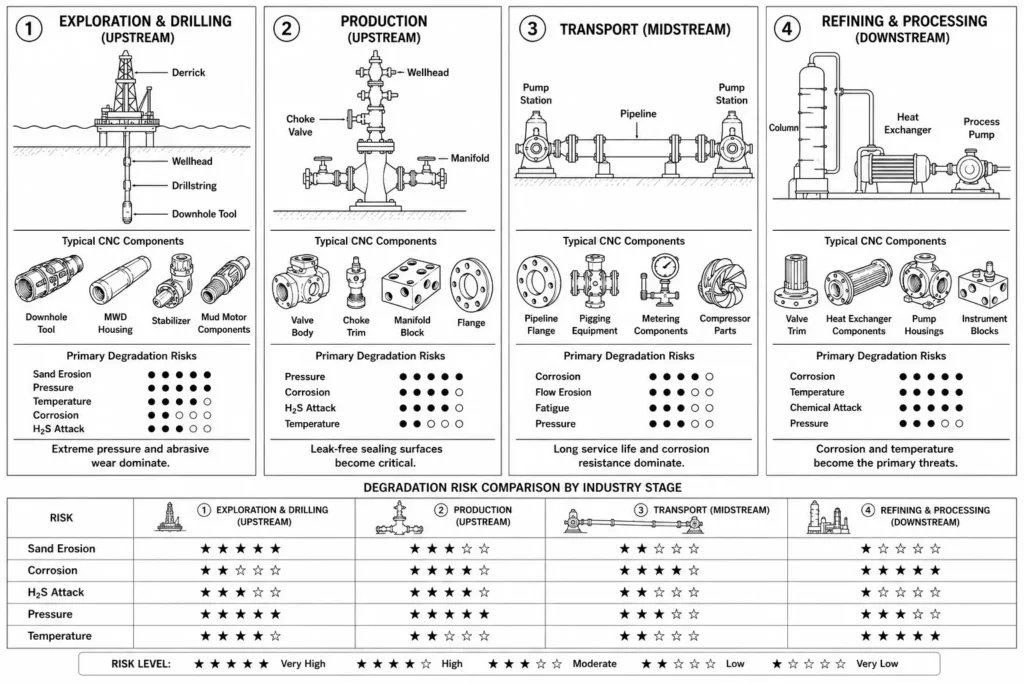
How CNC machining supports oil and gas operations
Precision machined components support every stage of the oil and gas value chain.
In upstream operations, CNC machining enables the production of downhole tools, drill string components, measurement-while-drilling equipment, mud motor components, wellhead systems, and subsea hardware such as BOPs and templates. These components frequently operate under conditions that combine high pressure, high temperature, vibration, abrasion, and corrosive chemical exposure while remaining inaccessible for maintenance.
Midstream operations rely on CNC-machined valves, pumps, flanges, pipeline fittings, metering systems, compressor components, and manifold assemblies. Reliability is critical because component failure can disrupt the transport of hydrocarbons over hundreds or thousands of kilometres, or result in catastrophic environmental and cost consequences.
Downstream facilities use precision-machined parts throughout refineries, petrochemical plants, LNG facilities, and gas processing installations. Pumps, compressors, reactors, heat exchangers, flow control equipment, and rotating machinery all depend on accurately machined components to maintain efficiency and safety. While the demands in this zone can look very different, they are in many regards more extreme.
Equally important is the industry’s ongoing MRO requirement.
Unlike many manufacturing sectors that focus primarily on new production, oil and gas operators continuously source replacement parts, emergency repairs, and shutdown-critical components. A single failed fitting, valve trim component, or pump shaft can halt production worth millions of dollars per day.
For these situations, rapid supplier response, verified material certification, and direct communication with experienced machinists often become more valuable than lowest-piece-price sourcing.
What are the major applications of CNC machining in oil and gas?
CNC machining applications extend throughout the oil and gas production chain. While operating environments vary significantly between drilling operations, pipelines, and refineries, they all rely on precision-manufactured components capable of maintaining performance under the most demanding service conditions.
Upstream drilling and exploration equipment
Upstream applications typically present the harshest operating environments in terms of stress, abrasion, and component isolation.
Common machined components include:
- Drill bit bodies
- Rotary steerable system components
- Measurement while drilling (MWD) and logging while drilling (LWD) in-string housings
- Mud motor rotors and stators
- Downhole sensor housings
- Wellhead components
- Subsea connector systems
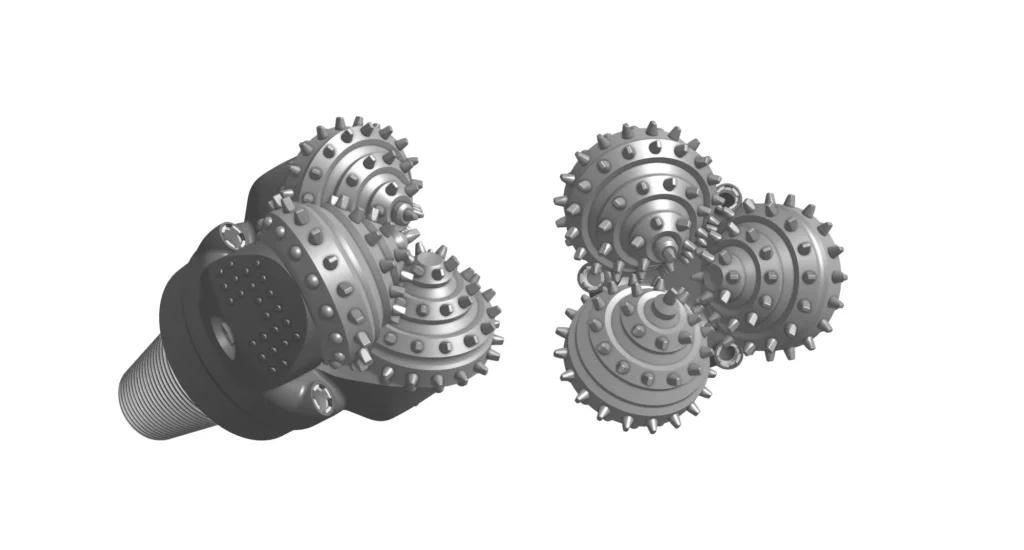
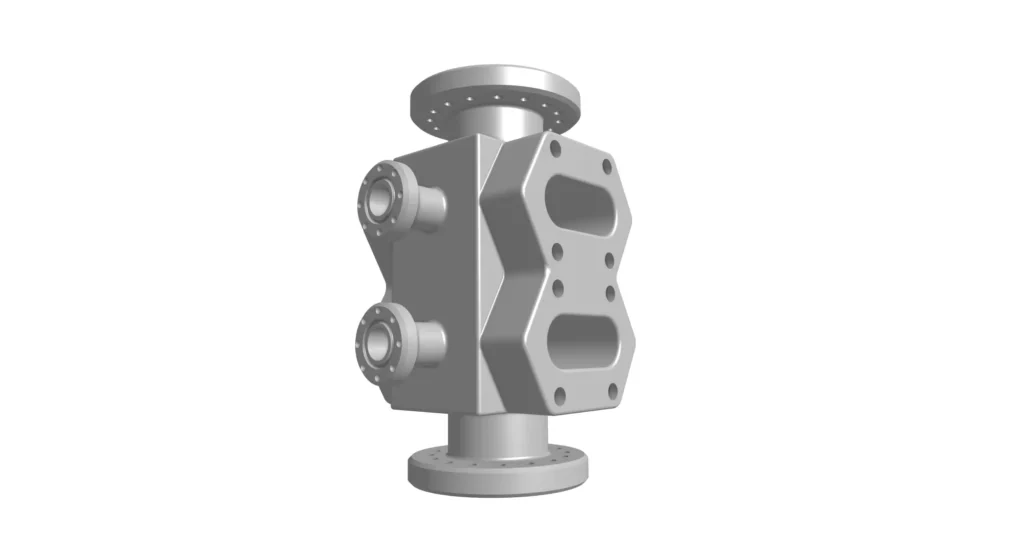
These parts may encounter temperatures exceeding 175°C, pressures above 20,000 psi, abrasive drilling fluids, and corrosive gases containing hydrogen sulphide and carbon dioxide.
Reliability requirements are exceptionally high because retrieval and replacement costs can be enormous.
Midstream transport and storage systems
Midstream infrastructure depends heavily on machined flow-control and pressure-containing components.
Examples include:
- Pipeline valves
- Compressor housings
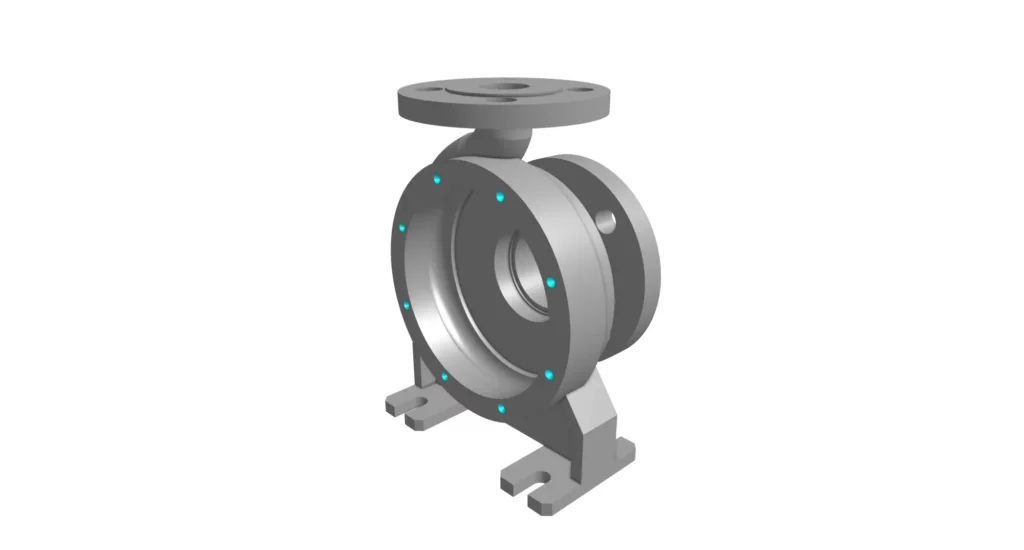
- Pump casings
- Metering equipment
- Pigging systems
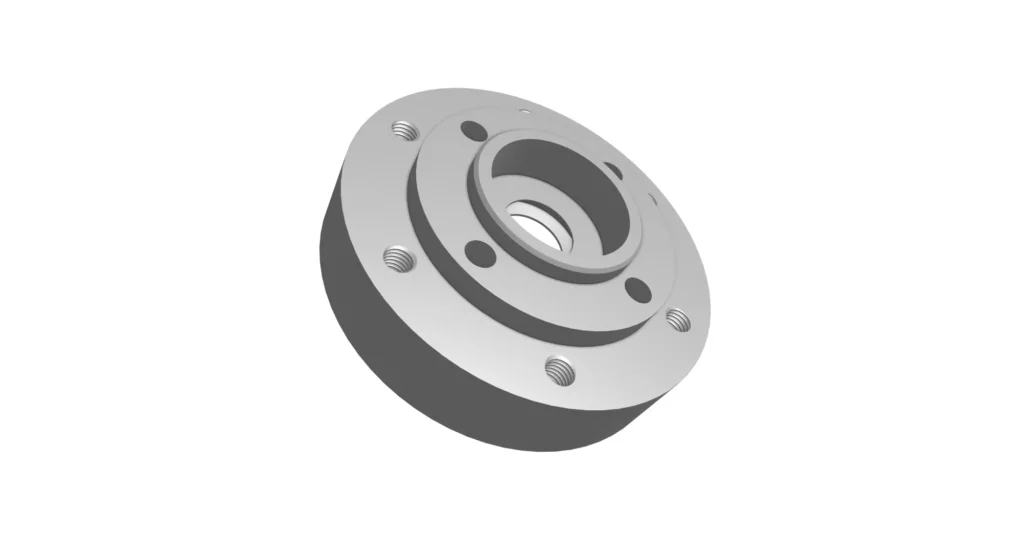
- Flanges and fittings
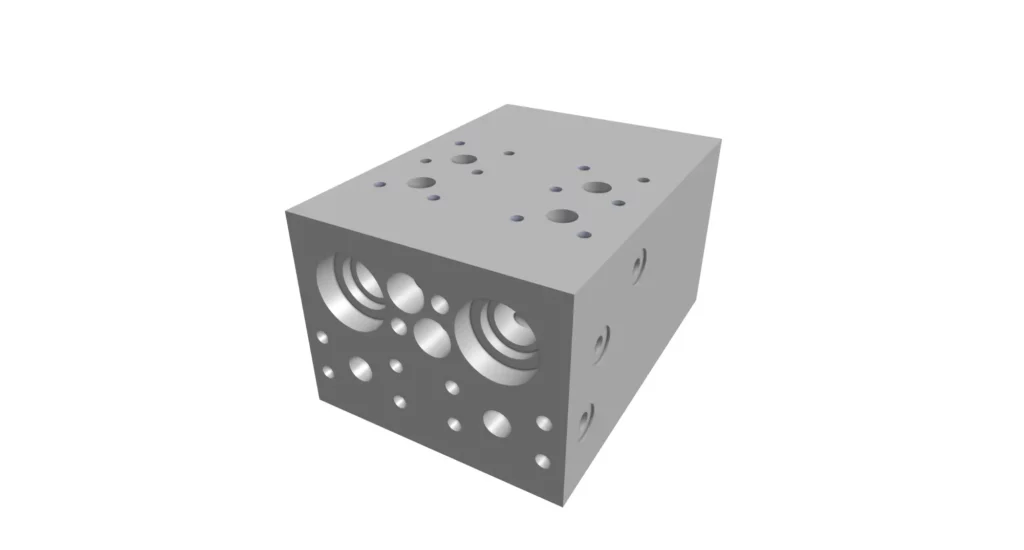
- Manifold assemblies
Many of these components operate continuously for decades, while maintaining sealing integrity under cyclic pressure loading. They commonly require seal and gasket serviceability, to allow very extended service life.
Downstream refining equipment
Refineries and petrochemical facilities expose components to combinations of elevated temperature, hydrogen, sulphur compounds, chlorides, and aggressive process chemicals.
Critical machined components include:
- Valve trim assemblies
- Reactor vessel internals
- Pump impellers
- Compressor rotors
- Heat exchanger components
- Burner assemblies
- Instrumentation fittings
Dimensional accuracy, corrosion resistance, and long-term reliability are essential because shutdown costs can be extremely high.
Critical oil and gas components manufactured with CNC machining
Several component families represent the highest-value and most demanding machining applications within the industry.
Drill bits and downhole tools
Downhole tools contain intricate internal geometries, precision threaded connections, and tight tolerance interfaces.
Common examples include:
- Directional drilling tools – bent housings, mud motors etc.
- Stabilisers
- Drilling collars
- MWD housings
- Rotary steerable systems
These components frequently require machining of Inconel, titanium, or high-strength alloy steels.
Blowout preventers and wellhead equipment
Blowout preventers (BOPs) represent some of the most safety-critical equipment in the industry. Their sole purpose is to remain ready to cut a drillstring and instantly seal a borehole, to prevent the potential catastrophe of a kick becoming a blowout.
Machined components include:
- Ram blocks
- Bonnets
- Connectors
- Flanges
- Actuator components
- Sealing interfaces
Failure cannot be tolerated, as they have the most severe safety, environmental, and financial consequences.
Pumps and manifolds
Pump systems rely on precision-machined:
- Impellers
- Shafts
- Casings
- Diffusers
- Wear rings
- Manifold blocks
Many applications require corrosion-resistant alloys combined with extremely precise sealing surfaces.
High-pressure valves and flow control systems
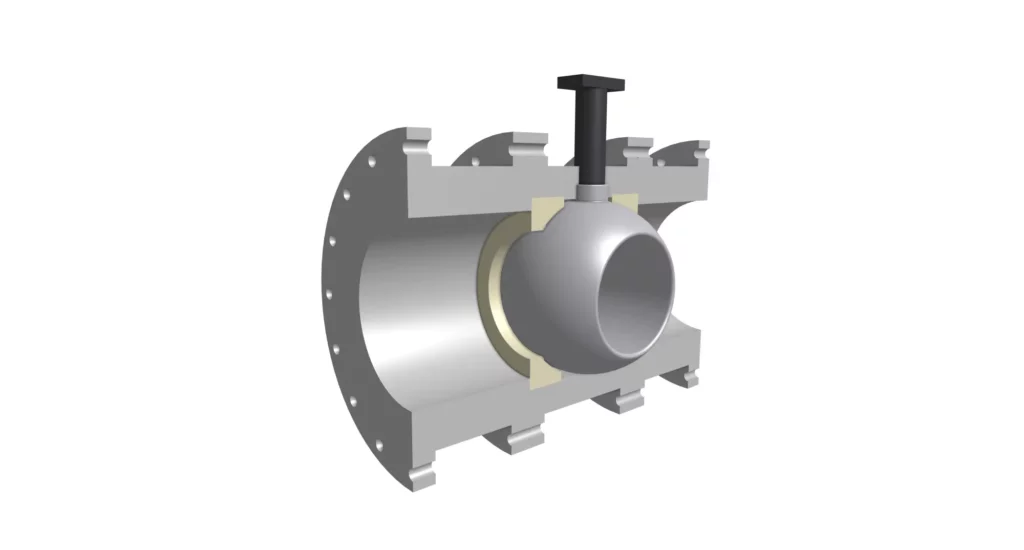
Valve bodies, seats, stems, stuffing components, cages, and trim components represent a major portion of oil and gas machining demand.
Surface finish requirements are often critical. For example, a sealing surface specified at Ra 0.4 μm but machined to Ra 1.6 μm may compromise sealing performance, increase leakage risk, and shorten service life.
Which materials used in oil and gas CNC machining
Material selection for oil and gas components is driven primarily by operating environment conditions rather than strength. Material weakness and fatigue risk can typically be fully compensated for by size/design. Temperature, pressure, chloride exposure, Hydrogen sulphide (H₂S), Carbon dioxide (CO₂), seawater contact, erosion, and fatigue loading are the drivers of material choice. Selecting the wrong alloy can result in corrosion, cracking, leakage, premature wear, or catastrophic failure.
The following alloy families dominate modern oil and gas machining applications.
Inconel and nickel superalloys
Nickel-based superalloys are among the most important materials in critical oil and gas applications.
Common grades include:
- Inconel 718
- Inconel 625
- Incoloy 825
These alloys are specified because they retain strength at elevated temperatures while providing exceptional corrosion resistance.
Inconel 718 is particularly common in:
- Downhole tools
- Subsea equipment
- Wellhead systems
- High-pressure valve components
Its popularity stems from a rare combination of:
- High-temperature strength retention
- Excellent fatigue resistance
- Corrosion resistance
- Resistance to sulphide stress cracking
The trade-off is machinability. Inconel generates high cutting forces, work hardens rapidly, and concentrates heat at the cutting edge, making it one of the most challenging raw materials in the CNC sector.
Duplex stainless steel
Duplex and super duplex stainless steels combine the corrosion resistance of austenitic stainless steels with the strength of ferritic grades, by integrating both firms in a single alloy.
Popular grades include:
- Duplex 2205
- Super Duplex 2507
These alloys are widely used in:
- Offshore equipment
- Subsea systems
- Valve bodies
- Pumps
- Pipeline equipment
Their resistance to chloride stress corrosion cracking makes them especially valuable in seawater environments.
Titanium alloys
Titanium alloys provide exceptional corrosion resistance combined with a high strength-to-weight ratio.
Common applications include:
- Subsea connectors
- Offshore instrumentation
- High-performance downhole tools
- Specialty valve components
Grade 5 Titanium (Ti-6Al-4V) remains the most widely used alloy.
Titanium performs exceptionally well in seawater and many corrosive chemical environments, although its low thermal conductivity and work hardening tendency create machining challenges similar to those encountered with Nickel alloys.
Monel
Monel alloys are Nickel-Copper materials renowned for their resistance to seawater and chemical corrosion.
Typical applications include:
- Marine equipment
- Offshore systems
- Pump shafts
- Valve trim
- Instrumentation components
Monel remains a preferred solution where chloride resistance is critical, although it entails all of the Nickel machining challenges other alloys suffer
High-strength carbon steels
Despite growing use of exotic alloys, Carbon and low-alloy steels remain the highest-volume materials in oil and gas.
Examples include:
- AISI 4140
- AISI 4340
- ASTM A105
- ASTM A350
These materials are commonly used in:
- Flanges
- Valve bodies
- Wellhead components
- Structural equipment
- Pressure-containing parts
When properly heat treated and protected, they provide excellent performance at a significantly lower cost than corrosion-resistant alloys. Where corrosion risks are low, these alloys offer excellent performance at significantly lower cost in both material and processing.
CNC machining technologies used in oil and gas
The complexity of oil and gas components frequently requires machining technologies beyond conventional three-axis milling and turning.
Many components contain compound angles, deep internal features, complex flow paths, or large dimensions that demand specialised equipment.
Multi-axis machining
Five-axis machining has become increasingly important throughout the sector.
Advantages include:
- Reduced setup requirements
- Improved positional accuracy
- Complex geometry production
- Better surface finish consistency
- Reduced lead times
Applications include:
- Impellers
- Valve trim
- Downhole tool bodies
- Subsea connectors
- Compressor components
For high-value components, five-axis machining often improves both quality and production efficiency and offers increased design freedom.
Deep hole drilling
Many oil and gas components contain long internal passages that cannot be produced using conventional drilling methods.
Deep hole drilling technologies include:
- Gun drilling
- BTA drilling
- Trepanning
Applications include:
- Drill collars
- Downhole tools
- Hydraulic manifolds
- Instrumentation housings
Maintaining straightness and surface finish over long depths is critical.
Heavy-duty turning and horizontal boring
Large oil and gas components frequently exceed the capacity of standard machining centres.
Heavy-duty turning and horizontal boring machines are used for:
- Valve bodies
- Wellhead equipment
- Large flanges
- Pump casings
- Pressure vessels
These machines provide the rigidity necessary to hybrid-machine large forgings and castings, while maintaining high dimensional accuracy.
Turn-mill centers
Turn-mill machines combine turning and milling operations within a single setup.
Benefits include:
- Reduced handling and setups
- Improved concentricity
- Faster production
- Better accuracy
Common applications include:
- Valve stems
- Flow-control components
- Downhole tool parts
- Instrumentation fittings
As component complexity increases, turn-mill technology continues to gain adoption throughout the industry.
Challenges in oil and gas machining
Oil and gas machining remains one of the most demanding sectors in precision manufacturing.
The industry faces challenges associated with operating conditions, compliance requirements, and evolving production technologies.
Extreme operating environments
Many machined components must survive combinations of:
- High pressure
- High temperature
- Corrosive chemicals
- Abrasive particle erosion
- Cyclic loading
A component failure can lead to:
- Production shutdowns
- Environmental incidents
- Safety hazards
- Regulatory investigations
Consequently, performance margins are often smaller than in other industries.
Precision and compliance requirements
Oil and gas machining is governed by extensive and overlapping standards and certification requirements.
Common standards include:
- API 6A
- API 6D
- API 17D
- ASME B16.34
- NACE MR0175 / ISO 15156
- ASTM material standards
Compliance frequently requires:
- Material traceability
- Heat treatment records
- Inspection reports
- Dimensional verification
- NDT documentation
The documentation package accompanying the component can be as important as the component itself.
Automation and advanced manufacturing
Manufacturers are under increasing pressure to improve quality while reducing lead times.
To achieve this, many suppliers are investing in:
- Automated, and even lights-out machining cells
- In-process probing
- Digital quality systems
- Predictive maintenance
- Advanced CAM software
- Real-time production monitoring
These technologies improve consistency and reduce errors, while supporting increasingly complex production requirements and meeting cost pressures.
Future trends in oil and gas machining
The future of the oil and gas sector CNC machining will be shaped by increasing performance demands, tighter compliance requirements, constant cost pressures, and accelerating manufacturing innovation.
Extreme operating environments
Energy production continues development of resources in more demanding and isolated environments.
Examples include:
- Ultra-deepwater fields
- High-pressure high-temperature (HPHT) wells
- Sour gas developments
- Arctic operations
- Fracking and oil-shale production
These applications will drive continued adoption of advanced alloys and higher-performance machining technologies.
Precision and compliance requirements
Regulatory expectations continue to increase. Future developments are likely to include:
- Greater digital traceability
- Enhanced supplier qualification
- Automated inspection reporting
- Expanded material verification requirements
Digital manufacturing records will increasingly become mandatory, rather than optional as they often are currently.
Automation and advanced manufacturing
Manufacturing technologies are advancing rapidly. Key developments include:
- AI-assisted process optimisation
- Digital twins
- Closed-loop machining
- Hybrid additive-subtractive manufacturing
- Automated inspection systems
These developments serve to reduce lead times while improving consistency and traceability.
For oil and gas operators, this translates into more reliable supply chains and faster access to critical components.
Conclusion
CNC machining remains fundamental to every stage of the oil and gas value chain. From exploration and development drilling systems and subsea equipment, to pipelines, compressors, valves, and refinery process equipment, precision-machined components enable safe, efficient, and reliable operation.
What distinguishes oil and gas machining from general precision manufacturing is the combination of extreme service conditions, demanding materials, rigorous certification requirements, and the often severe consequences of component failure. Success requires more than machining expertise alone. Material selection, traceability, quality management, standards compliance, and supplier communication all play critical roles.
For procurement teams, two sourcing scenarios deserve particular attention: emergency MRO requirements and prototype development programmes. In both cases, direct engagement with experienced machinists often determines whether a project succeeds or becomes an expensive cycle of delays and requalification.
As machining technology, automation, and digital manufacturing continue advancing, organisations that combine strong engineering practices with capable machining partners will be best positioned to meet the industry’s evolving demands.
Frequently Asked Questions
What certifications should an oil and gas CNC machining supplier have?
At minimum, suppliers should operate under a certified quality management system such as ISO 9001. Depending on the application, relevant certifications may include API Q1, API Monogram licensing, AS9100-derived quality controls, NACE compliance experience, and documented material traceability procedures. Suppliers should also be able to provide inspection reports, material certificates, and NDT documentation when required.
What does sour service mean, and why does it change material selection?
Sour service refers to environments containing hydrogen sulphide (H₂S). H₂S can cause sulphide stress cracking, hydrogen embrittlement, and other corrosion mechanisms that damage susceptible materials. NACE MR0175 / ISO 15156 establishes material selection requirements for these environments to minimise failure risk.
Why is Inconel 718 specified so often for downhole tools?
Inconel 718 combines high-temperature strength, corrosion resistance, fatigue resistance, and resistance to sulphide stress cracking. These properties make it suitable for demanding downhole environments where conventional steels may lose strength or suffer corrosion-related failures.
What is the difference between API Q1 and API Q2 for machining suppliers?
API Q1 establishes quality management requirements for manufacturers supplying oil and gas equipment. API Q2 expands the framework to service providers, focusing on risk management, contingency planning, service execution, and continuous improvement. Most machining suppliers are more commonly associated with API Q1 requirements.
Can you machine oil and gas parts to draw without prior industry experience?
Technically, many machining suppliers can manufacture components to print. However, oil and gas applications often involve specialised materials, certification requirements, traceability expectations, pressure-containing geometries, and industry-specific standards. Suppliers lacking relevant industry experience may produce dimensionally correct parts while overlooking critical compliance, documentation, or material qualification requirements.