
Most guides to the top precision manufacturing companies in 2026 sort by revenue or brand recognition. That tells engineers nothing about who can actually make their parts right. For teams evaluating the best CNC machining services or comparing digital sourcing services, the real question is capability fit rather than company size.
According to The Business Research Company, the global precision parts market is expected to reach around $350 billion in 2030. Aerospace and medical device demand drive most of that growth, with semiconductors adding pressure. That growth has expanded the options for precision parts suppliers, though it has also created more noise to cut through when evaluating partners.
This guide examines machine tool providers and component manufacturers, plus the digital sourcing networks that connect engineers to them. Most engineering teams need partners from at least one of these categories.
What counts as precision manufacturing?
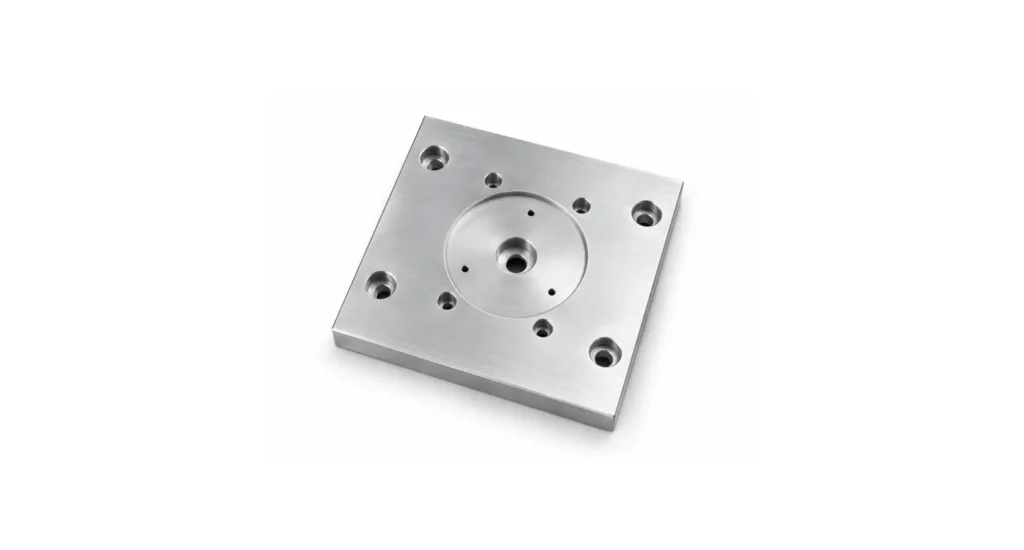
Precision manufacturing involves parts where tolerances get measured in microns and surface finishes directly impact function. In precision CNC machining, a few microns separate a working part from scrap. These components go into aircraft, medical devices, semiconductor equipment, and other applications where approximate results cause failures.
The ecosystem breaks into three categories: machine tool manufacturers who build CNC machines, grinders, and EDM equipment; component providers who run that equipment to deliver finished parts; and digital sourcing networks that connect buyers with manufacturers while handling quoting and ordering logistics.
Tolerance expectations by industry
| Industry | Typical Tolerances | Key Certifications |
|---|---|---|
| Aerospace | ±0.001mm to ±0.01mm | AS9100, NADCAP |
| Medical Devices | ±0.005mm to ±0.02mm | ISO 13485, FDA registration |
| Semiconductors | ±0.001mm to ±0.005mm | ISO 14644 (cleanroom) |
| Automotive | ±0.01mm to ±0.05mm | IATF 16949 |
| Industrial Equipment | ±0.02mm to ±0.1mm | ISO 9001 |
These ranges help calibrate whether a potential supplier operates at the capability level your application requires. Before you compare shops, define part tolerances that reflect function rather than habit. Jiga, your custom manufacturing arm, lets you filter its qualified network by certification and capability level to match specific industry requirements
Machine tool providers
Understanding what machines a supplier runs reveals what they can realistically achieve, which matters when evaluating quotes for complex geometry.
DMG Mori emerged from merging German and Japanese machine tool expertise, producing everything from basic CNC mills to ultrasonic and laser machining systems. Mazak builds multi-tasking machines that combine turning and milling, reducing setups and error opportunities.
Makino maintains a strong reputation in high-speed machining and EDM for mold shops and aerospace facilities. Haas Automation offers American-made machines at accessible prices, letting smaller shops build genuine capability.
On the automation side, FANUC, ABB, and KUKA dominate robotic part handling, machine tending, and inspection cells.
Component manufacturers
Contract manufacturers such as Jabil and Flex operate globally for high-volume programs where scale drives cost advantages.
Most engineers work at smaller scales, where mid-sized specialists become relevant. Aerospace specialists including Barnes Group, Heico, and Ducommun serve Tier 1 and OEM supply chains with required certifications and traceability.
Medical device specialists such as Integer Holdings and Tecomet deliver ISO 13485 compliance and validation documentation. Semiconductor equipment specialists like Ultra Clean Holdings manufacture ultra-high-purity components for fab equipment.
Regional precision shops often deliver quality that larger shops cannot match within their particular niche. The real work is matching requirements to capability levels.
Shops optimized for high-volume automotive may lack process controls for medical work. Boutique aerospace specialists, meanwhile, may charge premiums that make no sense for less-demanding parts.
Jiga, working as your in-house resource, shows supplier capabilities, equipment lists, and certifications upfront. That simplifies matching compared to algorithm-based alternatives.
How we ranked the top precision manufacturing companies for 2026
This section ranks companies on capability fit rather than revenue or brand
recognition. Five questions drive the evaluation:
- Does the shop hold the certifications the industry requires?
- Is its tolerance track record backed by inspection data rather than claims?
- Has the shop run your alloys and plastics before?
- How fast and how technical are its answers during quoting?
- Does the shop hold up from prototype through production?
Jiga applies the same lens to its own qualified network, auditing suppliers continuously and removing them when performance drifts.
Online CNC machining comparison: Digital sourcing services
Digital sourcing services promised simpler sourcing through file uploads and automated quoting. In practice they behave very differently, and the differences matter more than a feature chart shows.
Jiga
Most online sourcing runs as a black box, hiding who actually makes your parts. Jiga takes the opposite approach: you see which shops quote your work and message them directly about tolerances or material questions.
You keep going back to the shops that deliver. That continuity matters more than buyers realize, until they order the same part three times from a black-box broker and get three different results.
The supplier network spans CNC machining, sheet metal, injection molding, and 3D printing with shops across the US, Europe, and Asia. It supports aerospace, defense, and robotics programs, with named customers including NASA, Siemens, Collins Aerospace, and Zipline.
Jiga qualifies suppliers for quality systems, equipment capability, and delivery history. DFM conversations happen with the machinist cutting your part, so technical questions reach the person who can actually answer them.
Production experts and program managers monitor orders directly, staffed by real people rather than chatbots or offshore teams. They catch quality issues and delivery risks before parts ship. They also coordinate with suppliers when schedules slip and own the outcome in ways that upload-and-hope services do not.
Jiga is the supplier of record too, with one contract and one point of accountability. Teams running supply chains without dedicated procurement can take a part from prototype through production with the same shop and the same expectations.
No re-sourcing when quantities increase. No headcount added to manage vendor paperwork.
Complex parts needing real DFM collaboration are where this model shines. Straightforward geometry with loose tolerances? Automated quoting works fine for those.
But there are harder questions: whether an internal corner radius is achievable, or whether switching alloys saves money without compromising function. Talking to the person making your part beats an algorithm every time
Fictiv
Fictiv operates a managed network model with quality controls and fast turnaround, handling quoting and supplier matching with options for inspection reports and material certifications. Communication goes through the portal rather than directly to suppliers, which suits standard parts but can create friction for precision work requiring detailed engineering discussion.
Protolabs
Protolabs pioneered the upload-and-quote model with owned manufacturing facilities in the US, Europe, and Japan, providing tight control over quality and turnaround. Automated DFM feedback catches issues before production on straightforward parts, though complex parts requiring engineering discussion can be harder to manage through self-service interfaces.
Xometry

Xometry runs an algorithm-driven broker network connecting engineers with manufacturers across CNC, 3D printing, sheet metal, and injection molding. Broad capability coverage provides convenience, though the broker model means supplier quality varies. Inspection options help ensure requirements get communicated clearly for precision work.
Hubs (Protolabs network)

Hubs is a manufacturing network with automated quoting, offering broad process coverage and competitive pricing. Automatic supplier selection streamlines ordering but reduces visibility into who actually makes parts.
RapidDirect

RapidDirect focuses on Asian manufacturing with pricing lower than domestic options for cost-sensitive projects with timeline flexibility. Factor shipping times and timezone differences when planning, because complex precision work requiring frequent communication becomes difficult across twelve-hour time differences.
Star Rapid

Star Rapid runs manufacturing facilities in China with Western management and quality systems. It bridges domestic quality expectations and Asian manufacturing economics, with strength in rapid tooling and low-volume injection molding.
SendCutSend

SendCutSend specializes in flat parts through laser cutting, waterjet, and CNC bending. The focused scope enables streamlined ordering and fast turnaround within that specialty.
Platform comparison
| Platform | Model | Best For | Communication | Inspection Options | Geographic Coverage |
|---|---|---|---|---|---|
| Jiga | Vetted network | Direct supplier access, complex parts | Direct with supplier | Full reports available | US, Asia, Europe |
| Fictiv | Managed network | Hands-off sourcing | Through platform | Standard included | US, Asia |
| Protolabs | Owned facilities | Speed, standard parts | Through platform | Add-on options | US, Europe, Japan |
| Xometry | Marketplace | Broad capabilities | Through platform | Add-on options | US, Europe, Asia |
| Hubs | Automated network | Price-conscious orders | Through platform | Add-on options | Global |
| RapidDirect | Managed network | Cost savings | Through platform | Standard included | China-based |
| Star Rapid | Owned facilities | Tooling, low-volume molding | Direct available | Full reports available | China-based |
| SendCutSend | Owned facilities | Flat parts only | Through platform | Limited | US |
Matching platforms to project types
Different project requirements suit different platform sourcing models. This breakdown helps identify which CNC machining services align with specific use cases.
- For prototyping with tight timelines, Protolabs and SendCutSend offer the fastest turnaround through owned facilities with predictable capacity. Expect premium pricing for speed.
- For complex precision parts that require DFM collaboration, iga provides direct supplier communication. You work through tolerance and material questions before optimizing the design for production. This matters when parts require iteration.
- For high-volume production runs, Fictiv and Jiga both handle production quantities with qualified supplier networks. Jiga offers supplier continuity for repeat orders while Fictiv provides managed oversight.
- For budget-conscious projects with flexible timelines: apidDirect and Star Rapid offer cost savings through Asian manufacturing, well below domestic pricing on comparable work
- For simple, well-defined parts: Xometry and Hubs work well when parts need little discussion and automated quoting speeds procurement. Algorithm-based matching suits straightforward geometry.
- For mixed process requirements: Xometry covers the broadest range of processes in one place. That helps teams ordering diverse part types across CNC, 3D printing, and sheet metal.
How much does precision CNC Machining cost?
Pricing varies significantly based on complexity, material, tolerances, quantity, and turnaround requirements. These ranges provide general guidance for budgeting purposes.
Prototype quantities (1-10 parts):
- Simple CNC parts: $75-300 per part.
- Complex geometry or tight tolerances: $200-800 per part.
- Multi-axis machining: $300-1,500+ per part.
Low-volume production (10-100 parts):
- Standard materials and tolerances: $30-150 per part.
- Precision work with inspection: $75-400 per part.
Production quantities (100+ parts):
- Per-part costs drop 40-70% from prototype pricing.
- Setup costs amortize across volume.
- Typical range: $10-100 per part depending on complexity.
Cost factors that increase pricing:
- Tighter tolerances (±0.001″ vs ±0.005″ can double cost).
- Exotic materials (titanium, Inconel, medical-grade plastics).
- Secondary operations (anodizing, plating, heat treatment).
- Expedited turnaround (rush fees of 25-100%).
- Domestic vs overseas (US manufacturing typically 30-50% higher than Asian alternatives).
- Inspection and documentation requirements.
Pricing also differs by sourcing model. Owned-facility providers like Protolabs often price higher but include quality controls. Broker networks vary based on which supplier wins the job.
Jiga, as a qualified network, shows quotes from multiple suppliers. That lets you compare cost while keeping visibility into who provides each quote.
For accurate budgeting, submit actual CAD files for quotes rather than relying on estimates. Quote turnaround varies by supplier and part complexity, and Jiga’s focus stays on on-time, on-spec delivery rather than quote speed.
Why repeat orders come back inconsistent
Engineers order identical parts multiple times from auction-style brokers and get noticeably different results. Jobs route to whoever bid lowest that week, which means different machines and operators, and inconsistent outcomes.
Owned-facility providers like Protolabs address this through vertical integration, using the same machines and operators. Jiga solves it as a qualified network by revealing who made parts, allowing repeat orders from high-performing shops. Users can restrict accounts to show quotes only from preferred suppliers.
Black-box brokers hide supplier identity, which makes consistency difficult. Requesting the same shop is impossible when you never learn who made the previous parts.
Quality verification
Dimensional inspection should include CMM reports for critical tolerances, with clarity on whether suppliers use in-process or only final inspection. Surface finish verification matters for sealing surfaces and wear components. Material certification should trace to material suppliers, which becomes mandatory for aerospace and medical work.
First article inspection reports, especially AS9102-compliant ones for aerospace, document that production matches design intent. Statistical process control data helps confirm process stability on production runs.
Some services include full inspection reports automatically, with Jiga suppliers typically providing dimensional reports before parts leave shops for approval. Others charge premiums for basic dimensional verification.
2026 Industry trends
Reshoring and nearshoring have moved from discussion to budget line items as companies qualify domestic and Mexico-based suppliers for critical components. According to the Reshoring Initiative, reshoring and foreign direct investment accounted for 244,000 announced U.S. manufacturing jobs in 2024.
Services offering access to suppliers across multiple regions, with visibility into manufacturing locations, help teams build geographic diversity. Jiga’s network spans US, European, and Asian suppliers, allowing selection based on lead time, cost, and risk tolerance per project.
ITAR and CMMC compliance have become table stakes for defense and aerospace work. Engineering teams that once treated compliance as a nice-to-have now find it is a hard requirement for government contracts and defense primes. Domestic-only supplier networks with proper registration and handling procedures are no longer optional for this work.
Jiga maintains ITAR-registered suppliers and compliance infrastructure for teams facing these requirements. A single non-compliant supplier in your chain can disqualify an entire program.
Supply chain diversification has become standard practice. Engineering teams qualify backup sources even when primary suppliers perform well. The days of single-sourcing critical components and hoping for the best are over.
Digital sourcing networks continue taking share from traditional job-shop relationships as teams appreciate the reduced overhead of managing multiple suppliers. Machinist shortages push automation adoption, making lights-out manufacturing and automated inspection capabilities worth evaluating in potential suppliers.
How to choose a CNC Machining service provider
Start with an honest assessment of which tolerances matter for function versus cautious specification, which certifications your customer or industry requires, and realistic volume expectations.
Certifications like ISO 9001, AS9100, or ISO 13485 provide baseline quality-system assurance. Certification alone does not guarantee a shop can hold specific tolerances on specific materials. Request sample inspection reports and run firstarticle inspection before committing to volume on critical parts.
When evaluating precision parts suppliers, work through five checks:
- Confirm the shop has the right machines for your geometry, such as 5-axis machines for complex parts and Swiss machines for small turned components.
- Ask about the shop’s experience with your specific materials, especially exotic alloys or engineering plastics.
- Request sample inspection reports that demonstrate capability at your required precision levels.
- Test response times during quoting to gauge how production communication will run.
- Confirm the shop will suggest design improvements that reduce cost or
improve manufacturability.
For complex precision work, direct machinist communication often determines whether parts work or require expensive rework. Jiga enables direct shop messaging, equipment and experience inquiries, and DFM discussion before order commitment. With Jiga, you can develop preferred suppliers you return to repeatedly, combining trusted local shop relationships with digital sourcing convenience.
What engineers want from a sourcing partner
Engineers keep naming the same sourcing frustrations. They want direct conversations with machinists during quoting. They want to keep good suppliers instead of drawing random assignments, and they want to see who quotes their work.
Jiga is built around this: it puts you in direct contact with the shops making your parts rather than intermediating every exchange. Some engineers still prefer a hands-off approach for simple, well-defined parts. Uploading files and receiving results can suit that workflow better than managing more supplier relationships.
Choosing a sourcing model for precision parts
For straightforward parts, digital sourcing simplifies procurement effectively. For precision work requiring collaboration, losing direct contact with the people who can answer technical questions leads to rework and delays.
High-volume standard parts suit owned-facility providers like Protolabs for speed and consistency. Cost-sensitive projects with timeline flexibility benefit from Asian manufacturing through managed networks. Complex precision work requiring iteration and tight tolerances demands direct supplier access over automated quoting, which is where Jiga’s approach delivers value.
The most effective sourcing networks connect engineers with capable suppliers, then step back, enabling partnerships that deliver consistent quality over time.