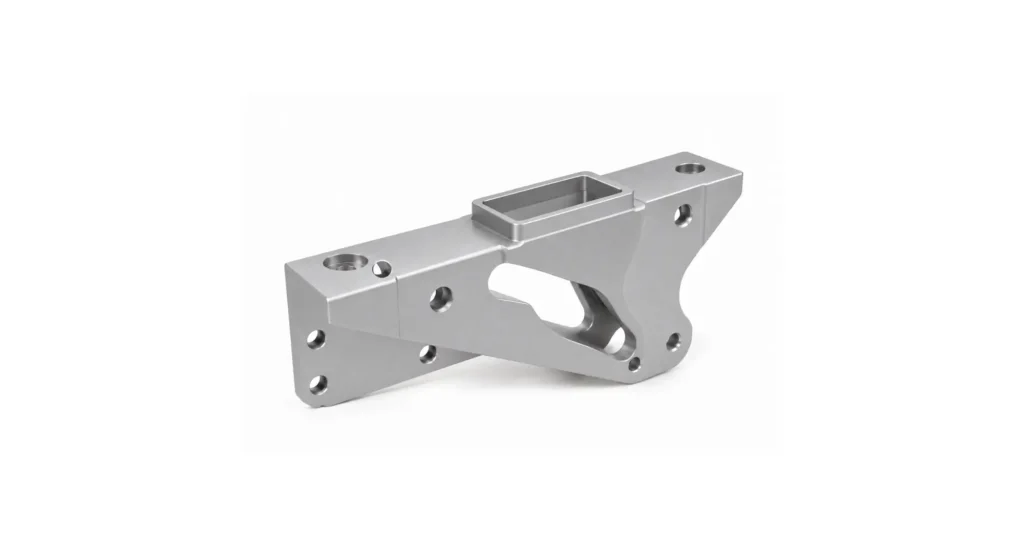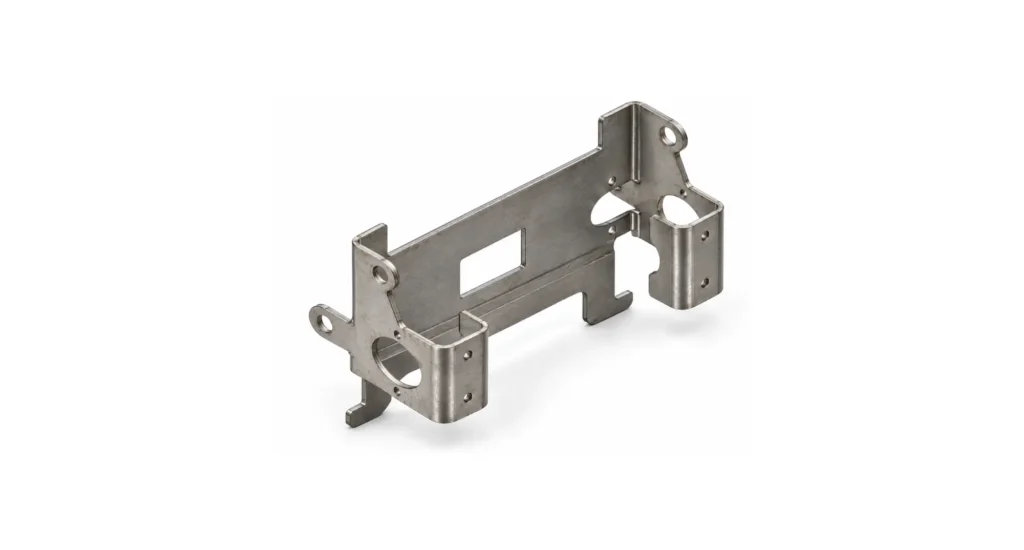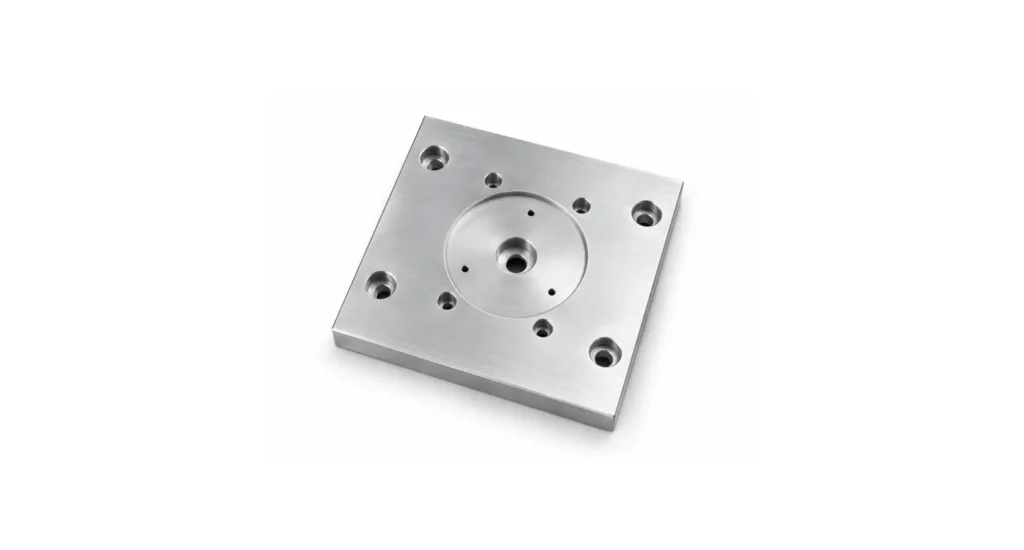
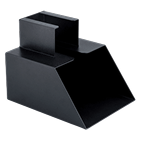
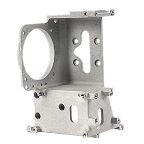
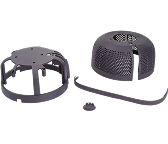
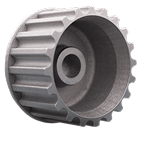
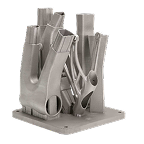
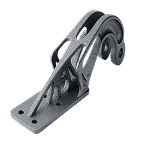

EDM is now a widespread option in many operations, removing material using closely controlled electrical discharges between an electrode and a conductive workpiece submerged in a dielectric fluid. Instead of cutting with mechanical force, EDM uses the thermal energy resulting from electrical discharge to locally vaporize and erode microscopic volumes of material.
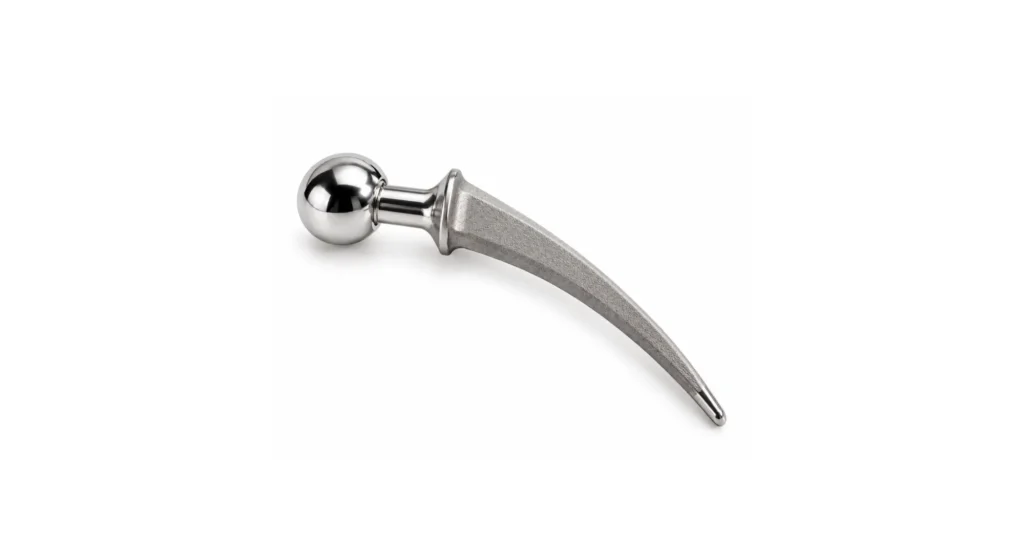
EDM has become increasingly indispensable in precision manufacturing of highly custom parts, typically allowing extraction of parts from material that is too hard, too delicate, or too geometrically complex for conventional cutter processes. In applications as diverse as turbine blades and injection mold cavities, surgical instruments and jet/rocket engine components, EDM extracts shapes and finishes that are otherwise impossible by CNC mechanical cutting. In some cases, 3D printing can be competitive, although surface finishes require post processing and precision is typically much lower.
EDM is possible in various forms, the main two being;
- Wire-cut EDM, in which a wire electrode cycles through a slot and erodes the leading face to act as a high-precision bandsaw


- Sinker EDM, in which a precision machined Carbon, Copper or Copper/Tungsten electrode erodes the entire face of a complex cavity in a single action.

Key takeaways
- Precision in material removal: EDM delivers tight tolerances and can support intricate geometries that conventional methods cannot achieve.
- Hard material capability: Ideal for hardened steels, superalloys, and other difficult-to-machine materials.
- Non-contact process: Banishes mechanical process stress, cutting induced distortion, and localized heat-warping of the workpiece.
- Complex shapes are enabled: Sharp internal corners, cavities, and micro features are achievable.
- Surface finish control: Fine surface finishes are possible.
- Limitations: Slower material removal rates, electrode erosion, and dielectric management require careful planning.
- Informed choice: Selecting EDM over alternative processes depends on material hardness, geometry complexity, and precision requirements.
How does Electrical Discharge Machining work?
The principle of EDM transforms electrical energy into thermal energy to remove material. Each spark acts like a microscopic plasma explosion, creating a temperature zone above 10,000°C at the discharge point, sufficient to melt and vaporize localized regions in the hardest and most resilient (conductive) materials.
The process eliminates classical tool wear or chatter, allowing precision outcomes in machining materials of extreme hardness. For example, the ability to directly machine tooling parts in fully hardened steel removes the need for heat treatment after machining – and the localized and gross distortions this can introduce. It’s particularly applicable to high-value, low-volume production, micro-machining, and tight-tolerance applications where accuracy, surface finish, and repeatability matter most.
Step-by-step process
- Setup and submersion:
The electrically conductive workpiece and erosion-tool electrode are submerged in a dielectric fluid such as deionized water, paraffin or other hydrocarbon oil. This fluid insulates the gap, flushes debris, and cools the eroded region. - Spark-gap formation:
The machine’s servo system maintains a microscopic gap (typically 10–50 microns) between the tool and workpiece. A constant voltage is applied across the gap. - Spark generation:
When the electric field exceeds the dielectric’s breakdown voltage, it ionizes a tiny channel of fluid, forming a plasma. A spark jumps the gap, melting/vaporizing a small controlled area of the workpiece surface. - Material removal:
The metal is mostly vaporized instantaneously and ejected by the expanding plasma bubble and dielectric pressure. Each spark removes a volume of 0.001 to 0.01 mm³, depending on spark parameters, gap and dielectric strength. - Repetition and flushing:
This discharge process repeats thousands of times per second. The dielectric fluid flushes residues of eroded material (known as “swarf”), while the machine controller assesses the spark status and adjusts the gap dynamically, to ensure stable sparking. - Cooling and solidification:
The dielectric cools the surface immediately after discharge, minimizing residual stress and creating a characteristic crater pattern that contributes to EDM’s typical surface texture.
Role of the Dielectric Fluid
The dielectric medium is both a coolant and a key control element in EDM. It determines spark consistency, surface finish, and erosion rate by:
- Insulation, which prevents premature arcing outside the chosen machining parameters.
- Ionization, which allows controlled spark formation/tunneling when the voltage threshold is achieved.
- Flushing, which removes debris that would otherwise cause short-circuiting or unstable discharge.
- Cooling, which reduces thermal stress to negligible levels, preventing microcracks or excessive heat-affected zones.
| Dielectric Type | Typical Application | Advantages |
|---|---|---|
| Deionized water | Wire EDM | Clean, good flushing, non-flammable |
| Paraffin and other hydrocarbon oils | Sinker EDM | Excellent surface finish, stable discharge |
| Synthetic dielectrics | Micro-EDM | Controlled conductivity, reduced wear |
Servo Control and Spark Gap Monitoring
Modern EDM machines rely on closed-loop servo systems to maintain optimal gap distance. Where the electrode sits too close to the surface, short circuits occur; too far and sparks fail to form. The servo continuously adjusts electrode position using closed loop control driven to maintain gap voltage and discharge frequency within the required parameters.
Advanced systems employ adaptive gap monitoring, where real-time data from voltage, current, and acoustic sensors ensures more consistent material removal, even under variable flushing conditions.
Effective gap control ensures:
- Stable spark formation
- Minimal tool erosion
- Improved surface integrity
- Reduced downtime due to wire or electrode failure/erosion
Material Removal Rate (MRR) and surface quality
Material removal rate in EDM depends on spark energy (voltage, current), discharge frequency, and electrode material. Coarse machining uses higher current and longer pulse durations for faster erosion, while finishing uses restricted arc pulses to achieve smoother surface finish and therefore closer tolerances.
Typical surface roughness values range from Ra 0.1 – 3 µm, with high-end systems capable of mirror-like finishes (< 0.05µm Ra) for die and mold applications.
Key components of EDM systems
An EDM system is an integrated electro-mechanical setup where every element contributes to controlled spark erosion. Performance depends on the precision, responsiveness, and cleanliness of these subsystems.
| Component | Function | Design Notes |
|---|---|---|
| Electrode / Tool | Acts as the spark-emitting counterpart to the workpiece. | Shape is inverse of the cavity; must balance wear rate and conductivity. |
| Power Supply and Pulse Generator | Delivers controlled voltage/current pulses to form discharges. | Determines removal rate, surface quality, and thermal load. |
| Dielectric Fluid System | Immerses and cools both parts while flushing debris. | Cleanliness and filtration are critical for spark stability. |
| Servo Control and Gap Monitoring | Maintains spark gap (10–50 µm) dynamically. | Prevents shorting and optimizes discharge frequency. |
| Motion Control / CNC Unit | Guides electrode or wire path with micron-scale precision. | Enables complex contours and 3-axis or 5-axis control. |
Electrodes and Electrode materials
Electrode choice affects wear, accuracy, and surface quality.
- Graphite: High removal rate and low wear in roughing.
- Copper: Excellent finish and low-energy stability.
- Copper-Tungsten: Combines toughness and arc resistance for fine features.
Electrode wear ratio (EWR) can range from 0.1 % – 10 %, depending on current density and polarity.
Power Supply and Pulse Generator
The pulse generator shapes electrical energy into precise bursts (of a few microseconds duration). Adjustable parameters are peak current, pulse duration, and duty cycle and they define the trade-off between speed and finish. Modern systems typically use digital pulse generators and power amplifiers to ensure repeatability, reduce stray-arcing, and extend to electrode life.
Dielectric Fluid system
In addition to insulation and flushing, well managed dielectric fluid influences both surface micro-topography and material recast layering. Filters of 1–5 µm screening, plus tightly controlled temperature prevent contamination with what are essentially combustion residues. Automatic flushing jets or vacuum ports keep the discharge zone clear, which is particularly critical for narrow cavities or deep slots.
Servo Control and Gap Monitoring
High-speed digital servos evaluate gap voltage every few microseconds, generating a position correction for the electrode to maintain optimal spark conditions. The more advanced machines apply adaptive algorithms that self-learn flushing efficiency, improving MRR significantly.
Advantages of Electrical Discharge Machining
Despite lower removal rates than rotating cutter processes, EDM remains unmatched for its non-dependance on hardness, geometric freedom, and precision.
Material Hardness Independence
EDM works on any electrically conductive material – regardless of hardness. This includes tool steels, Inconel, Titanium, Tungsten carbide, and pre-hardened mold cavities. This allows EDM to obviate the mechanical limitations of milling or drilling super-hard alloys, which are otherwise intrinsically limiting and make many operations either very expensive or impossible.
Complex geometries and tight tolerances
EDM’s operational basis in micro-erosion allows intricacy of features that no other process can offer. This equips manufacture of highly detailed cavities, sharp internal corners, and high aspect-ratio ribs that rotating tools simply cannot achieve. Dimensional tolerances of ±2–5µm are achievable with finishing passes, such that component engagements can be so precise that they are barely visible to unaided vision.
No mechanical cutting forces
Because no tool tool contact is involved, no simple/large mechanical pressure is exerted in the cutting. As a result, very fragile and thin-walled parts can be machined without distortion or flexibility-induced chatter, rendering EDM ideal for micro-features and extremely fine components.
Superior surface finish capabilities
Surface roughness can be tuned from Ra 3 µm (roughing) to Ra 0.05 µm (equivalent to super-finishing) simply by adjusting pulse energy and accepting increased processing time. EDM produces surfaces that possess a compressive residual stress layer resulting from the plasma pressure and sudden cooling. This increases the fatigue resistance of stressed surfaces, reducing galling and spalling.
EDM Process Variants and Operating Principles
| EDM Variant | Typical Application | Material Thickness | Precision | Notes |
|---|---|---|---|---|
| Wire EDM (WEDM) | Cutting profiles, punches, dies | Up to 300 mm | ± 2 µm | Uses continuously fed wire; ideal for 2D outlines and precision tooling |
| Sinker / Die-Sinking EDM | Cavities, molds, blind holes | Up to 500 mm | ± 5 µm | Electrode shaped to cavity; uses oil dielectric |
| Fast-Hole EDM | Cooling holes, turbine blades | 0.1 – 5 mm dia | ± 20 µm | Rapid drilling using rotating tubular electrode |
| Micro-EDM | Watch parts, nozzles, micro-molds | < 1 mm features | ± 1 µm | Extremely low-energy pulses; high precision but slow |
Wire Electrical Discharge Machining (WEDM)
WireEDM employs a thin brass or coated-wire electrode (0.05 – 0.3 mm dia) that continuously spools between two guides. As the wire moves, the CNC path defines the toolpath to be followed to perform the cut, producing kerf-free cuts on any conductive material, irrespective of hardness. Multi-pass cutting refines accuracy and finish.
Sinker EDM (Die-Sinking or Ram EDM)
A shaped electrode is used, machined from a variety of materials – typically Carbon (graphite), Copper, Tungsten or Copper/Tungsten alloy. This electrode plunges uniaxially into the workpiece to form 3D cavities. This approach is widely used in mold and die industries to produce precise cavity forms in pre-hardened steel, requiring no post machining hardening with the associated distortion risks. In general, oil-based or synthetic dielectrics yield excellent finishes. Sinker EDMs employ multi-axis positioning and highly durable electrodes, for faster erosion and low electrode degradation through long cycling.
Fast-Hole Drilling EDM
This high-speed variant creates deep, narrow holes for turbine blades, fuel injectors, and cooling channels. The rotating tubular electrode delivers pressurized dielectric through its core, flushing debris continuously. Typical penetration rates of 1–2 mm/s in Inconel 718 are described – which for a high precision operation in a very challenging material is fast.
Micro-EDM
Micro-EDM extends the concept into the micron range, achieving hole diameters below 100 µm and surface finishes near optical quality. Used in biomedical stents, micro-molds, and fine injector nozzles, these results outperform even laser drilling in single step precision. This requires ultraprecise pulse control (< 1 µs), vibration-isolated platforms and typically specialist equipment and skills in setup and operation.
Applications across Industry
EDM is widely used in sectors where precision, complex geometries, and hard-to-machine materials are critical:
- Aerospace: Ideal for cutting superalloys, Tungsten, and Titanium components for engines, turbines, and structural parts. EDM achieves high precision and profile complexity without inducing mechanical stress.
- Automotive: Used to manufacture intricate fuel system components, molds, and dies – particularly suited to tools requiring sharp corners and tight tolerances, such as fuel system components.
- Medical: Manufactures surgical instruments, implants, and micro-scale devices with exacting tolerances and smooth finishes.
- Electronics: Enables fabrication of fine connectors, housings, and microelectromechanical systems (MEMS).
- Tool and Die Making: Essential for complex molds, punches, and dies with sharp internal corners and cavities.
- Prototyping and Custom Parts: Provides flexibility for low-volume or custom components without extensive tooling changes.
EDM vs. Aternative processes
- Conventional Milling/Turning: Best for softer metals and high-volume production. Limited capability for hard alloys or complex internal geometries. Fast material removal but cannot achieve fine internal corners.
- Laser Cutting: Non-contact, precise, and fast for thin materials. Can create significant heat-affected zones; not suitable for thick metal parts without considerable post processing.
- Abrasive Waterjet Cutting: Alternative to wireEDM. Works on many materials, including composites. Cannot achieve the tight tolerances or sharp internal geometries EDM provides and offers no depth control – though cut only.
- EDM: Excels with hard materials, complex geometries, and fine tolerances. Slower material removal, requires careful electrode management for position and feature erosion, and may leave a recast layer.
Design for Manufacture to Aid EDM processing
Design for Manufacturability (DFM) guidelines for Electrical Discharge Machining generally focus on ensuring that parts can be efficiently and accurately produced while minimizing cost, probability of tool erosion, and setup complexity.
Key DFM considerations include feature accessibility and electrode design.
- Ensure sufficient clearance for the electrode and flushing channels to remove debris and maintain spark stability.
- Corner radii should be slightly larger than the minimum electrode size to prevent excessive tool wear or arcing.
- Designers should aim to maintain consistent part thickness and include start holes for wire threading when internal cutouts are required.
- Avoid overly deep cavities in sinker EDM; or overly thin walls in wireEDM that can lead to wire deflection or unstable erosion.
- Specify tolerances realistically – EDM can achieve micrometer precision, but unnecessarily tight tolerances increase machining time and cost. Surface finish requirements should aim to match functional needs, as finer finishes require slower, multi-pass cutting.
By integrating these DFM principles in the design phase, manufacture can fully leverage EDM’s strengths – precision, material versatility, hardness versatility, and geometric complexity – while optimizing cost and manufacturability.
Troubleshooting common EDM problems
- Excessive Electrode Wear: Use wear-resistant electrodes, reduce current, and optimize pulse duration.
- Poor Surface Finish: Clean dielectric fluid, reduce current, and adjust pulse frequency.
- Short Circuits: Check electrode alignment, maintain proper gap, confirm and replace contaminated fluid.
- Slow Material Removal: Adjust pulse on/off ratio, electrode geometry, and spark energy.
- Cracks or Thermal Damage: Lower discharge energy, use flushing to remove debris and increase cooling.
- Dimensional Inaccuracy: Monitor electrode wear compensation and machine calibration.
- Wire Breakage (Wire EDM): Adjust tension, speed, and flushing; ensure correct wire material.
- Excessive Recast Layer: Reduce discharge energy or perform finishing passes.
- Dielectric Fluid Issues: Filter and replace fluid regularly; check conductivity and viscosity.
- Arc Stability Problems: Maintain proper electrode gap, remove debris, and monitor machine parameters.
Conclusion
Electrical Discharge Machining is an increasingly critical cornerstone of the leading edge of precision manufacturing, bridging the gap between what is design-desirable and what can be practically achieved in metal cutting. The ability to shape hard-to-machine materials, form complex internal geometries, and maintain micron-level accuracy makes it indispensable.
From turbine blades and injection molds to surgical instruments and micro-electronic components, EDM equips engineers to create parts that defy the limitations of conventional machining.
By understanding EDM’s principles, advantages, and challenges, manufacturers can unlock greatly improved precision and repeatability, longer tool life, and lower overall production costs in the most difficult parts. Material innovation and design complexity innovation are expanded by EDM.
Ultimately, EDM is not merely a specialized technique, it’s a strategic enabler of next-generation engineering, delivering the precision, flexibility, and performance required to meet the demands of advanced industries worldwide.