
Injection molding and extrusion are two of the most widely used plastic manufacturing processes, but they solve fundamentally different problems with virtually no overlap – almost no part that is appropriate for extrusion offers a practical and cost-effective route to injection molding.
A plastic manufacturing process comparison is a complex task, but these two processes exist on a continuum that must be well understood by designers.
Injection molding produces discrete, fully formed and finished net-shape parts, of potentially high complexity, by injecting molten plastic into a closed mold cavity. Extrusion produces continuous, uniform cross-section profiles by forcing plastic through a shaped die. injection molding vs extrusion cost is a complex comparison, but in cases where the processes are interchangeable, extrusion is considerably more cost effective.
For engineers and product designers, the choice is usually dictated by part geometry, production volume, functionality, and tolerance requirements. Understanding how each process works – and where its economic and technical limits lie – makes it simple to select the right method early and avoid costly confusion.
Key takeaways
- Injection molding creates complex 3D parts by pressure-forcing molten polymer into closed mold cavities; extrusion creates continuous 2D profiles by pushing hot polymer through a die.
- Injection molding suits high-volume production of detailed, precise parts like housings, cosmetic parts, consumables, and functional component.
- Extrusion suits continuous profiles with uniform cross-sections such as pipes, tubing, window frames, and sheets.
- Extrusion tooling costs are typically 80-90% lower than injection molding, but injection molding enables tighter tolerances and complex features.
- Geometry is decisive: discrete 3D parts favor injection molding; continuous, essentially 2D profiles favor extrusion.
What is Injection Molding?
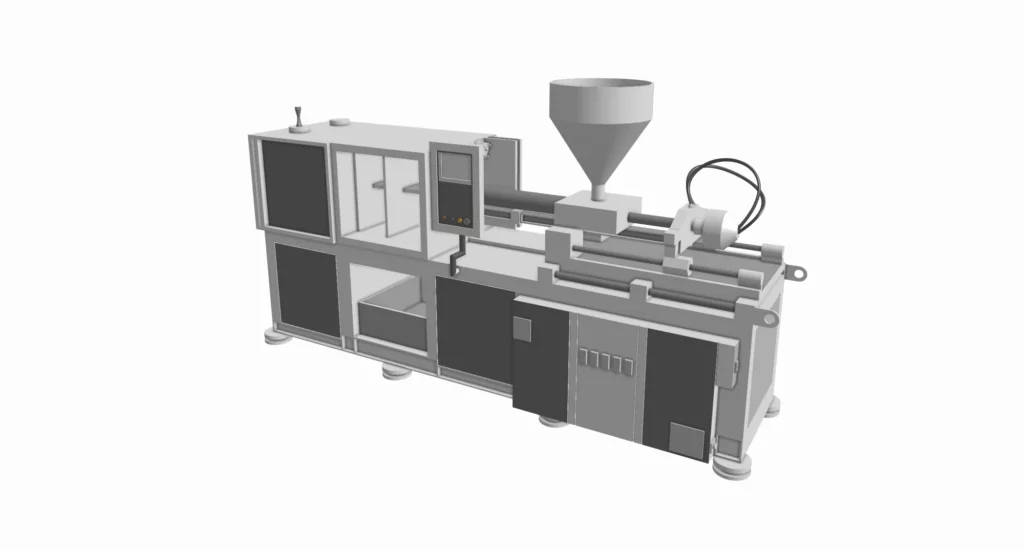
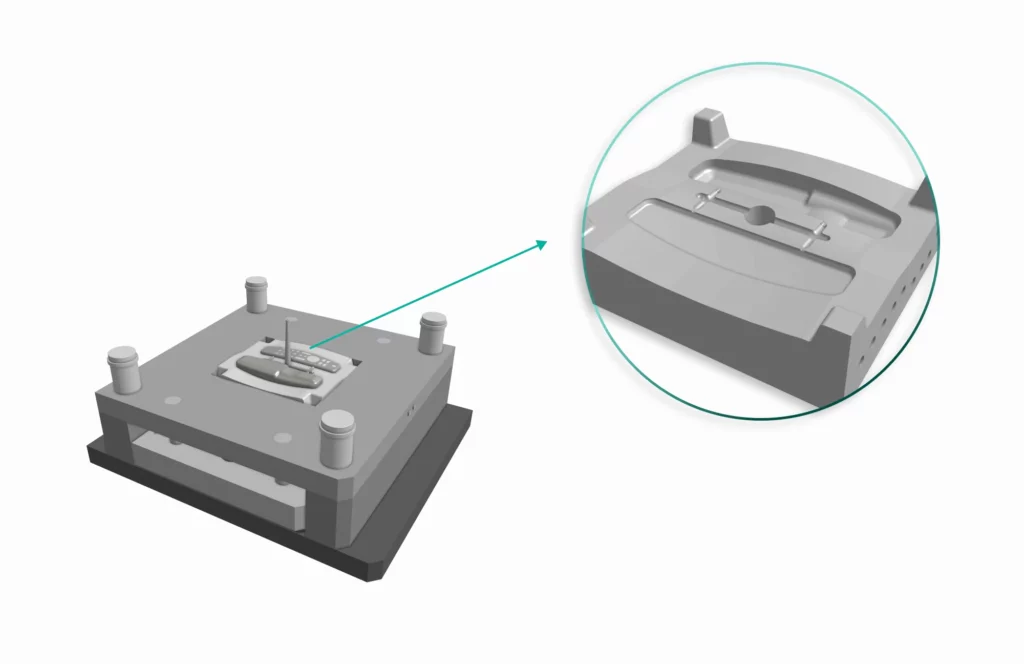
Injection molding is a batch manufacturing process where molten plastic is injected under high pressure into a closed mold cavity. The mold tool – typically made from hardened steel – defines the complete 3D geometry of the part. Pressure is retained through cooling, to counteract shrinkage, and after the plastic cools and solidifies, the mold opens and the part is ejected before the cycle repeats.
This cyclical process enables high repeatability and excellent dimensional control. Multi-cavity molds can produce many identical parts per cycle, making injection molding highly cost-effective at large scale – despite high tooling costs. Typical cycle times range from a few seconds to a few minutes, depending on part size, wall thickness, and material.
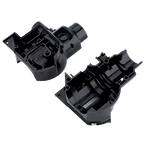
Injection molding is used to manufacture parts with complex geometries, tight tolerances, internal features, snap fits, threads, and fine surface detail. Common examples include bottle caps, phone enclosures, medical disposables, automotive clips, electrical housings, and precision consumer products.
Insert molding, overmolding, and composite co-molding are advanced polymer processing techniques that enable multi-material and multi-functional components in a single manufacturing step, reducing part-count and moving assembly tasks up-stream to automated and tooled processes.
- Insert molding embeds pre-fabricated components, such as metal threads or sensors, directly into plastic parts, improving assembly efficiency and mechanical integrity.
- Overmolding applies a secondary material, often soft-touch or elastomeric, over a rigid substrate to enhance ergonomics, sealing, or grip.
- Co-molding combines a wide spectrum of polymers or polymer-fiber mixtures, creating structures with tailored strength, flexibility, or thermal properties. Collectively, these techniques reduce assembly steps, improve performance, and are widely applied in medical devices, automotive components, consumer electronics, and industrial products.

What is Extrusion?
Extrusion is a continuous manufacturing process where semi-molten plastic is pushed through a shaped die to create a product with a constant cross-section. Unlike injection molding, there is no mold cavity that opens and closes. Instead, material flows continuously, exiting the die as a long profile that is cooled and cut to length.
Because the die only defines the cross-section, extrusion is limited to shapes that are uniform along their entire length. The process is extremely efficient for producing long, linear components and profiles at high output rates. Production runs can continue for hours or days with minimal interruption.
Extrusion is commonly used for pipes, tubing, window frames, weather seals, wire insulation, plastic sheets, films, and structural profiles. Post-processing steps such as cutting, drilling, or secondary forming may be applied after extrusion, often in dedicated CNC stations for hybrid production of finished parts. The fundamental geometry remains constant along the length.
Multi-material extrusion enables the simultaneous processing of two or more polymers, to produce components with combined functional properties in a single profile. In medical applications, it is used for catheters, tubing, and seals that require soft-touch biocompatible layers over structural cores. In automotive systems, multi-material extrusion produces weather seals, vibration-damping trims, and fluid transfer lines with integrated barriers. Other industrial uses include wire insulation, appliance gaskets, and construction profiles. By intrinsically bonding materials during extrusion, manufacturers improve performance, reduce assembly steps, and enhance durability across demanding environments.


Key differences between Injection Molding and Extrusion
Injection molding and extrusion both process molten thermoplastics, but they serve very different manufacturing needs. In most cases, desired part geometry makes the process selection obvious, even before design. Understanding the full range of differences – geometry, cost, tolerances, materials, and production style – helps engineers optimize designs and avoid mismatches between part requirements and manufacturing capability.
Part geometry and complexity
Part geometry is the primary differentiator. Injection molding is designed for complex, fully three-dimensional shapes. Parts can include varying wall thicknesses, ribs, bosses, undercuts, internal features, threads, living hinges, and intricate surface details. The entire shape is formed in a single operation.
Extrusion, by contrast, is limited to 2D cross-sections that remain constant along the entire length of the part. The profile can be complex in outline, but it cannot vary along its axis. Features like holes, slots, or variable thickness must be added through secondary operations.
If your part is a discrete object with depth, internal features, or non-uniform geometry, injection molding is almost always the correct choice. If your part is long, linear, and uniform, extrusion is typically the most efficient solution.
Process and production type
Injection molding is a cyclical, batch-based process. Each cycle consists of mold closing, plastic injection, cooling, mold opening, and part ejection. A single-cavity mold produces one part per cycle, while multi-cavity molds can produce many identical parts simultaneously. Production planning revolves around cycle time and machine availability.
Extrusion is a continuous process. Material is fed into the extruder without interruption, and output length is theoretically unlimited. Products are cut to length downstream, and production is measured in meters or kilograms per hour rather than parts per cycle. Typical production runs range from a few hundred Kg to tonnes, and production rates are highly dependent on section weight (mass per unit length). Productivity of up to a tonne per hour are feasible in well equipped processing.
This difference affects scheduling, inventory strategy, and economics. Injection molding excels at repeatable, high-volume part production. Extrusion excels at steady-state output of long profiles with minimal changeover time.
Tooling and costs
Tooling is one of the most important cost-and-duration drivers when comparing these processes.
Injection molding requires complex, precision-machined molds, generally made from pre-hardened steel and slowly machined by spark erosion, for low stress/distortion. These tools can contain literally hundreds of components in very complex functioning assemblies. Tooling costs typically range from $10,000 to well over $100,000, depending on part size, complexity, number of cavities, use of hot runners, and required lifespan/maintainability. While the upfront investment is high, per-part cost becomes very low at volume.
Extrusion tooling is far simpler, and typically produces uncut length at costs of a few dollars per meter. A die only defines the cross-sectional shape, not a full 3D cavity. As a result, extrusion dies typically cost 80–90% less than injection molds. This makes extrusion attractive for lower-risk tooling investments and long production runs of uniform profiles.
Total cost still depends on production volume, material type/usage, tolerances, and finishing requirements – but application and tooling economics alone force the process selection in the concept phase.
Precision and tolerances
Injection molding provides excellent dimensional control. Well-designed tools can routinely achieve tolerances in the ±0.05 mm to ±0.1 mm range for small to medium parts and localized features in larger parts, making the process suitable for precision assemblies and functional components requiring exact fit.
Extrusion generally operates with looser tolerances. The continuous nature of the process, combined with material swell and post-die cooling, makes tight dimensional control more challenging – especially across large or thin-walled profiles. Typical tolerances are wider and may vary along the length, and straightness in the cooling phase requires careful management to avoid slump and warping.
For assemblies where alignment, sealing, or mechanical performance depends on tight tolerances, injection molding is a safe choice.
Materials
Both processes primarily use thermoplastics for rigid parts, but their material ecosystems differ considerably – though they may coexist in a single supplier. Rubber and silicone rubber extrusion are also very widely employed, for medical, chemical, food and automotive sectors.
Injection molding supports a wide range of materials, including ABS, polypropylene (PP), polyethylene (PE), polycarbonate (PC), nylon (PA), acetal (POM), and high-performance engineering plastics. Filled and reinforced grades are commonly used to achieve strength, stiffness, or thermal performance targets.
Extrusion of thermoplastics commonly uses commodity thermoplastics such as PVC, PE, and PP, which flow well in continuous processes and are cost-effective for long runs. While engineering plastics can be extruded, material selection is generally narrower, and specialized requirements may limit feasibility. Natural and synthetic rubber and silicone rubber of a broad range of hardnesses are extruded to satisfy various markets.
Material choice should be evaluated alongside geometry, tolerances, and end-use conditions.
Comparison Table: Injection Molding vs Extrusion
| Factor | Injection Molding | Extrusion |
|---|---|---|
| Part geometry | Complex 3D shapes | Continuous 2D profiles |
| Process type | Cyclical batch | Continuous |
| Tooling cost | High ($10K–$100K+) | Low (80–90% less) |
| Part volume | Suits high volume (typically 10k+ depending on cost sensitivity) | Suits high linear volume of product required – typical production batches are 200+ kg |
| Precision | High, tight tolerances | Lower precision |
| Production | Discrete parts | Continuous lengths cut to size |
| Typical materials | ABS, nylon, PC, PP | PVC, PE, PP |
| Best for | Housings, caps, complex parts | Pipes, tubing, profiles, sheets |
Advantages and disadvantages of Injection Molding
Advantages
- Enables complex 3D geometries and fine features.
- High dimensional accuracy and repeatability.
- Excellent surface finish straight from the mold.
- Very low per-part cost at high volumes.
- Supports a wide range of engineering plastics.
Disadvantages
- High upfront tooling cost
- Long lead times for mold fabrication
- Design changes after tooling are expensive
- Less economical for low production volumes
Injection molding is ideal when part complexity and performance justify the tooling investment.
Advantages and disadvantages of Extrusion
Advantages
- Low tooling cost and fast die lead times
- Extremely efficient for long, continuous profiles
- Minimal material waste
- Simple, repeatable production setup
Disadvantages
- Limited to uniform cross-sections
- Lower dimensional precision than molding
- Secondary operations often required
- Less flexibility for design variation
Extrusion is best when geometry is simple and continuous.
Common applications
Injection Molding applications
Injection molding is used across automotive, medical, consumer electronics, and industrial products. Typical applications include enclosures, connectors, fasteners, packaging closures, medical disposables, appliance components, and structural plastic parts requiring tight tolerances and repeatable performance.
Injection molding is widely used for both single-use and longer term service products. Single use applications range from phlebotomy (blood sampling/donation) disposables and dental floss ‘handles’ to packaging components for product displays. Longer term uses are near-infinite in range and market sector utility – from remote control and other electronics housings to gear elements in machines, from toys to automotive interior parts.
Extrusion applications
Extrusion dominates markets that rely on long profiles and continuous shapes. Common examples include piping systems, tubing, window and door frames, weather seals, cable insulation, films, and plastic sheets for forming or cutting.
Plastic extrusions serve in a huge variety of contexts, from protective strip packaging materials to architectural elements, from simple tubes for water/sewage to multi-material specialist, mulit-lumen tubing for medical applications.
Design considerations
Designing for the correct process early reduces cost and lead time.
Designing for Injection Molding
Injection-molded parts should maintain uniform wall thickness where possible, to avoid sink (highly localized shrinkage) marks and warping. Draft angles must be incorporated to allow part ejection – and these must be sensitive to sealing (blanking) needs and surface finishes that may cause parts to stick to the tool. Ribs should be designed to add stiffness without creating thick sections, and undercuts should be minimized or planned with side actions.
Material shrinkage, gate location, and cooling behavior all influence final dimensions. Early injection molding DFM feedback helps optimize geometry before committing to expensive tooling.
Designing for Extrusion
Extruded profiles must maintain a consistent cross-section along their entire length. Sharp corners should be radiused to improve material flow and reduce die wear. Wall thickness should be balanced to prevent distortion during cooling.
Features that cannot be extruded, such as holes, slots, or localized detail, should be planned as secondary operations.
Finding the right manufacturing partner
Injection molding and extrusion require different machines, tooling expertise, and process controls. Most manufacturers specialize in one process rather than offering both at equal depth.
What to look for in a supplier
- Process expertise: Confirm specialization in injection molding or extrusion.
- Material experience: Prior work with your required plastics
- Volume capability: Equipment sized for your production needs.
- Quality systems: Documented inspection and process control.
- Communication: Ability to discuss tolerances, finishes, and design tradeoffs.
Comparing quotes across processes
For borderline designs, obtaining quotes for both processes can reveal meaningful cost differences. Even when only one process is feasible, understanding why it dominates helps validate the decision.
For injection molding projects in particular, early supplier feedback is critical due to high tooling investment.
Platforms like Jiga empower engineers to streamline the injection molding process by connecting them with vetted, reliable suppliers. They enable direct communication with manufacturers, provide real-time DFM feedback, and give transparent insights into cost drivers before any tooling is finalized. This ensures faster decision-making, reduces expensive revisions, and optimizes part design for manufacturability – all while maintaining control over quality, timelines, and budget from the earliest stages of production. By using Jiga, engineers receive concierge service in moving from concept to production, resulting in fewer surprises and greater efficiency.
Summary
Injection molding and extrusion are complementary, and almost never competing, plastic manufacturing processes. Injection molding excels at producing complex, high-precision 3D parts at volume. Extrusion excels at producing long, uniform profiles with low tooling investment. Part geometry is usually the deciding factor, followed by tolerance and cost considerations. By understanding how each process works and designing appropriately, engineers can select the most efficient manufacturing route and avoid unnecessary complexity or expense.