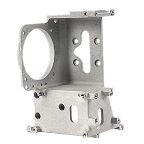
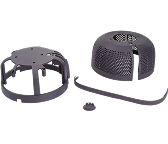
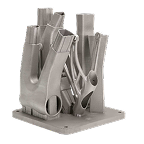

Tungsten Inert Gas (TIG) welding is a precision arc welding process that uses a non-consumable tungsten electrode to produce high-quality, clean welds across a wide range of metals. Unlike MIG welding, which feeds a consumable wire continuously, TIG welding allows separate manual control of the electrode and filler rod, enabling precise fusion and an exceptional surface finish.
TIG welding is widely used in applications where weld aesthetics, structural integrity, and high-quality joints are critical. Industries such as aerospace, medical devices, artistic metalwork, and high-precision manufacturing rely on TIG welding to join metals like stainless steel, aluminium, and exotic alloys. The process is generally slower and requires higher operator skill, but it delivers superior results with minimal spatter, deep penetration, and controlled heat input.
A critical aspect of TIG welding is the use of an inert shielding gas, most commonly Argon, which protects the molten weld pool from atmospheric contamination, oxidation, and porosity. The combination of manual precision, clean gas shielding, and high-quality electrodes makes TIG welding indispensable for applications demanding accuracy and repeatability.
Key takeaways
- TIG welding uses a non-consumable Tungsten electrode and inert gas shielding for clean, precise welds.
- It offers precision, versatility, and significantly superior weld quality, when well executed. However, it requires considerably higher skill levels than MIG welding.
- TIG is widely used in aerospace, medical devices, and artistic or high-precision metalwork.
- It primarily uses argon as the shielding gas, sometimes mixed with helium for specific metals and thicker sections.
How does TIG welding work?
TIG welding generates an arc, from the Tungsten electrode at the gun tip, to the workpiece, melting the base metal in a precise and tightly controlled pattern. Filler material, where required, is fed manually by the operator (or robotically under closed loop control and machine visual analysis of the weld). The inert gas shields the arc and molten pool, preventing contamination. Operators control heat input, travel speed, and filler feed to ensure penetration, bead uniformity (puddle dynamics), and minimal distortion.
Step-by-step process:
- Setup: Prepare workpiece and select appropriate tungsten electrode and filler rod.
- Shielding gas flow: Start argon flow to protect the weld area.
- Arc initiation: Strike an arc using lift or scratch start techniques.
- Welding: Feed filler rod manually while maintaining torch angle and arc length.
- Cooling and Inspection: Allow weld to cool under continued gas shielding after cutting the arc. Inspect visually or using NDT methods.
What is TIG welding used for?
TIG welding excels in applications demanding precision, clean joints, and superior metallurgical qualities (porosity, inclusions, alloy uniformity). Its versatility makes it ideal across industries where aesthetics and structural integrity are critical.
Aerospace and Aviation components
TIG welding is widely used for aircraft frames, engine components, and fuel system assemblies. The process enables thin-section welding without warping and ensures high fatigue resistance, with low/zero post-weld finishing requirements. Materials like Magnesium and Aluminium alloys and stainless steels are commonly welded using TIG for structural and safety-critical parts.
Medical device and Pharmaceutical equipment manufacturing
In medical and pharmaceutical applications, TIG welding ensures high integrity, contamination-free joints on stainless steel tubing, surgical instruments, and bioprocessing equipment. The inert gas shielding produces clean, smooth surfaces critical for hygiene and regulatory compliance.
Artistic and Architectural metalwork
TIG welding is often the process of choice for sculptures, metal art, and decorative railings, providing aesthetic welds that require minimal post-finishing. Welders can create precise beads, even on intricate designs, with no detectable spatter.
High-Precision manufacturing and prototyping
TIG welding supports tooling, prototyping, and custom fabrication where joint integrity and precision are essential. Industries like robotics, high-performance vehicles, and energy systems benefit from the ability to reliably and consistently produce consistent, defect-free welds.
What gas is used for TIG Welding?
Shielding gas is key to successful TIG welding, protecting the molten weld pool from atmospheric contamination and ensuring arc stability by maintaining a consistent ionization path.
Argon – The primary choice
Pure Argon is the most widely used shield gas due to its excellent arc stability, ease of use, and suitability for most metals, including stainless steel, mild steel, and Magnesium/Aluminum alloys. It is ideal for thin-section welding and delivers smooth, clean welds, when operator skills or automation are of sufficient standard of control.
Helium and Argon-Helium mixtures
Helium increases heat input and penetration and is often blended with Argon for thicker sections or high-conductivity metals like Copper. Argon-helium blends also improve weld pool fluidity and bead shape.
Gas purity requirements
High-purity shielding gas is critical. Impurities (Oxygen or moisture) can cause porosity, oxidation, electrode tip erosion and Tungsten inclusions, compromising joint integrity. Industrial-grade gases typically have 99.995% purity.
Choosing the right gas for different materials
- Aluminium: Pure argon or argon-helium blends.
- Stainless steel: Pure argon for thin sections; argon-helium for thick sections.
- Exotic alloys: Gas composition tailored to thermal conductivity and metallurgical requirements.
TIG welding equipment essentials
To perform TIG welding effectively, specialized equipment and consumables are required, selected according to joint geometry, materials to be welded and operator skills. .
TIG welding machine (Power source and controls)
TIG machines provide AC, DC, or pulsed current, adjustable amperage, and precise voltage control. Advanced units feature foot pedal or fingertip control, enabling the operator to modulate heat input for optimal penetration.
Tungsten electrodes (Types, sizes, and preparation)
Electrodes can be thoriated, ceriated, or lanthanated, each suited for specific materials and currents. Correct tip sharpening and electrode diameter selection are essential for arc stability, and require regular checking/dressing under high workloads.
TIG torch and consumables
Torches come with air- or water-cooled designs and require collets, cups, and gas lenses to focus the shielding gas appropriately.
Filler rods and material selection
TIG welding uses separate filler rods, manually (or robotically) fed into the weld pool. Selection depends on base material, thickness, and desired mechanical properties.
Foot pedal or fingertip amperage control
Precise heat management is necessary for optimal and consistent results, especially for thin and/or more heat sensitive metals such as Magnesium and Aluminum alloys, which are prone to burn-through and slump. Foot pedal control allows dynamic adjustment of current during welding.
Safety equipment
Operators must use welding helmets (preferably with auto-darkening lenses), fire-resistant clothing, gloves, and proper ventilation, as TIG welding produces UV radiation and intense heat.
TIG welding techniques for precision welds
TIG welding is a high-skill process, and technique directly impacts weld quality. It takes extensive experience to be able to reliably and repeatably produce high quality jointing, with skills required varying considerably, based on the alloys being processed. These skills increase the direct cost of weld production – although some part of this is offset by improved cosmetics allowing welds to be delivered as finished, with little or no dressing/grinding.
Torch angle and arc length control
Torch angle (typically 10 to 20°) and arc length (around 1 to 1.5 times the diameter of the electrode, or about 1/8 to 1/16 of an inch for most standard tips) are critical. These must stay consistent to ensure stable heat input, smooth bead formation, and minimal local/regional distortion. A shallow torch angle improves shielding coverage, while keeping arc length tightly controlled enhances penetration control and reduces spatter. Together, they deliver cleaner welds, better fusion, and predictable results.
Filler rod feeding technique
Filler rod feed in TIG welding is a critical part of the skill/art of producing quality welds. It demands rhythm, precision, and consistency. The rod should be advanced smoothly into the leading edge of the weld pool, keeping it within the gas shield. Either a controlled “dab” or continuous feed motion are selected according to the required quantity of filler, maintaining a steady pace, angle, and stick-out to ensure uniform bead formation.
Travel speed and heat management
Optimized weld travel speed balances penetration and bead control. Moving too slowly overheats the workpiece, causing excessive heat affected zone (HAZ) width and distortion; moving too fast reduces fusion. Coordinating travel speed with amperage and torch angle helps maintain a stable weld pool. Skilled heat management is central to the production of quality and consistency and ensures cleaner beads, minimal warping, and consistent mechanical properties.
Pulsed TIG welding for thin materials
Pulse TIG is highly beneficial for welding thin materials because alternating high and low amperage narrows the heat input window and allows the operator longer decision/control time. The high pulse establishes penetration, while the low pulse cools the pool and limits distortion. This controlled thermal cycling stabilizes the arc, reduces burn-through risk, and enhances precision on delicate joints.
Walking the cup technique
Walking the cup is a technique primarily used on pipe welds. The welder slightly rocks or “walks” the Tungsten electrode along the joint to maintain a consistent arc length and even heat distribution. This improves weld penetration, controls bead shape, and reduces defects on curved or tubular surfaces.
TIG welding design
Design of parts to suit TIG welding is crucial to ensure strong, defect-free welds while optimizing production efficiency. Proper design considers joint geometry, material thickness, access, distortion control, and post-weld inspection.
Joint design and preparation
Common joint types include butt, lap, T, and corner joints. For TIG welding, joints should have sufficient root openings and bevel angles to allow full penetration without excessive heat. Precise fit-up tolerances reduce the risk of voids, excessive filler loading, or incomplete fusion.

Thickness considerations and edge preparation
TIG welding excels on thin to medium thickness metals (0.5–6 mm). Edges must be clean, oxide-free, and properly beveled to ensure consistent arc initiation and penetration. Aluminum often requires AC current and special surface cleaning to remove the oxide layer, which otherwise disrupts the arc and creates spatter.
Access and ergonomics for welding
The operator needs sufficient clearance at the joint for the torch, filler rod, and gas nozzle. Complex assemblies should be designed for ergonomic positioning to maintain steady hand control and consistent weld bead.
Distortion control through design
Heat-induced distortion is managed by symmetrical weld placement, intermittent welding, and pre-bending parts where necessary. Designing welds to minimize high-heat accumulation prevents warping and dimensional drift.
Surface finish and aesthetic requirements
TIG welding provides visually clean welds, often left without dressing as a feature on exposed components. Incorporating bead-friendly surfaces and minimizing overlap ensures consistent appearance and weld integrity.
Design for inspection and quality verification
Include inspection access points for visual, ultrasonic, or dye-penetrant tests. Features like removable fixtures, flat surfaces, and consistent spacing simplify quality control and ensure traceable weld documentation.
Which materials can you TIG weld?
TIG welding stainless steel
TIG is ideal for structural, medical, and decorative stainless steel components. AC or DC polarity selection, along with pure argon shielding, ensures smooth, oxidation-free welds.
TIG welding aluminum
AC TIG welding is preferred for Aluminum to break surface oxides and ensure penetration. Filler rod selection must match alloy composition and thickness is selected according to weld depth.
TIG welding wild steel and carbon steel
DC straight polarity provides deep penetration for thin to medium sections. Effective edge preparation prevents slag inclusion and porosity.
TIG welding exotic metals
Titanium, Magnesium, and Copper alloys require high-purity gas shielding and careful heat control to prevent contamination and warping.
Advantages and limitations of TIG Welding
| Advantages | Limitations |
|---|---|
| Produces high-quality, clean welds | Requires higher operator skill |
| Works on thin materials without distortion | Slower than MIG or stick welding |
| Excellent for aesthetic and precision applications | Limited material deposition rate |
| Enables welding of exotic metals | Equipment cost is higher than simpler processes |
| Superior control over heat input | Requires consistent shielding gas supply |
The future of TIG Welding: Automation and advanced technologies
TIG welding is increasingly seen in automated assembly. Increasing integration of robotics, and advanced power source technology enhance repeatability and throughput.
- Robotic TIG systems automate repetitive welds in aerospace, pharmaceutical, and automotive components. These are increasingly driven with dynamic controls responding to machine learning protocols running on high resolution visual analysis.
- Orbital TIG welding enables precision welding of tubing and piping in confined or remote locations and is simpler to automate, as pipe motion is easier to deliver than gun motion.
- Advanced power supplies with pulsed, square-wave, and AC/DC modulation improve control over heat input for thin sections and dissimilar metals.
- AI and machine learning integration enables predictive parameter optimization, reducing defects and minimizing operator error.
These innovations maintain the high-quality advantages of TIG welding while improving production efficiency, process monitoring, and traceability for modern manufacturing environments. The programming and setup of automation is a highly skilled task that requires the deep knowledge of experienced welding technicians for optimal outcomes.
Summary
TIG welding is a highly effective technique that is a widely used (skilled manual process) in lower volume applications, but becoming more practical for higher productivity and lower skill levels through automation.
Jiga connects businesses with qualified manufacturers for precision TIG welding of custom components and assemblies. Using the platform, you can source specialist welders, get fast quotes, and ensure quality-assured parts for aerospace, medical, and industrial applications. Jiga simplifies the workflow from design to delivery, guaranteeing accuracy, repeatability, and traceable documentation for high-value projects.
JIGA is ideally positioned to connect clients with the best supplier to suit their project.