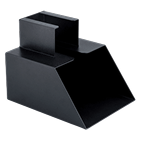
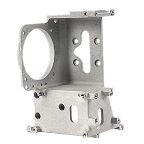
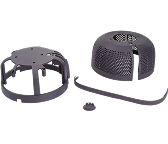
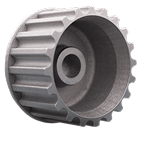
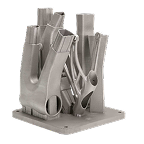
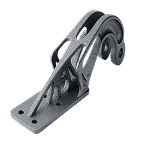

In a manufacturing landscape of growing intricacy and opportunity, engineers and designers face increasingly complex choices between traditional and modern production methods. CNC machining and 3D printing (additive manufacturing) each offer unique capabilities, but their suitability depends heavily on part requirements, material selection, production volume, geometric complexity, and overall project goals. This guide provides a detailed comparison of CNC machining vs 3D printing, offering insights into performance, cost, and material considerations, as well as practical guidance for selecting the right process for your application.
While CNC machining has, for decades, been a cornerstone of precision processing, additive manufacturing has expanded the possibilities for creating intricate designs, lightweight structures, and rapid prototypes. Rather than framing these methods as competitors, they should be considered complementary technologies, each offering advantages in specific scenarios. For many projects, the best solution may involve hybrid workflows, combining additive processes for complex features with CNC machining for critical surfaces and tight tolerances.
Industries leveraging both technologies include aerospace, automotive, medical devices/implants, electronics, and industrial equipment. Engineers must carefully evaluate project requirements to ensure part performance, cost efficiency, and manufacturability, while also accounting for post-processing, surface finishes, and lifecycle performance.
Key takeaways
- CNC machining is a subtractive manufacturing process, ideal for high-strength metals, polymers, tight tolerances, and high quality surface finishes. CNC machining is applicable to virtually all rigid materials – metals, polymers, machinable ceramics, composites and natural materials.
- 3D printing is powder, filament or liquid based additive manufacturing, where parts are digitally constructed. This burgeoning sector excels in creating complex geometries, internal features, lightweight structures, and rapid prototypes in polymers, metals, ceramics and other materials
- Material selection, tolerances, production volume, and cost are principal factors in deciding between CNC machining and additive processes.
- Hybrid workflows can combine additives followed by subtractive processes, to optimize workflow efficiency and manufacturing performance.
- Understanding cost scaling, post-processing needs, and component strength, durability, toughness, cosmetic and cost requirements is essential for selecting the optimal method.
Understanding CNC Machining: Overview and capabilities
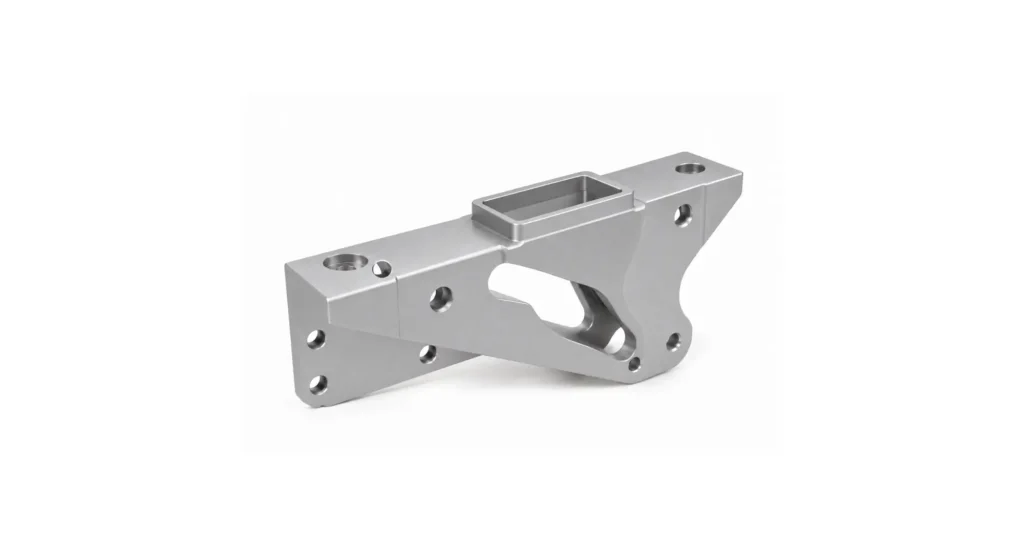
CNC (computer numerical control) machining is a subtractive manufacturing process, where material is removed from a solid block using high-precision rotating cutting tools to extract the required net-shape geometry from a raw material start point. CNC machines are programmed with digital (CAD) designs, allowing engineers to produce complex parts with high repeatability and minimal human error.
Common CNC processes
| CNC Process | Description | Typical Applications |
|---|---|---|
| Milling | Rotating cutting tools remove material along multiple axes. | Brackets, housings, molds. |
| Turning | Rotating the workpiece against stationary cutting tools. | Shafts, cylindrical components. |
| Drilling | Precision hole creation. | Fastener holes, fluid channels. |
| Grinding | Abrasive removal for tight tolerances and surface finish. | Tooling, dies, precision mechanical parts. |
| Multi-axis machining | Simultaneous movement along 3+ axes. | Complex aerospace and automotive components. |
Materials in CNC machining
CNC machining supports a wide range of materials, providing engineers the flexibility to balance strength, corrosion resistance, thermal properties, and cost demands to make an effective outcome, suited to the task.
| Material Category | Examples | Notes |
|---|---|---|
| Metals | Aluminum, steel, stainless steel, titanium, Inconel | Offers full isotropic strength; excellent mechanical properties. |
| Polymers | Nylon, PEEK, ABS, Delrin | Used in low-load or chemical-resistant applications. |
| Composites | Carbon fiber, GRP, reinforced plastics | Requires specialized tooling; CNC can maintain fiber orientation. |
| Ceramics | Machinable alumina, zirconia | Excellent thermal/chemical stability; brittle—requires careful handling. |
Advantages of CNC machining
- Tight tolerances, where ±0.01 mm is typical on small features, closer is possible, at a price.
- Smooth surface finishes, often ready for end-use without post-processing – though with cost/throughput implications.
- Full mechanical strength; isotropic properties. CNC finish-machining of chill cast or forged components preserves process imposed microstructures such as crystallinity and grain.
- Wide material selection, from low cost polymers through to high-performance super-alloys.
- Excellent repeatability and very low labor costs for medium-to-high volume production in both CNC milling and CNC lathe work.
Limitations
- Complex internal features, particularly undercuts and internal cavities are difficult or impossible in one-piece manufacture
- High setup costs for small runs are typical, as programming and dry/wet run evaluations consume valuable machine time and skilled labor.
- Waste material is produced, often in large proportion compared with component outcomes. This is intrinsic to subtractive process
- Limited lightweighting opportunities are available, in comparison to additive manufacturing, as extensive machine time is required.
Understanding 3D Printing: Overview and capabilities
3D printing, or additive manufacturing, builds parts layer by layer directly from digital CAD models. Unlike subtractive processes, material is deposited only where required, enabling complex geometries, internal features, and lattice structures that cannot be produced with traditional machining.
Complexities such as undercuts, overhangs and closed internal galleries are built with internal support features that are either intrinsic, in dual liquid resin or powder based methods; or extrinsic break-off support features in single filament based construction; or water soluble supports in co-extrusion printed, multi-material processors
Major 3D printing technologies
| Technology | Description | Typical Materials | Applications |
|---|---|---|---|
| Fused Deposition Modeling (FDM) | Extrudes thermoplastic filaments | PLA, ABS, Nylon, PEEK | Functional prototypes, jigs, housings |
| Stereolithography (SLA) | Cures photopolymer resins with UV light | Standard, engineering, or high-temperature resins | Fine-featured prototypes, dental, medical models |
| Selective Laser Sintering (SLS) | Fuses powdered polymers with laser | Nylon, TPU, PA12 | Functional parts, complex internal channels |
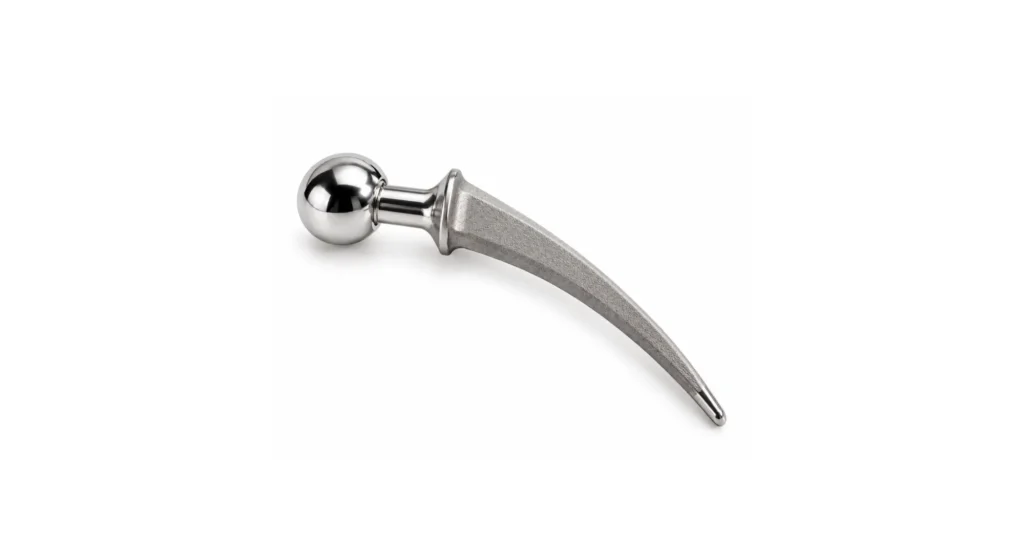
| Direct Metal Laser Sintering (DMLS) / Selective Laser Melting (SLM) | Fuses powdered metals | Stainless steel, titanium, aluminum alloys | Aerospace, medical implants, tooling |
| Binder Jetting | Deposits a binding agent onto powder beds | Metals, ceramics, sand | Rapid prototyping, complex metal structures |
Advantages of 3D printing
- Ability to produce intricate geometries and complex, embedded and fully internal cavities and structures
- Greatly shortened prototyping and design iteration cycles, compared with extractive methods.
- Material-efficiency through minimal waste is widely reported, although this is often greatly overstated, as many additive processes carry a hidden waste burden.
- Lightweight structures achievable via lattices or honeycomb infills allow significant weight reduction, with minimal impact on robustness.
- The potential for hybrid manufacturing, combining additive and subtractive processes, is steadily increasing the utility of additive processes, while better exploiting extractive process capabilities in detail.
Limitations
- Many additive processes deliver lower mechanical strength compared to bulk machined metals. This results from a combination of anisotropic properties, limited layer adhesion and process -imposed, limited capability simulant material substitutions.
- Surface finish often requires post-processing. The intrinsically layered or pixelated-granular construction cannot deliver high quality surfaces, particularly on curved faces.
- Process resolutions are often limited, resulting in blurring and detail loss in fine features.
- Limited material choices for metals and high-performance polymers restrict part utility or real-world use.
- Longer build times for large or complex components can be very cost-burdensome.
Direct Comparison: CNC machining vs 3D printing
Understanding the differences in approach, capabilities, and limitations is essential when choosing a manufacturing method. The following table summarizes the key factors:
| Factor | CNC Machining | 3D Printing |
|---|---|---|
| Manufacturing Approach | Subtractive: material removed from solid blocks | Additive: material deposited layer by layer |
| Design Complexity | Limited internal channels, undercuts; multi-axis required for complex parts | Highly complex geometries, internal cavities, lattices possible |
| Material Options | Wide range of metals, plastics, composites | Polymers, resins, metals (limited alloys), some composites |
| Mechanical Properties | Full isotropic strength | May be anisotropic; slightly lower strength in certain orientations |
| Tolerances | ±0.01–0.05 mm typical | ±0.05–0.3 mm typical; depends on technology |
| Surface Finish | Smooth; Ra 0.4–1.6 μm typical | Layer lines; post-processing often required |
| Production Speed | Fast for medium-to-high volume; setup needed | Rapid for low-volume or complex prototypes; slower for high-volume |
| Cost | Higher setup; lower per-part at scale | Lower setup; higher per-part at scale |
| Post-Processing | Minimal (anodizing, plating optional) | Often required (polishing, machining, heat treatment) |
| Waste | Subtractive, generates chips however, in mass production these chips are exact-grade known and offer an easy recycling path to consistent material outcomes. | Minimal by reputation; in reality, setup and operational material usage varies considerably between processes. Waste material is either unusable or hard to use. |
Manufacturing Approach: Subtractive vs Additive
CNC machining’s precision comes from removing material from solid billets or blocks, using fine traverses of high precision tooling. This allows high-quality finishes and consistent material properties, but with severely limited internal geometries.
3D printing builds layer by layer, with filament based approaches enabling open weave structures, powder based systems internal channels/galleries offering improved fluid flow or thermal performance, and optimization of weight reduction by deliberate internal latticing.
Design Complexity and Geometry limitations
While CNC machining can produce sophisticated parts, features like enclosed cavities, thin lattices, and overhangs often require multiple setups and are typically impossible. 3D printing excels at such geometries without additional tooling, making it ideal for parts that require functional integration or topology optimization.
Material options and properties
CNC machining supports an essentially unlimited array of metals – steel, Aluminum, Titanium, Inconel, Magnesium, Copper and the plethora of alloys that are derived from them. An equally wide spectrum of plastics such as PEEK, Nylons, ABS, HDPE, PTFE, PC etc. are extensively machined. Composites, such as GRP, Carbon fiber and Tufnol respond well to CNC machining, as do the smaller range of machinable ceramics.
Metal 3D printing continues to advance, but the range of alloys is considerably more limited, and post-print heat treatment is often necessary to achieve full mechanical properties.
Polymer 3D printing offers a wide range of approaches and materials, although only the powder-bed approaches such as SLS approximate as-molded or machined-from-solid properties.
Precision, Tolerances, and Surface finish
CNC machining achieves tolerances as tight as ±0.01 mm (and better, for additional machine time cost. This makes the process suitable for functional end-use metal, plastic, composite and ceramic components.
3D printing tolerances (and resolutions) vary widely by technology and are typically ±0.05–0.3 mm. Exceptions such as Objet and some others can achieve 16um resolution in polymers, though typically the material properties are poorer than ‘real’ material options.
Surface finish on 3D printed parts (all material/process options) often requires sanding, chemical smoothing, or CNC finishing for as-machined comparable quality.


Metal 3D printing vs CNC machining
For metal components, engineers must make the choice between extractive CNC machining and metal additive manufacturing. While CNC machining is widely available and well-established for high-strength metals, additive techniques such as Direct Metal Laser Sintering (DMLS), Selective Laser Melting (SLM), and Binder Jetting are increasingly used for complex metal parts. These processes approach native material properties, though lacking the micro-structural benefits of forged and chill cast components.
In particular, designers benefit from – and part performance is improved by – the reduction in design constraints represented by additive processes. This avoids the designed-for-CNC limitations that extractive processes entail.
Metal 3D printing technologies and capabilities
| Technology | Description | Materials | Strengths | Typical Applications |
|---|---|---|---|---|
| DMLS / SLM | Fuses fine metal powders with a laser layer by layer. | Stainless steel, titanium, Inconel, cobalt alloys. | High geometric complexity, internal features, lightweighting. | Aerospace brackets, medical implants, tooling. |
| Binder Jetting | Binds metal powder layer by layer, then sintered. | Stainless steel, bronze, tool steels. | Large parts possible, lower cost, complex shapes. | Prototypes, tooling, low-volume production. |
| Electron Beam Melting (EBM) | Uses an electron beam to melt metal powder. | Titanium, cobalt-chrome. | Excellent mechanical properties, high density. | Aerospace, biomedical implants. |
Metal 3D printing technologies enable moderate internal lattice structures, optimized cooling channels, and part consolidation that would be difficult or impossible with CNC machining. However, post-processing (often CNC based) is usually required for surface quality, functional/interfacial areas, residual stress relief, and densification. This adds time and cost.
When to choose metal 3D printing over CNC machining
- When highly complex or optimized geometries, internal flow channels, weight reduction lattices, heat exchange pin/plate and lattice areas are required.

- When low-volume production or prototyping requires avoidance of or delayed commitment to tooling costs that are prohibitive as design iterations are required.
- When lightweighting requirements for aerospace or automotive components must be met without reduced strength.
- When part consolidation – ie. multiple components printed as a single ‘assembly’ is desirable.
Metal CNC machining advantages
- Offers full isotropic mechanical properties of native materials (Aluminum, stainless steel for example), essential for high-pressure or load-bearing applications
- Can deliver exceptional surface finishes and tight tolerances
- Where broad material availability for metals and alloys is required, CNC machining delivers.
- Predictable repeatability for medium-to-high volume production
Cost comparison for metal parts
| Factor | CNC Machining | Metal 3D Printing |
|---|---|---|
| Setup costs | Moderate; fixtures and programming. | Low for prototypes; minimal tooling. |
| Material cost | High if waste-intensive. | Powder can be recycled, but process is slower. |
| Per-part cost | Decreases with volume. | High per-part for large volumes; limited economies of scale. |
| Post-processing | Optional (surface finishing). | Required for most high-performance applications. |
| Lead time | Rapid for small to medium batches. | Longer builds; slower for large components. |
When to choose CNC machining over 3D printing
Various applications favor extractive CNC machining, due to material performance, tolerance demands, and production scale/per part cost targets. Consider CNC machining when your project requires:
- High-volume production runs where setup amortization reduces per-part cost
- Superior surface finish critical for aesthetics or functional surfaces
- Tight tolerances (<±0.02 mm) for mechanical assemblies
- Wide real-material selection is required, including high-strength metals or specialty alloys
- Functional end-use parts requiring full strength and fatigue resistance
Process selection criteria favoring CNC:
- Need for isotropic properties.
- Dimensional repeatability.
- Critical mechanical performance demanding real-material options.
- Limited design complexity requiring no buried features or internal channels.
When to choose 3D printing over CNC machining
Additive manufacturing excels in areas where CNC machining imposes design limitations:
- Complex geometries and internal features that are impossible to machine.
- Need for rapid prototyping and fast design iterations.
- Material efficiency and reduced waste.
- Low-volume custom products.
Process selection criteria favoring 3D print:
- Lightweighting and organic structures.
- Highly integrated multi-part, single-step process benefits.
- Short prototyping cycles.
- Limited tooling cost-tolerance, or test/iteration cycles incomplete
- Internal cavities, complex shapes or internal flow channels
Cost Analysis: CNC machining vs 3D printing
Understanding how costs scale with volume, complexity, and material choice is critical for project planning.
CNC machining cost factors
- Material cost: bulk stock vs. utilization ratio.
- Machine time: complexity, number of axes, surface finish/tolerance, setup complexity.
- Labor: programming, number of setups, and quality control.
- Post-processing: finishing, plating, coating.
- Economies of scale: per-part cost decreases significantly in medium to large batches
3D printing cost factors
- Build volume and part size limitations.
- Layer resolution and complexity.
- Material type – resins, polymers, metals, ceramics.
- Post-processing – support removal, sintering, heat treatment, machining for fits and interfaces.
- Volume scaling: high per-part cost for even moderate batch size, but competitive for prototypes.
Volume-based cost comparison
| Production Volume | CNC Machining | 3D Printing |
|---|---|---|
| 1–10 units | Higher setup, per-part cost low–medium. | Lower setup, per-part cost high. |
| 50–200 units | Cost-effective, repeatable. | Per-part cost still high. |
| 500+ units | Most cost-efficient. | Often uneconomical vs CNC. |
Notes to graphic:
Break-even is typically somewhere in the 5+ to 20+ volume level, but heavily affected by material/process choices and by part complexity, programming and fixturing issues (in CNC).
The red line – additive manufacture – shows a small but steady decline in part price as volumes rise. This can be a rapid fall and it can contain step-downs as equipment options (such as build volumes) change with increasing partcount.
The black line and associated zones represent the CNC part costs;
Zone 1 – the bulk of the cost at low volume is assignment of the entire programming, setup and fixturing costs to a small number of parts, making 1 off typically more expensive than the ‘equivalent’ 3D print.
Zone 2 – Increasing volume (in the 10-100 off level) sees diminished per-part cost from initial setup, improving overall price rapidly.
Zone 3 – at high volumes (1000 plus parts), near-fixed machine time and material costs dominate over setup costs and these show increasingly limited benefit as volumes rise.
Material Comparison: What can you make with each process?
Material selection is a major differentiator between CNC machining and 3D printing. Understanding mechanical properties, thermal resistance, and chemical compatibility is critical for part performance.
In particular, while particular material choices must be made to meet performance requirements, their knock-on effects on productivity, manufacturability, and quality can be significant. Sensitivity to the downstream consequences of these choices is a key indicator of success.
| Material Category | CNC Machining | 3D Printing | Notes |
|---|---|---|---|
| Plastics/Polymers | ABS, Nylon, PEEK, Delrin | PLA, ABS, PETG, Nylon, TPU, high-performance resins | Machined plastics have isotropic strength; printed parts may be anisotropic. |
| Metals/Alloys | Aluminum, steel, titanium, Inconel, copper | Stainless steel, titanium, aluminum alloys (DMLS/SLM) | Machined metals retain full mechanical properties; printed metals often require heat treatment. |
| Composites | Carbon fiber, fiberglass reinforced plastics | Limited: short fiber reinforced filaments | Machined composites maintain fiber orientation; printed composites limited to short fibers. |
| Ceramics | Machinable alumina, zirconia | Some SLA ceramic resins | Machining allows high-precision shapes; printed ceramics often brittle and require post-processing. |
Surface finish and post-processing requirements
Surface quality often dictates the need for secondary processes, but flows directly from material, process, and tooling choices. Balancing increased component costs from material and processing choices against avoidance of, or increased complexity costs in post processing can be a complex and multi dimensional process.
| Process | Typical Surface Finish (Ra) | Common Post-Processing |
|---|---|---|
| CNC Machining | 0.4–1.6 µm | Polishing, anodizing, plating |
| 3D Printing | 5–25 µm (layer thicknesses) | Sanding, chemical smoothing (polymers), CNC milling of critical faces (polymers & metals), heat treatment (metals) |
CNC machined parts typically require minimal finishing intervention, whereas 3D printed components always need extensive post-processing for functional, aesthetic, or tolerance-critical areas.
However, the highest grade surfaces resulting from CNC processing demand considerably increased processing time.
Combining CNC Machining and 3D Printing: Hybrid workflows
Hybrid manufacturing is increasingly popular. Designers may 3D print complex geometries and then use CNC machining to:
- Achieve critical surface tolerances
- Drill or thread precision holes
- Perform finishing operations on contact surfaces
Other hybrid uses include 3D printed tooling or fixtures to support CNC operations, enabling faster production setup and reduced tooling costs.
How to choose the right manufacturing method for your project
Selecting between CNC machining and 3D printing requires evaluation of multiple factors, including part geometry, material, volume, tolerance, equipment costs, supplier skills and budget. A structured approach ensures optimal outcomes.
Key questions to ask before choosing
- What is the required material? Most metals or high-performance plastics are only feasible with CNC.
- What is the complexity of the part? Internal channels, galleries, and overhangs may necessitate 3D printing.
- What volume is required? CNC excels in medium to high-volume production, while 3D printing suits prototyping and low-volume batches.
- What are the tolerance requirements? CNC machining provides higher precision and repeatability and may be indicated as post processing of 3D printed parts (hybrid manufacture).
- What post-processing is required? Consider the cost influences and feasibility of surface finish, heat treatment, or coatings.
- What is the budget and timeline? Factor in setup, machine time, and lead time constraints.
Summary
By concentrating the decision and quote process, Jiga helps engineers confidently select the most efficient and cost-effective manufacturing method, by making realistic and rapid comparisons between price proposals for divergent processes and suppliers.