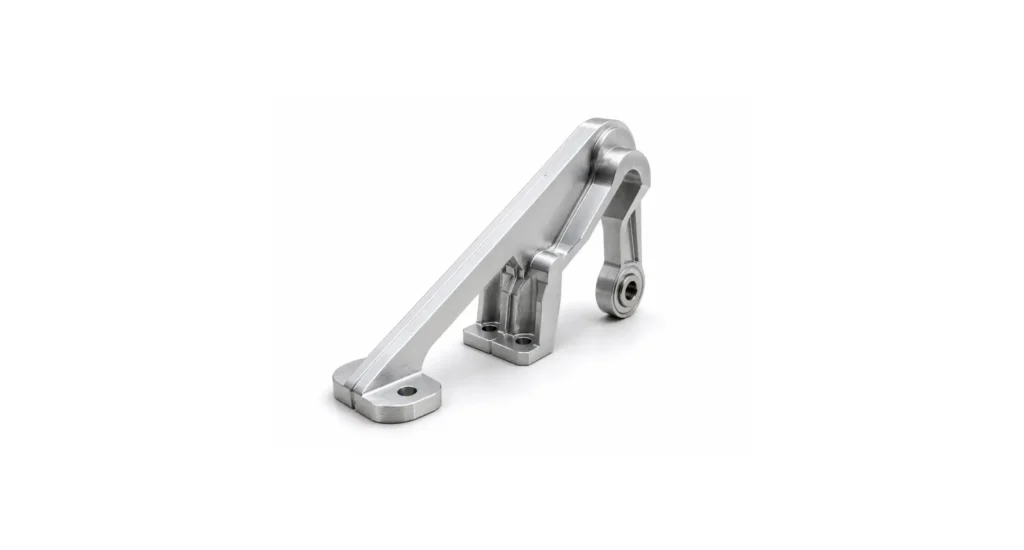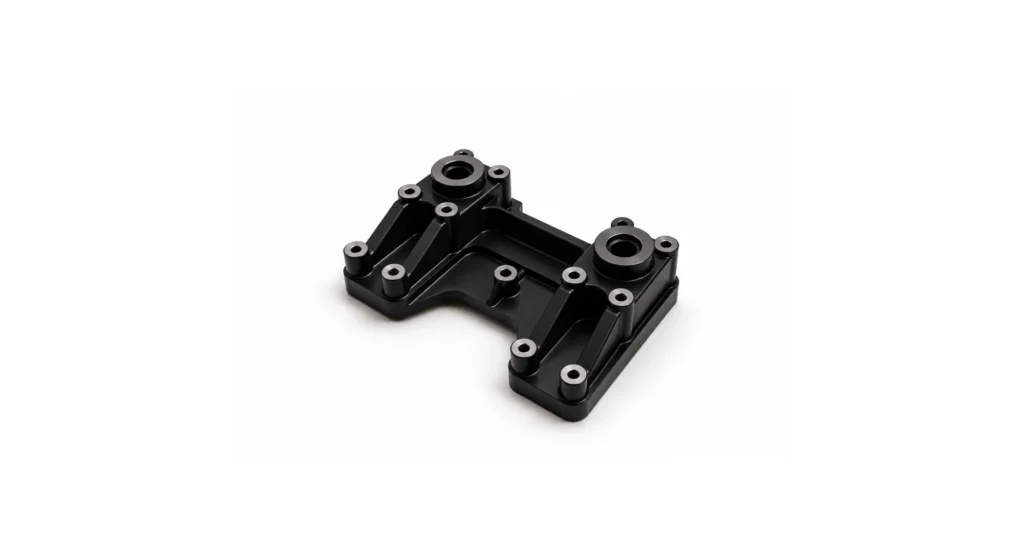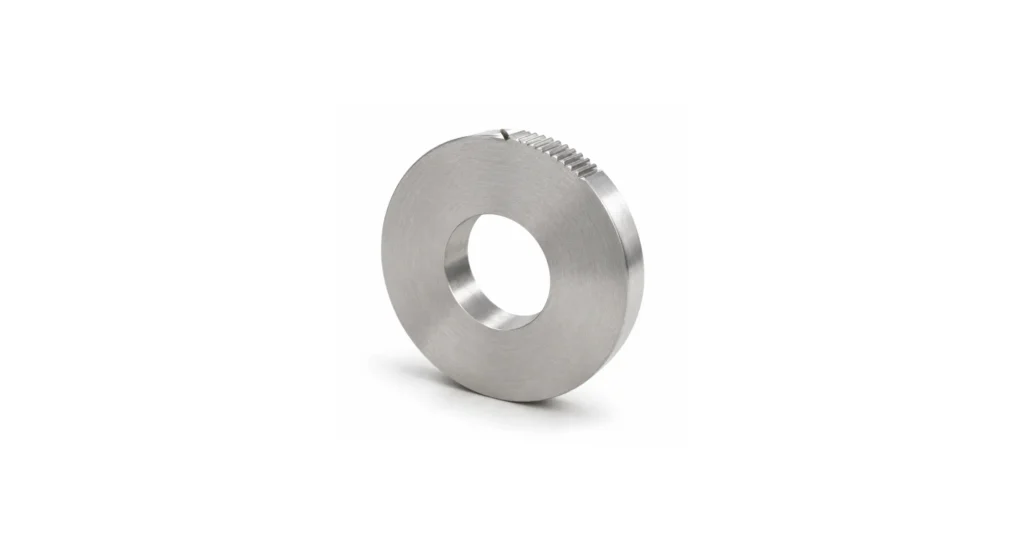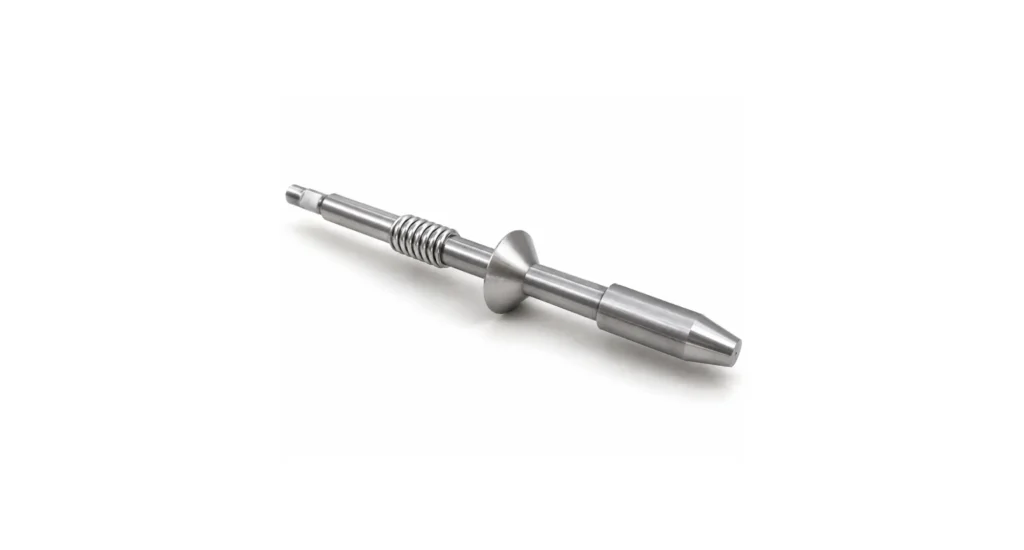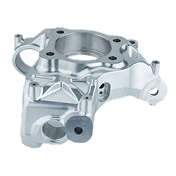
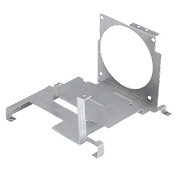

Selecting from the variety of extractive machining processes, to achieve the optimum for a part or project, is sometimes easy. More often it is a finesse decision requiring a matrix understanding of costs and downstream DFM consequences. Opting between the variety of CNC machining processes and laser cutting is a decision engineers and procurement teams regularly handle, when sourcing custom parts. In many cases, a hybrid approach can yield significant benefits in throughput, material use, and cost
Both processes are digitally controlled, through programmatic interpretation of CAD/CAM data; both options are precise and highly repeatable, yet they solve different but overlapping domains, in part manufacturing.
CNC cutting ablates material mechanically, either using rotating cutters and a (generally) stationary part – milling; or a rotating part and axis-fed cutters – lathe work.

Laser cutting is considerably simpler in operation, and offers lesser complexity in geometry. The process uses a collimated light/energy beam to melt/vaporize, and thereby cut material, excelling at fast 2D profiles, intricate details, and thin sheets.

The 2D-3D trade-off is simple but important: CNC excels in handling thickness, 6-sided machining, profile cutting, and cavity details, even with some undercuts; laser cutting performs best in speed, fine detail, and flat-part efficiency. This guide compares cnc vs laser cutter across materials, precision, edge quality, cost, and production strategy, so you can confidently select the right process for your application.
Key takeaways
- CNC cutting uses rotating tools or parts for ablative material removal; laser cutting uses collimated light for thermal ablation.
- CNC is optimal for 3D geometry, deep pockets, thick materials (>25 mm), and both structural and motion-functional parts.
- Laser cutting excels at fast 2D profiling, fine detail, thin sheets (<25 mm), and engraving.
- CNC produces clean edges with generally beveled or radiused internal corners; laser cutting achieves sharp corners but creates heat-affected edges, varied by material type and laser power.
- Material type, thickness, geometry (2D vs 3D), edge-finish needs, and production volume drive process selection.
What is CNC cutting?
CNC machining is a computer-controlled, subtractive manufacturing process that ablates material using cutting tools such as mills, drills, single/multi-point insert tools, and router bits.
Toolpaths are derived from CAD/CAM software precisely controlling tool motion in three or more axes, and applying cutter offsets, delivering repeatable geometry across metals, plastics, and natural and composite materials. CNC is a broad discipline that includes; routers used for wood, plastics, and softer metals; mills, used for most rigid materials, and tighter tolerances; lathes for essentially circular profile cutting in rigid materials; 5+ axis machines that combine mill and lathe functionality; and grinding wheels for particularly hard metals and ceramics.
How CNC cutting works
A digital (CAD) model is translated into toolpaths using highly specialized manufacturing interpretation (CAM) software. The machine feeds either a rotating spindle driving a cutter; or a moving/rotating part and linear-fed (non-rotating) cutter; or a combination of the two forms, to ablate material away, typically by highly localized shearing action.
Because the tool cutting tip is not truly sharp (i.e. is finely or coarsely radiused), internal corners are inherently rounded rather than sharp. Highly pointed tips are not generally employed due to their intrinsic fragility.
Each cutter pass is relatively small in depth to moderate both cutter and workpiece stress, so deep cuts are achieved through multiple passes as the part, or tool, or both are cycled through repeated cuts with modest axial steps between.
Coolant (or in some cases air pressure) serves to manage cutter and workpiece heat and chip evacuation, using fluids adapted to various machining styles and materials being cut. These range from water oil emulsions to synthetic oils and they provide both direct heat removal and heat prevention through cutting face lubrication.
Best applications for CNC cutting
- 3D contours, pockets, and both peripheral, and to a more limited extent buried and undercut features
- Thick materials and both motion-functional and structural parts
- Plastics, aluminum, steels, and composites
- Parts requiring tapped holes or post-machining features

Benefits of CNC cutting
- True 3D capability (depth and complex, compound curvature surfaces)
- Excellent dimensional accuracy and repeatability
- Broad material compatibility, from low rigidity polymers to cubic Boron nitride and polycrystalline diamond, only limited by cutter hardness and material fracture resilience
- Clean, stress-free edges, with no heat affected zone (HAZ)
CNC cutting limitations
- Material is ‘wasted’, removed from an oversize starting billet, leading to higher scrap rates compared with additive or near-net-shape processes.
- Programming, setup, fixturing, and tooling costs are typically uneconomic for small production runs.
- Geometric constraints – internal features are limited by tool access, and cutter diameter/profile.
- Longer lead times apply to complex parts – multi-axis setups, tool changes, and complex toolpaths increase cycle and preparation time.
- Tool wear and breakage – hard or abrasive materials result in adverse tooling costs and dimensional drift.
- Limited internal complexity, e.g. fully enclosed channels and lattices are not one-piece feasible.
- Surface finish variability, which may require secondary processes such as polishing or grinding.
- Loss of precision, where vibration and thin feature machining can affect tolerances, due to flex/chatter under machining loads.
- Setup challenges, as complex or flexible parts require custom fixtures.
- One-piece sequencing is a bottleneck for volume production.
What is laser cutting?
Laser cutting is a non-contact, thermal process that melts, burns, or vaporizes a very narrow, full depth strip of material along a programmed path. CO₂ lasers are common for wood, acrylic, leather, and fabrics, while fiber lasers dominate metal cutting due to appropriate frequency of the light (for absorption) and typically higher beam quality. Laser cutting is primarily a through-cut 2D process for profiles, and apertures, although moderate 3D profiling is evident in engraving. However, this offers limited depth precision, not allowing deeper 3D profiling.
How laser cutting works
A narrowly collimated and then focused laser beam heats the material locally, at the incident point; assist gas (Oxygen, Nitrogen, or air, depending on the target material) expels molten material from the kerf. No cutting tool contacts the part, enabling fast traverse and feed motion, and fine detail due to the absence of mechanical cutting stress.
Best applications for laser cutting
- Flat sheet parts and intricate profiles
- Thin metals and non-metals
- High-throughput production of 2D geometry
- Marking and engraving
Benefits of laser cutting
- Extremely fast for 2D profiles
- Fairly sharp internal corner transitions, fully sharp external corners, and fine features
- Minimal fixturing; rapid changeover
- Low per-part cost at volume
Laser cutting limitations
- Heat-affected zone (HAZ), especially in metals
- Limited thickness compared with CNC
- Primarily 2D (no pockets or depth controlled cuts)
CNC vs Laser cutter: Key differences at a glance
| Factor | CNC Cutting (Router / Mill) | Laser Cutting |
|---|---|---|
| Cutting method | Mechanical, rotating tools | Thermal, focused light |
| Best applications | 3D parts, thick sections, structure | 2D profiles, fine detail |
| Typical thickness | Up to 100 mm+ (material dependent) | Best <25 mm (material dependent) |
| Tolerances | ±0.02–0.1 mm typical | ±0.05–0.2 mm typical |
| Internal corners | Rounded (tool radius) | Sharp |
| Edge characteristics | Clean, burr-controlled | May show heat-affected zone (HAZ) or dross |
| Setup time | Higher (fixturing/tools) | Lower (nesting/programming) |
| Speed for 2D cutting | Slower | Very fast |
| Byproducts | Chips, coolant | Fumes, slag/dross |
Material compatibility differences with CNC vs Laser cutting
Material selection often decides the process before geometry does.
Which materials are best suited for CNC cutting (and routing)
Below is a comprehensive CNC cutting materials table, with process sensitivities called out where they materially affect quality, cost, tool life, or risk.
| Material | Benefits of CNC Cutting | Difficulties / Limitations | Key Process Sensitivities |
|---|---|---|---|
| Aluminum (6061, 5052, 7075) | Excellent machinability; high material removal rates; good surface finish | Thin sections may vibrate; chip welding possible | Tool geometry and coatings; proper chip evacuation; coolant or mist to prevent built-up edge |
| Mild / Carbon Steel | Strong, low cost, predictable cutting behavior | Higher cutting forces than aluminum | Tool rigidity and feed control; heat management affects tool life |
| Stainless Steel (304, 316) | Corrosion resistance; good strength | Work hardening; poor thermal conductivity | Sharp tools; conservative engagement; constant feed—dwells cause rapid hardening |
| Tool Steel (Pre-hardened) | Dimensional stability; wear resistance | Reduced tool life; slower cycles | Carbide grade and coating selection; step-down strategy critical |
| Hardened Steel (>45 HRC) | Precision finishing possible | Very slow machining; expensive tooling | Rigid machines; low radial engagement; toolpath strategy dominates success |
| Brass | Outstanding machinability; clean edges; tight tolerances | Higher raw material cost | Chip control on fine features; avoid aggressive feeds on thin walls |
| Copper | Excellent conductivity applications | Sticky chips; burr formation | Sharp tools; light lubrication; avoid heat buildup |
| Titanium (Grade 2, Grade 5) | High strength-to-weight ratio; corrosion resistant | Poor heat dissipation; rapid tool wear | Low surface speed; high-pressure coolant; constant chip load essential |
| Nickel Alloys (Inconel 625 / 718) | Extreme strength and temperature capability | Very slow machining; high cost | Tool life governed by heat; shallow cuts and aggressive cooling required |
| Plastics – ABS | Easy to machine; forgiving tolerances | Melting and smearing | High chip load; sharp tools; low RPM; avoid rubbing |
| Plastics – Acetal (POM / Delrin) | Excellent dimensional stability; clean finish | Stress relaxation after machining | Allow material to rest before final finishing; sharp tools |
| Plastics – Nylon (PA6 / PA66) | Tough; fatigue resistant | Moisture absorption; stringy chips | Control humidity; chip breakers recommended |
| Plastics – Polycarbonate (PC) | Tough; impact resistant | Internal stress; tool-induced heating | Sharp tools; light passes; annealing recommended for tight tolerances |
| Plastics – Acrylic (PMMA) | Optical clarity; crisp edges | Brittle; crack initiation | Proper clamping; sharp tools; avoid excessive tool heat |
| Plastics – PEEK (Unfilled / Filled) | High-temperature and chemical resistance | Very expensive; abrasive fillers | Tool material and coatings critical; dust management |
| Wood (Hardwood / Softwood) | Fast cutting; low cost | Grain variation; tear-out | Tool sharpness; climb vs conventional cutting choice |
| MDF / Plywood | Uniform geometry; ideal for panels | Glue layers dull tools | Dust extraction required; frequent tool changes |
| GFRP / CFRP Composites | High structural performance | Severe tool wear; hazardous dust | Diamond-coated tools; strict dust extraction and PPE |
| Phenolic / Laminates | Electrical insulation; stability | Brittle edges | Shallow depth passes; sharp tooling |
Materials less suitable for CNC, due to requiring special controls:
- Very thin foils (distortion during clamping)
- Brittle ceramics and glass (require grinding, not cutting)
- Highly abrasive composites without diamond tooling
Which materials are best suited for laser cutting
Below is a table covering materials suited to laser cutting, highlighting benefits, limitations, and process sensitivities. The table assumes the more prevalent modern industrial laser systems (fiber or CO₂ as appropriate).
| Material | Benefits of Laser Cutting | Difficulties / Limitations | Key Process Sensitivities |
|---|---|---|---|
| Mild / Carbon Steel | Excellent cut quality; fast cutting speeds; sharp edges; low cost per part | Oxidized edge when oxygen assist gas is used | Assist gas choice (O₂ for speed vs N₂ for clean edges); material thickness drives taper |
| Stainless Steel (304, 316) | Clean, precise cuts; sharp internal corners; minimal distortion | Slower cutting than carbon steel; nitrogen gas cost | Nitrogen pressure and purity control edge oxidation and surface color |
| Aluminum (3003, 5052, 6061) | Good for thin sheet; accurate profiles | Highly reflective; dross formation on thicker sections | Fiber lasers required; focus position and power density are critical |
| Galvanized Steel | Efficient for enclosures and panels | Zinc vaporization; fume hazards | Ventilation mandatory; slower pierce to reduce spatter and coating damage |
| Spring Steel | Precise profiles; minimal mechanical distortion | Localized heat alters edge temper | Heat input management; post-cut stress relief may be required |
| Electrical (Silicon) Steel | Ideal for laminations; clean profiles | Thin-sheet handling challenges | Burr control critical; stack flatness sensitive to cutting speed |
| Titanium (Grade 2, Thin Grade 5) | Very clean edges; excellent detail capability | Oxidation risk at cut edge | Inert assist gas essential; strict gas coverage required during cutting |
| Nickel Alloys (Inconel – Thin Sheet) | Accurate profiles in extremely hard materials | Slow cutting speeds; high operating cost | Power density and assist gas stability dominate process success |
| Copper | Possible for thin sheet applications | Extremely reflective; unstable cutting behavior | High-power fiber lasers required; slow feed rates essential |
| Brass | Acceptable for thin decorative parts | Zinc content disrupts cut stability | Lower power and slower speeds reduce edge roughness |
| Acrylic (PMMA) | Flame-polished, optically clear edges | Cracking if stressed after cutting | Controlled power and speed; ideal for CO₂ lasers |
| PET / PETG | Clean edges; minimal discoloration | Thickness limitations | Speed and cooling between features important to avoid melting |
| Polycarbonate (PC) | Detailed profiles possible | Heat stress; crazing over time | Annealing recommended if parts are bolted or stressed |
| ABS (Thin Sheet) | Fast cutting speeds | Melting, smoke generation, edge distortion | Ventilation required; low power density recommended |
| Plywood (Laser-grade) | Fast cutting; intricate detail possible | Glue layers cause uneven charring | Material selection critical; speed tuning required |
| MDF | Predictable geometry and kerf | Heavy smoke; charred edges | Strong extraction required; residue management important |
| Hardwood | Precise decorative cuts | Variable density; burning risk | Grain orientation strongly impacts edge quality |
| Rubber (Laser-safe Grades) | Excellent gasket cutting capability | Compound-dependent behavior | Always confirm formulation safety before cutting |
| Foam (PU, EVA – Laser-safe) | Fast cutting; sealed edges | Edge collapse at high power | Low power preferred; multiple passes recommended |
| Leather & Textiles | Sealed edges; no fraying | Odor and smoke generation | Extraction and material testing essential |
| Paper / Cardboard | High detail; rapid cutting | Fire risk | Low power operation; constant monitoring required |
Materials generally not suitable for laser cutting, or requiring restrictive atmospheric controls:
- PVC / vinyl (toxic chlorine gas)
- PTFE (Teflon)
- Fiberglass, CFRP (hazardous fumes, poor edges)
- Very thick plate beyond laser power capability
Precision, tolerances, and edge quality
CNC accuracy and edge finish
CNC routinely achieves ±0.02–0.05 mm on well-fixtured metal parts. Edges are mechanically sheared, leaving no HAZ. Internal corners require fillets equal to tool radius, which can be a functional constraint.
Laser accuracy and edge finish
Laser cutting commonly achieves ±0.05–0.2 mm, with excellent corner sharpness, in the axis of the cut profile. Metals may show HAZ, dross (oxygen cut), or heat tint; plastics and wood may char unless settings are tuned.
When edge quality drives selection
- Choose CNC for fatigue-critical edges, tapped holes, or post-weld surfaces.
- Choose laser cutting for intricate apertures, logos, and cosmetic 2D profiles.
Speed, setup, and production considerations
The two processes are divergent in setup and productivity, such that identical parts produced by them will tend to diverge considerably in operational complexity.
Setup time comparison
- CNC: Fixturing, tools, tool offsets, CAM verification.
- Laser: Nesting, focus selection, assist gas choice, typically faster.
Cycle time and throughput
Lasers dominate throughput on flat parts. CNC wins when depth, pocketing, or multiple operations are required in one setup.
Batch production vs Prototyping
- Prototyping: Laser for quick flat parts; CNC when fit/strength matters and/or shape is complex.
- Batch production: Laser for sheet-metal volumes; CNC for machined components with features.

Cost and maintenance considerations
Similarly, identical parts will be considerably different in price, indicating the limited overlap in the two processes.
Operating costs
- CNC: Tooling wear, coolant, labor; flexible across materials.
- Laser: Electricity, assist gas, optics; low labor per part at volume.
Safety and environmental considerations
CNC generates chips and coolant waste; lasers require fume extraction and eye-safe enclosures. Both demand trained operators and proper safeguards.
Should you choose CNC or Laser cutting for your project?
Below is a decision matrix that helps you choose between CNC cutting and laser cutting for your project.
| Decision Factor | CNC Cutting | Laser Cutting |
|---|---|---|
| Cutting Method | Mechanical material removal using rotating cutting tools | Thermal cutting using a focused, high-energy light beam |
| Best for Geometry | 3D features including pockets, holes, contours, and complex surfaces | 2D profiles and flat parts with intricate outlines |
| Material Thickness | Excellent for thick sections (≥25 mm); capable up to ~100+ mm depending on machine and tooling | Best for thin to medium sheet materials (<25 mm typical) |
| Material Types | Metals, plastics, composites, wood, MDF | Sheet metals, plastics, wood, textiles, leather |
| Internal Corners | Rounded to the cutting tool radius | Sharp, high-detail internal corners achievable |
| Edge Quality | Clean, burr-controlled edges; no heat-affected zone | Sharp edges, but may exhibit HAZ or dross on metals |
| Surface Finish | Smooth milled faces; dependent on tool selection and toolpath strategy | Very fine surface finish on flat cuts |
| Dimensional Tolerance | Tight tolerances: ±0.02–0.1 mm typical | Good tolerances: ±0.05–0.2 mm typical |
| Speed for 2D Profiling | Slower on flat patterns | Very fast and highly efficient |
| Best for Thick Materials | Yes | Limited; dependent on laser power and material type |
| Setup Time | Higher due to fixturing, toolpaths, and tool changes | Lower; primarily nesting programs and beam parameter setup |
| Batch / Volume Suitability | Well suited for prototyping through medium-volume production | Excellent for high-volume flat parts |
| Cost per Part | Tooling and setup overhead; lower cost at low-to-medium volumes | Low at high volume; driven by gas and beam operating costs |
| Debris / Byproducts | Chips and coolant | Fumes and edge dross; extraction required |
| Heat Effects | Minimal | Present; HAZ possible in metals and plastics |
| Holes & Threads | Drilling and tapping can be performed in the same setup | Usually separate secondary ops required |
| 3D / Contour Capability | Strong | Very limited; flat parts only |
| Best Use Cases | Structural parts, thick metal components, pockets, assemblies with holes | Sheet profiles, enclosures, ventilation patterns, signage, thin metals |
When to choose CNC cutting
- Structural brackets, housings, fixtures, close fit and functionally-interactive parts
- Parts requiring tapped holes or pockets
- Thick metals or engineering plastics
When to choose laser cutting
- Sheet-metal enclosures and panels
- Intricate apertures, patterns, and engraving
- Rapid turnaround for flat parts
Summary
CNC and laser cutting are overlapping and complementary toolsets, not competing methodologies.
CNC facilitates/delivers depth, strength, and versatility across a huge spectrum of materials, while laser cutting provides unmatched speed and detail for flat parts and fine details without process complexity.
Jiga connects you to vetted suppliers offering both CNC machining and laser cutting, making it easier to compare quotes, communicate requirements, and ensure quality for every project.