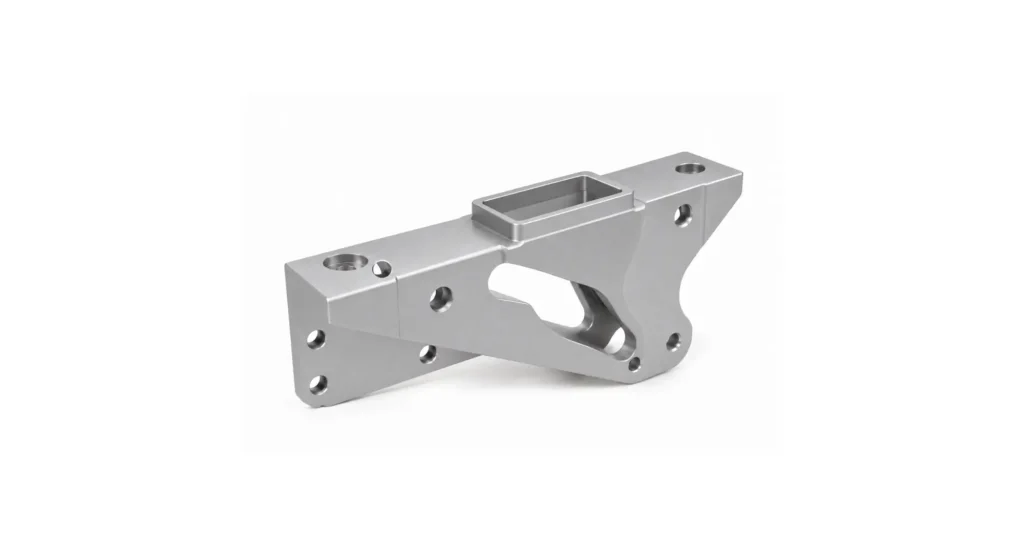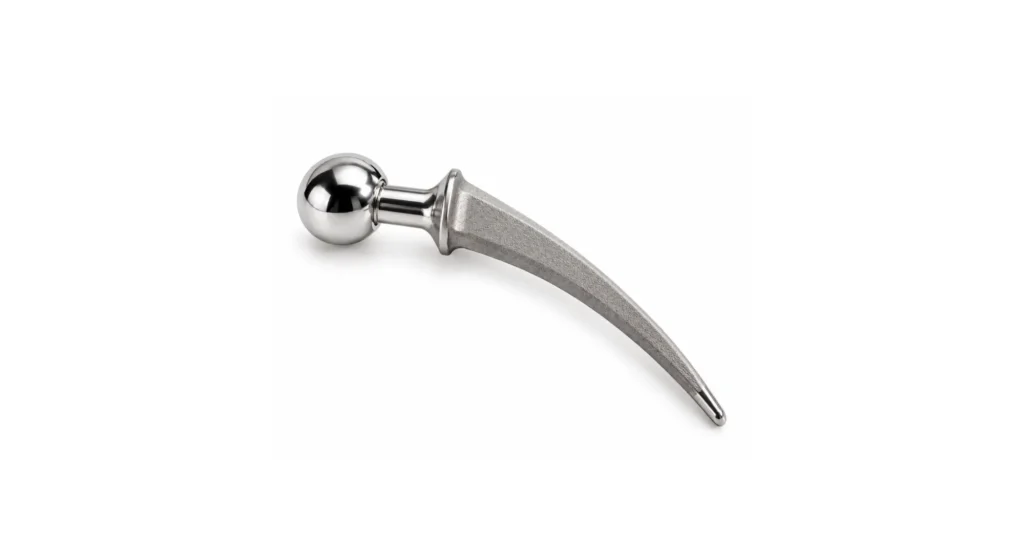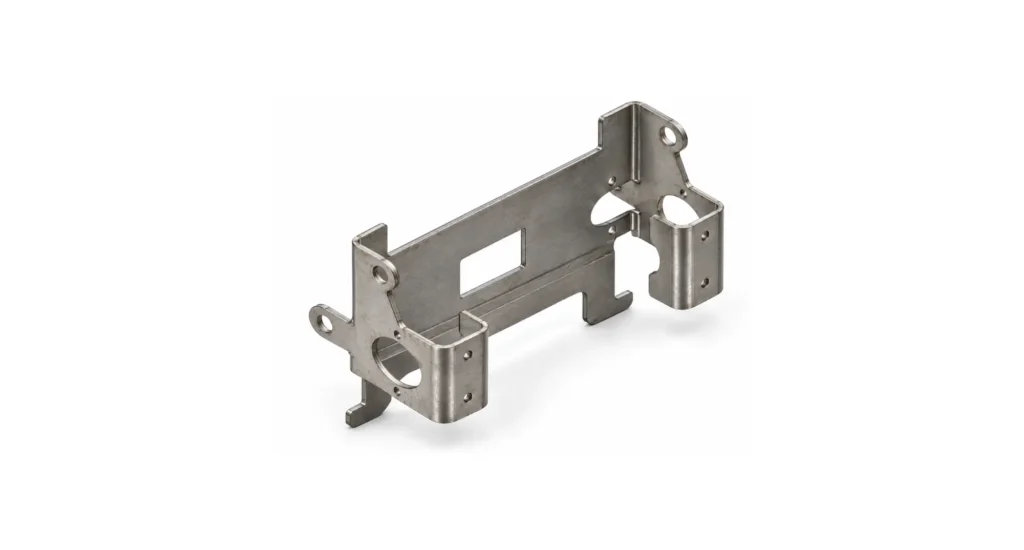





A supplier ships 500 brackets to Rev B. Your drawing moved to Rev C three weeks ago, and nobody told the shop floor. That is how most engineering change failures look: the change was right, and the handoff broke.
Designs evolve, tolerances require adjustment, suppliers discontinue materials/parts, customers revise requirements, and field failures expose weaknesses that were not visible during prototyping. Every program will issue engineering change orders (ECOs). What matters is whether each change reaches the shop floor controlled and on time.
Poorly controlled changes are a too-common cause of production discrepancies in contract manufacturing. A supplier builds the wrong revision, work-in-progress is scrapped without agreement, inspection criteria do not match the updated drawing, or inventory remains mixed across multiple revisions. The usual culprit is the handoff: how the change is communicated and enforced.
This guide explains what an engineering change order is, how the ECR–ECO–ECN workflow functions, what information an ECO must contain, how to communicate engineering changes to suppliers, and how to prevent revision-control problems from propagating through production.
Key takeaways
- An ECO is the formal authorization to modify a product, drawing, BOM, specification, or manufacturing process.
- The standard workflow is ECR (identify the issue, request change), then ECO (authorization of the change), then ECN (communicate implementation).
- Effectivity must always be defined clearly, including whether the change applies immediately, after inventory depletion, or from a specific serial or PO number onward.
- ECO failures usually trace back to late (or absent) supplier notification, unresolved WIP disposition, unclear revision control, or missing delta first article inspection after critical changes.
What is an engineering change order (ECO)
An engineering change order (ECO) is the formal, controlled document that authorizes a change to a product, component, drawing, bill of materials (BOM), specification, or manufacturing process, and tells everyone who builds it what changes, when, and what happens to existing stock.
The ECO is the authorization stage in the engineering change process. It converts an approved engineering change request into an actionable instruction with:
- a revision number,
- implementation requirements,
- effectivity,
- approvals,
- and traceable revision history.
An ECO is not:
- a redline markup,
- an email,
- a Teams message,
- a verbal supplier instruction,
- or a CAD comment thread.
Those may support the process, but the ECO is the controlled record that defines:
- exactly the change,
- why it is required,
- when it must take effect,
- and what happens to existing inventory and work-in-progress
Without formal ECO control, suppliers frequently end up building:
- mixed revisions,
- outdated geometry,
- incorrect BOM configurations,
- or assemblies where the drawing and production reality diverge silently over time
This is particularly hazardous in regulated industries such as aerospace, medical, automotive, and any production environment requiring traceability.
ECR vs ECO vs ECN: How they differ
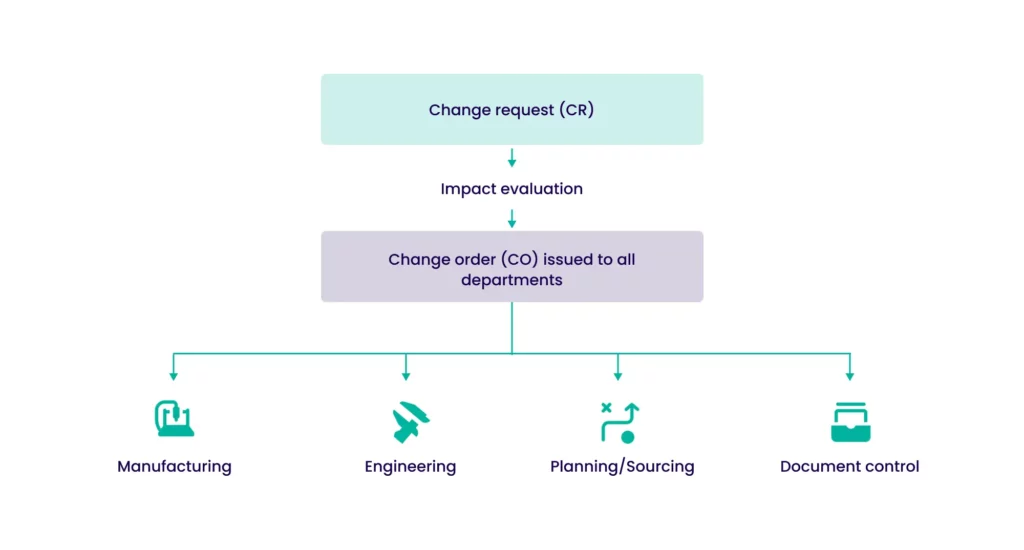
The terms ECR, ECO, and ECN are often used interchangeably, but they represent three sequential stages of the change-management workflow.
If your team conflates them, you typically hit one of two problems:
- changes begin production before approval,
- or suppliers never receive a formal implementation notification
Engineering change request (ECR)
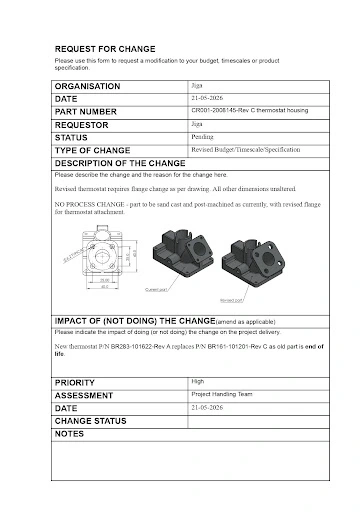
The engineering change request identifies a potential need for change.
An ECR may originate from:
- engineering,
- manufacturing,
- quality,
- procurement,
- field service,
- suppliers,
- or customers.
Examples:
- a tolerance repeatedly causes scrap,
- a connector becomes obsolete,
- a weld fails during testing,
- a supplier suggests a lower-cost material,
- a field failure reveals fatigue cracking.
The ECR describes:
- the problem,
- proposed change,
- justification,
- and expected impact.
It does not authorize implementation, it seeks that authorization from all parties who may have an interest, or information that enhances/assures the nature of the change.
Engineering change order (ECO)
The ECO is the formal authorization document, validated by all interested parties as agreed and confirmed.
It defines:
- the approved change,
- affected documents,
- revision levels,
- implementation timing,
- inventory disposition,
- inspection requirements,
- and approvals.
The ECO is the control instruction that manufacturing and suppliers execute against, effecting the change.
Engineering change notice (ECN)
The ECN is the communication mechanism used to distribute the approved change to:
- manufacturing,
- procurement,
- suppliers,
- quality,
- logistics,
- and service teams.
The ECN ensures every affected stakeholder knows:
- what changed,
- which revision is now valid,
- when the change becomes effective
- and what their responsibilities are in enacting the change
An organization may issue an ECO internally but still fail operationally if the ECN is delayed or unclear.
What does an engineering change order include?
A complete ECO should function as a self-contained implementation package and authorization for all required actions. A supplier receiving it should understand:
- what changed,
- why it changed,
- when it takes effect,
- and what happens to existing material/stock.
An incomplete or unclear ECO is how a supplier ends up building the wrong part.
Identification: Part numbers, drawing revisions, and BOM
Every ECO must clearly identify:
- affected part numbers,
- assemblies,
- BOMs,
- CAD files,
- specifications,
- and drawing revisions.
Ambiguity here creates immediate risk. Affected assemblies should also be identified.
Rason and justification
The ECO should explain why the change is occurring.
Examples:
- field failure reduction,
- assembly interference,
- cost reduction,
- supplier component obsolescence,
- manufacturability improvement,
- regulatory compliance.
This is key, because suppliers often need contextual understanding to implement the change on the shop floor.
Change classification: Class I vs class II
The Class I and Class II split comes from US defense configuration management. The US Air Force Space and Missile Systems Center defines Class I changes as those that “impact the form, fit, function, or interface characteristics of the configuration item,” and Class II as everything that does not meet that bar. Commercial programs often borrow the same split or use major and minor.
Class I changes
Affect:
- fit,
- form,
- function,
- safety,
- interchangeability,
- compliance.
These usually require:
- formal approval,
- updated qualification,
- delta FAI,
- customer notification.
Class II changes
Minor administrative or cosmetic changes that do not affect function.
Examples:
- note clarification,
- typo correction,
- non-functional marking update
These may entail lower level permission processes and a more relaxed authorization.
Impact assessment: Cost, inventory, and schedule
An effective ECO shares evaluation of:
- tooling impact,
- scrap exposure,
- inventory impact,
- supplier lead times,
- requalification cost,
- schedule disruption.
For example:
- changing anodizing thickness may require new qualification testing,
- tightening tolerances may increase machining cost,
- changing suppliers may require PPAP or FAI.
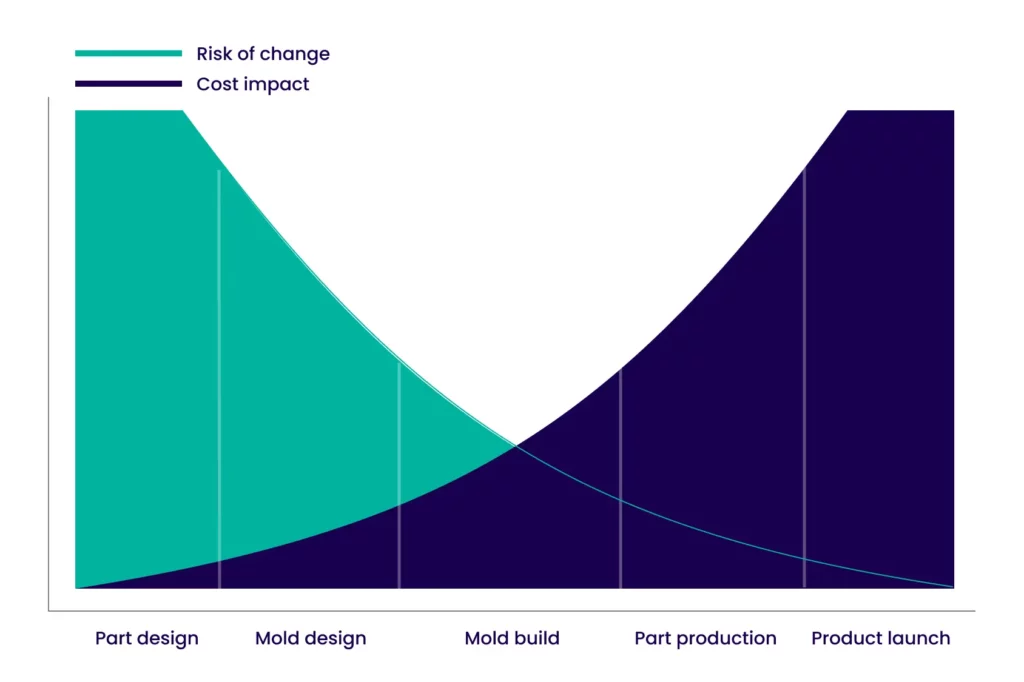
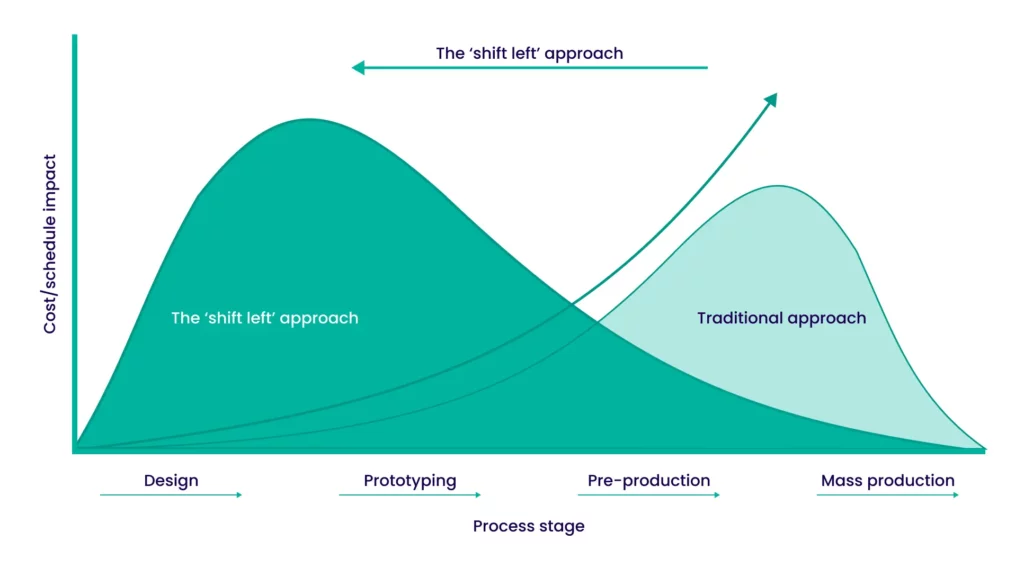
Errors that hide in early decisions get expensive when they surface. In a Design Society study of two aerospace UAV programs, changing decisions made during conceptual design took on average 13 times more rework than changing decisions made after the concept was fixed, and 13 of 49 design defects required re-certification on top of drawing changes.
Effectivity date and WIP disposition
Effectivity defines when the change becomes active.
Examples:
- immediate implementation,
- next PO only,
- after stock depletion,
- from a specified serial number onward.
WIP disposition must also be explicit:
- use as-is,
- rework,
- scrap,
- segregate,
- return to supplier.
Unresolved WIP disposition is a direct route to mixed revisions in the field.
Approvals and sign-off
Most ECO systems require cross-functional approvals and formal lodging/signatures.
Typical approvers:
- engineering,
- manufacturing,
- quality,
- supply chain,
- program management,
- customer,
- regulatory teams.
The approval structure reflects the risk level of the change, with increasing scrutiny and seniority of authorization as the criticality or commercial implications expand.
What are the common reasons an ECO is issued?
Manufacturers issue Engineering Change Orders based on six primary triggers: correcting field quality failures, executing cost-reduction initiatives, substituting components or suppliers, satisfying new regulatory compliance, integrating design evolution testing, and updating manufacturing processes. These triggers command immediate documentation revisions to protect product safety and production cost.
Quality and field failures
Examples can arise from any aspect of a product or its manufacture:
- interference during assembly,
- weld cracking,
- coating delamination,
- connector failure,
- fatigue cracking
- user experience failures
- exposure of performance issues
- material degradation
These changes are often urgent, because defective products may already exist in the field and timely correction can be market-influential
Cost reduction / value engineering
Examples:
- relaxing unnecessarily tight tolerances,
- changing material grades,
- reducing machining time,
- simplifying assembly.
A tolerance change from ±0.01 mm to ±0.05 mm may dramatically reduce cost without affecting function. An allowance for increasing recycled material content from 5% to 25% can greatly reduce cost, without functional consequence.
Supplier or component aubstitution
Supplier/source changes are a regular feature of ongoing mass production, and examples can arise from:
- discontinued raw material,
- unavailable component,
- alternate supplier qualification,
- sub-tier process change.
These often require qualification review, FAI, and evaluation of sample builds to confirm compliance.
New regulatory or customer requirements
Examples:
- RoHS compliance,
- REACH updates,
- medical implant standards material updates
- aerospace specification revisions,
- customer-driven geometry changes.
Design evolution
Prototype and EVT/DVT testing frequently expose required changes before production release. Equally, ongoing design maintenance can result in improvement opportunities that were previously out of reach.
Examples:
- rib reinforcement,
- geometry changes,
- tolerance adjustment,
- thermal redesign
Manufacturing process change
Examples:
- downgrading machining methods/equipment requirements,
- new tooling, cavity count increases, or post-repair tooling
- alternate plating vendor,
- new welding process, such as revision from MIG to laser welding
Even when the geometry remains unchanged, a process change itself may require ECO review and delta FAI.
The engineering change order process step by step
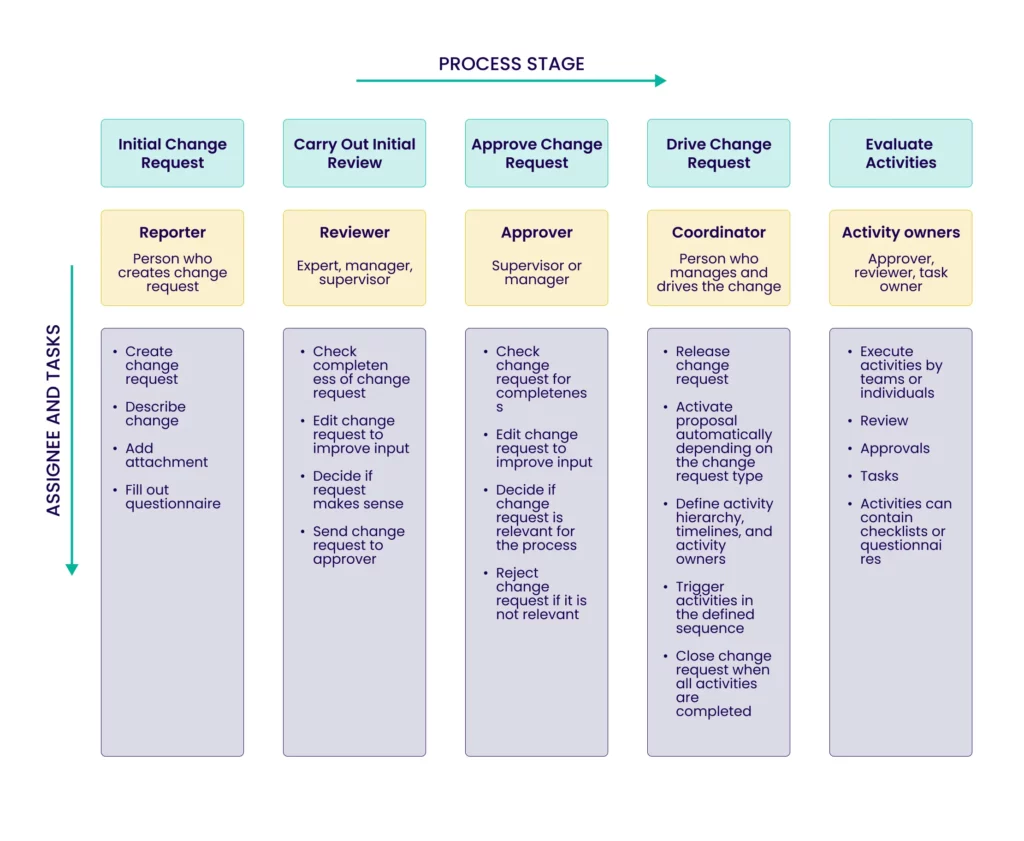
The ECO process is a critical, tightly controlled, and gated workflow. Skipping stages is a common cause of production misalignment.
1. Identify the need (ECR raised)
The issue is documented formally, usually by a change champion who owns the change from request to verified production. Anyone can raise an ECR, but someone has to own it.
Inputs may include:
- NCRs,
- supplier feedback,
- field returns,
- cost analysis,
- testing failures,
- customer requests.
2. Investigate and draft the ECO
Engineering, or the change champion/driver evaluates the change as a validation step that builds confidence in affected parties/departments who must authorize their aspects:
- technical impact,
- manufacturability,
- qualification requirements,
- inventory impact,
- and supply chain implications.
Updated:
- drawings,
- BOMs,
- specifications,
- CAD files
are prepared, to support the change process and ensure version control is maintained.
3. Review and authorize (CCB)
The change control board (CCB) reviews:
- technical validity,
- cost,
- schedule,
- risk,
- and implementation strategy
Approvals are captured formally.
4. Notify and implement (ECN issued)
The ECN distributes the change to:
- suppliers,
- procurement,
- manufacturing,
- quality,
- inventory control.
The supplier must confirm:
- receipt,
- understanding,
- and implementation timing.
5. Verify in production (Delta FAI where required)
Critical changes should be verified in pre-production sample builds that are evaluated as ‘new’ product.
This may include:
- delta first article inspection (FAI),
- PPAP,
- dimensional verification,
- material testing,
- functional testing.
Skipping this stage frequently allows incorrect revisions into production unnoticed.
Common ECO pitfalls and how to avoid them
Engineering Change Order failures typically occur during supplier handoff rather than internal engineering design. To eliminate these operational risks, manufacturing teams must execute immediate supplier notifications, dictate explicit inventory dispositions, define exact effectivity metrics, and enforce delta First Article Inspections.
Late notification to suppliers already in production
A supplier may already have:
- raw materials prepared or in stock,
- parts machined,
- tooling loaded,
- or assemblies partially built.
Late notification creates:
- scrap,
- mixed revisions,
- delivery delays,
- disputes.
Suppliers should be informed immediately after approval, and in critical they should be consulted in the ECR stage, to reduce surprises.
Unresolved WIP disposition
One of the most damaging failures is ambiguity around partially completed inventory, and the danger of creating uncontrolled versions with unresolved (or un-evaluated) failure risks.
Questions must be answered explicitly:
- scrap?
- rework?
- use as-is?
- segregate?
Without clear disposition, mixed inventory becomes highly likely, and potentially commercially hazardous.
Unclear or missing effectivity
Effectivity must never be implied.
Statements like:
- “use latest revision”
- “implement ASAP”
are operationally dangerous.
Instead specify:
- exact serial range,
- PO applicability,
- stock exhaustion policy,
- implementation deadline.
No delta FAI after a class I change
Critical feature changes frequently require verification – at component, sub assembly, AND product level.
Examples:
- hole relocation,
- tolerance tightening,
- material substitution,
- coating change,
- supplier process change.
Without delta FAI, the organization may incorrectly assume implementation succeeded, with subsequent field failures the potential outcome.
ECO best practices for engineering and supply chain teams
Document and version control are imperative, and must be closely managed to reduce risk.
Use a single source of truth for drawing revisions
Suppliers should never rely on:
- email attachments,
- desktop copies,
- uncontrolled PDFs,
- screenshots in chat threads.
Centralized controlled revision systems reduce confusion and consequent risk of scrap and schedule slips.
Loop in manufacturing and quality before the ECO is drafted
Many ECO problems originate because:
- manufacturing,
- suppliers,
- procurement,
- or quality teams
were not consulted early enough. A no-surprises approach is the safest.
Supplier input in early design for manufacturing reviews often identifies:
- tooling risks,
- unrealistic tolerances,
- lead time impacts,
- or inspection challenges.
Tie every ECO to cost and schedule impact
Even “small” changes may:
- increase machining time,
- require new tooling,
- affect plating,
- delay qualification,
- or create scrap exposure.
Those costs add up. APQC’s open benchmarking data puts the median at 10.0% of total new product development cost spent on engineering change orders, across 325 companies. Put the cost and schedule number on the ECO so the change control board approves it with the bill in view.
How Jiga makes ECOs easier to execute with contract manufacturers
You likely already know your internal ECO mechanics. The failure point is usually the contract manufacturing interface:
- revision communication,
- implementation timing,
- WIP handling,
- and verification.
These are fundamentally communication and traceability problems.
Jiga closes those gaps by pairing direct supplier access with one point of accountability. In practice, that means:
- direct communication with the shop making the part, with your Jiga team alongside,
- the current drawing, with part and order revisions tracked on the order,
- software that flags revision mismatches and missing docs, with your Jiga team resolving them,
- and FAI, CoCs, material certs, and lot traceability on production.
Instead of changes being buried inside email chains, the supplier works against the current controlled documentation attached directly to the manufacturing workflow. When a supplier quotes or ships against an old revision, someone at Jiga owns it, and one supplier of record answers for the delivered part.
This becomes especially important during:
- prototype-to-production transitions,
- supplier substitutions,
- tolerance changes,
- or process changes requiring verification.
Pre-shipment inspection also catches a costly ECO failure: parts shipping to the wrong revision.
The payoff is alignment between the engineering definition and the hardware that arrives inspected at your dock.
Conclusion
An engineering change order is the mechanism that keeps manufacturing in step with design intent.
The change process matters most when the change itself appears minor, to the originator, but carries unobserved complexities that other responsible parties can see. Small undocumented changes accumulate into major production discrepancies over time.
Define the change clearly, classify it precisely, specify effectivity explicitly, communicate with suppliers early, resolve WIP disposition formally, and verify implementation through inspection. Sequence consistency is what separates controlled production from revision chaos.
Frequently Asked Questions
What is an ECO in manufacturing?
An engineering change order (ECO) is the formal, controlled document that authorizes a change to a product, component, drawing, BOM, specification, or manufacturing process. It turns an approved engineering change request into an actionable instruction with a revision number, effectivity, approvals, and traceable revision history. It also defines what happens to existing inventory and work-in-progress.
What is the difference between an ECR, ECO, and ECN?
They are sequential stages of one workflow: the engineering change request (ECR) identifies a potential need for change and seeks authorization. The engineering change order (ECO) is the formal authorization, defining the approved change, revision levels, timing, and inventory disposition. The engineering change notice (ECN) distributes that change to suppliers, manufacturing, procurement, quality, and logistics, so everyone knows which revision is valid.
Who creates and owns an engineering change order?
An ECR can come from engineering, manufacturing, quality, procurement, field service, suppliers, or customers. A change champion drives it from request to verified production. The change control board (CCB) approves it, with sign-off typically from engineering, manufacturing, quality, supply chain, and program management.
What are the steps in the engineering change order process?
The process has five gated steps. You identify the need and raise an ECR, then investigate and draft the ECO with updated drawings and BOMs. The change control board reviews and authorizes it, the ECN notifies suppliers and manufacturing, and critical changes get verified in production (delta FAI where required).
Does an ECO require a new first article inspection?
Class I changes usually require a delta FAI, because they affect fit, form, function, safety, interchangeability, or compliance. Process changes can trigger one even when the geometry is unchanged, such as a switch to laser welding or a new plating vendor. Class II changes, such as note clarifications or typo corrections, typically go through a lighter authorization.