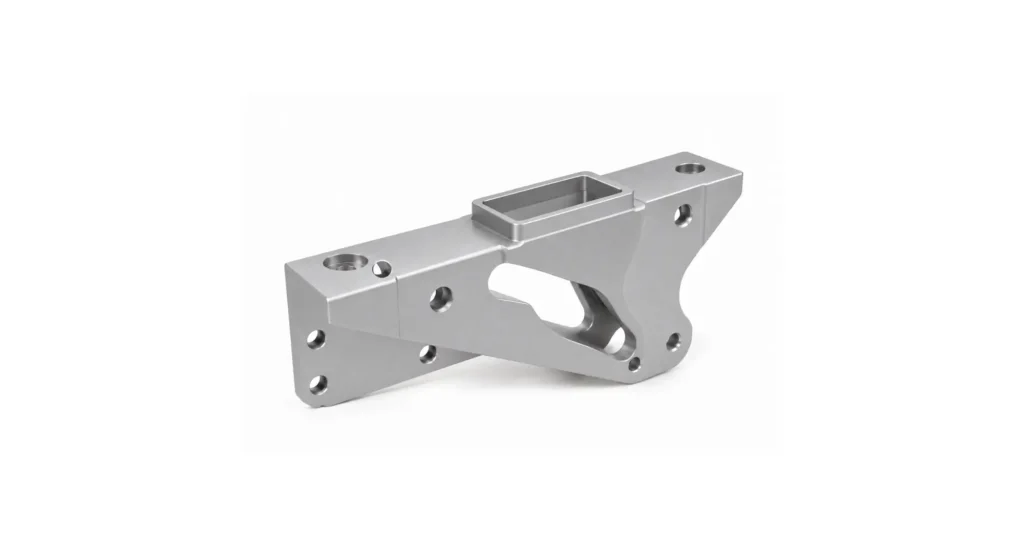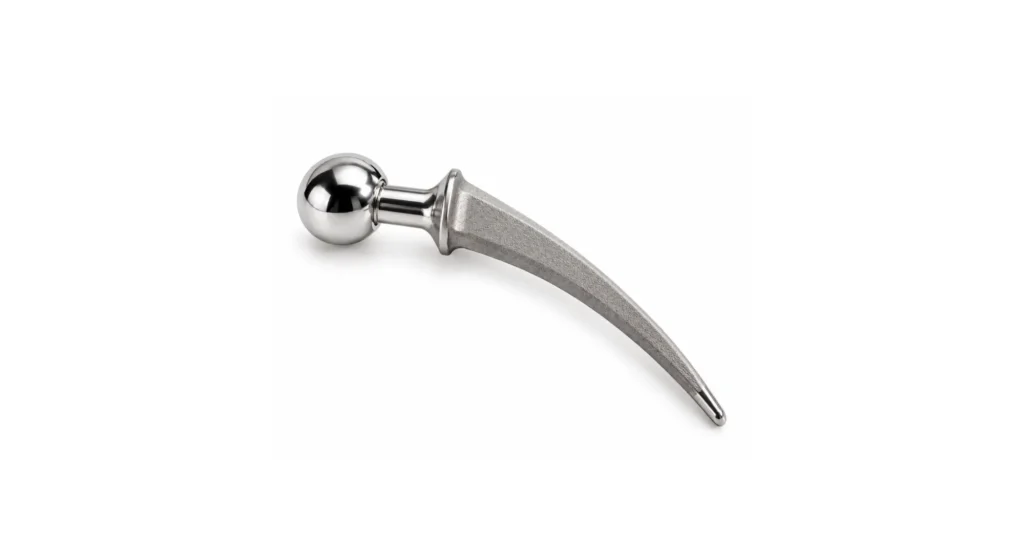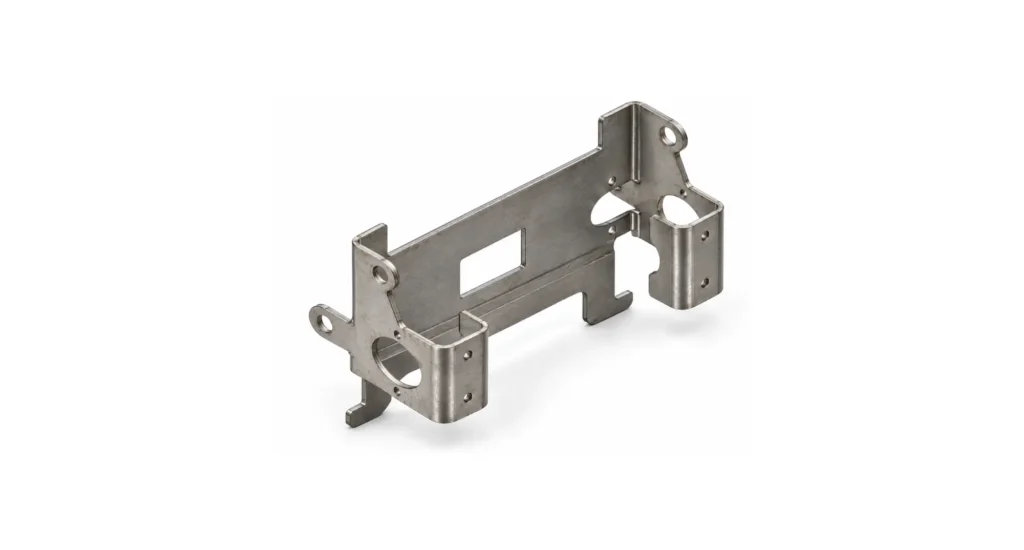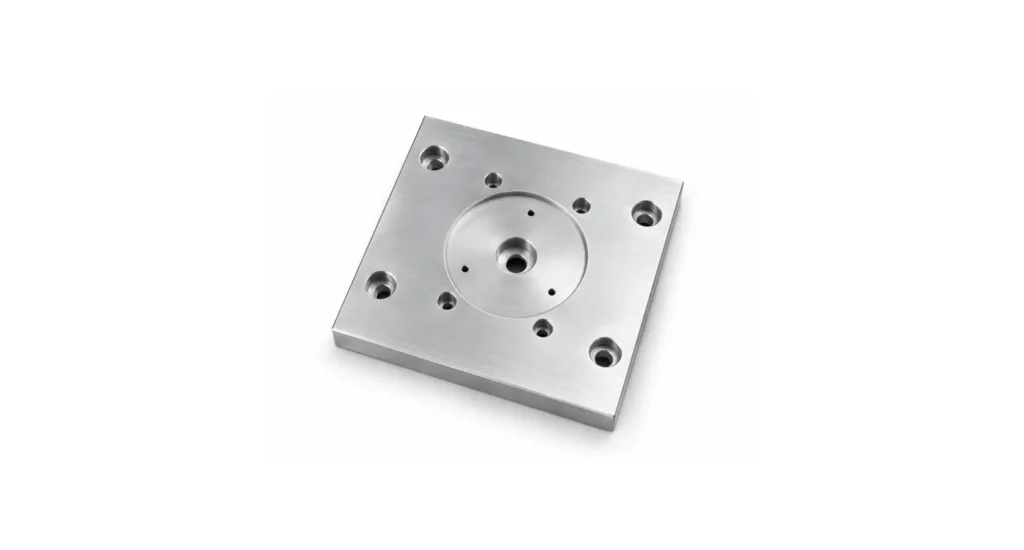

Aerospace CNC machining is among the most technically demanding fields in precision manufacturing, operating to standards that make other sectors seem, frankly, primitive.
Every air/space craft component, whether commercial, military, orbital or interplanetary, relies on precision-machined components with tolerances measured in microns, validated and controlled by the most rigorous certifications. In an industry where most parts are mission/life critical, factors of safety are engineered to extreme levels. CNC-machined parts serve as the embodiment and realization of reliability, structural integrity, and flight performance.
Unlike much of the output of CNC machining, aerospace components must contend with extreme environmental challenges: rapid temperature swings, corrosive fuels, high frequency vibration loading, structural fatigue and impact loading, and long service endurance to extract value.
This demands the most specialized materials, leading edge equipment and skills, and the greatest rigor, under quality systems such as AS9100 and NADCAP. Engineers and procurement teams must manage material traceability, documentation, First Article Inspection (FAI), and Statistical Process Control (SPC) for every part produced, with long term record keeping.
Key takeaways
- Aerospace CNC component machining is precision subtractive manufacturing, used for highly regulated aircraft and spacecraft component supply.
- Standard aerospace tolerances often reach ±0.0005 in (±12.7 μm) or tighter.
- Critical considerations include material specifications, certifications (AS9100, NADCAP), corrosion performance, traceability, and structural integrity.
- Documentation, such as FAI, SPC, and process validation, carries equal emphasis with machining precision.
What is Aerospace CNC machining?
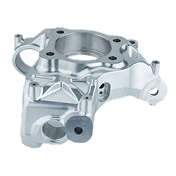
Aerospace CNC machining encompasses a wide spectrum of computer-controlled, subtractive manufacturing techniques, used to produce the full range of components for aircraft, spacecraft, satellites, propulsion systems, and avionics.
- Rotating cutters of various types are imposed onto material billets or cast/forged preforms, to extract the required part with precise and repeatable detail (milling) for complex, 3D profile extraction.
- Stationary/traversing cutters are applied to rotating workpieces (turning) for similar but essentially circular extracted parts.
- A running wire or shaped electrode erodes the required cuts by electrical discharge (wirecut and EDM) for intricate and precise processing of complex, hard material parts.
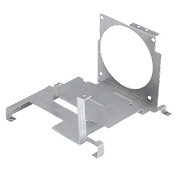
- A traversing laser or plasma jet is used to cut essentially 2D profiles from flat sheet (laser and plasma cutting) for post-shaped skin, folded/fabricated parts, and flat structural elements.
The most prevalent CNC machining processes in aerospace manufacture are multi-axis CNC milling, and CNC turning, the main concern of this guide. These are particularly suited for aerospace components, as they can achieve extremely fine tolerances, excellent surface finishes, and repeatability across high-mix, low-volume production, which is typical of aerospace workflows.
Common aerospace CNC applications include:
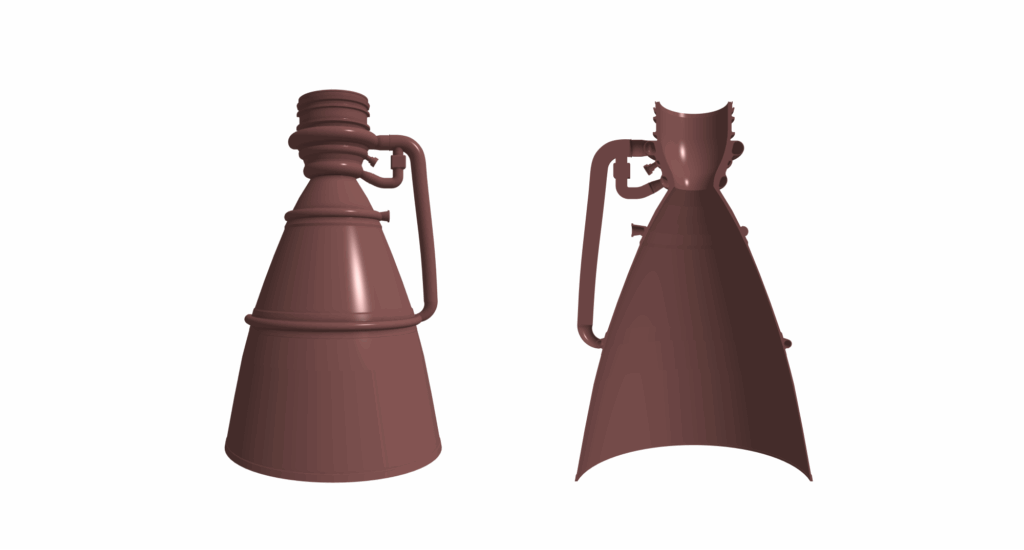
- Flight-critical engine and combustion components (turbine blades/discs, combustion chambers, exhaust components etc.)
- Structural elements (ribs, bulkheads, frames, spars).
- Airfoil and aerodynamic surfaces
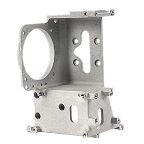
- Avionics housings and electronic assemblies
- Fuel system and hydraulic system components
- Landing gear assemblies

Aerospace CNC machining differs from standard machining in its typical material requirements (Titanium, Magnesium, Nickel superalloys, HEAs), precision requirements, certification frameworks, extreme traceability, and extensive quality processes and documentation/records.
For readers new to CNC machining fundamentals, Jiga’s guide to what is CNC machining provides helpful context and general background information about CNC process details.
Key aspects of aerospace CNC machining
Aerospace CNC machining requires tight tolerances, robust validation procedures, and highly capable machine tools operated at peak skill/capability. Below are the pillars that serve to define aerospace CNC manufacturing as a standalone operational process, distinct from the general and typical application of the technology.
Extreme precision requirements
Aerospace components regularly demand tolerances within:
- ±0.0005 in (±12.7 µm) – structural parts
- ±0.0002 in (±5 µm) – engine components
- ±0.0001 in (±2.5 µm) – fuel system and hydraulics
- 2–8 µm Ra – surface finish requirements
Precision prevents assembly failures, improves aerodynamic and combustion efficiency, and ensures predictable operational performance and fatigue life.
Material traceability and certification
All aerospace material supply must provide full traceability to mill sources and heat-treatment lots. Documentation typically includes:
- Mill test certificates (MTC)
- Heat-lot traceability
- Chemical composition and mechanical testing
- Conformance to AMS, ASTM, or MIL specifications
Traceability is required for regulatory compliance and lifecycle management. If and when failures in-service occur, the ability to trace all parts that may share common failure characteristics, due to supply chain commonality, is of life saving criticality.
Quality management systems
Aerospace CNC machining is typically be governed/validated by adherence to:
- AS9100D quality system requirements
- NADCAP accreditation for coatings, heat treatment, welding, and NDT
- Continuous improvement through SPC and capability studies
These systems ensure process repeatability and defect prevention. Without this – in the world that predated these confirmation and record keeping tools – lives and equipment were lost to issues of material, processing and precision repeatability. Knowing that outcomes are equal, irrespective of the supplier, is central to the sector supply chain confidence.
Documentation and compliance
Every aerospace part must be supported by:
- First Article Inspection (FAI) per AS9102.
- Dimensional inspection reports, following standardized procedures for cross-compatibility between suppliers.
- Material certification.
- Process validation records
- Non-conformance documentation, when applicable
Documentation is crucial for airworthiness certification. No component should ever become active/airborne until it has passed the layered hurdles that exclude random or surprise failure – to the degree that this is possible.
Advanced machining capabilities
The most advanced machine tools and programming skills are mandatory for aerospace work:
- 5-plus-axis machining is imperative for the increasingly complex geometries required in weight/performance optimized parts.
- High-RPM spindle regards are required for Aluminum, Magnesium and thin-wall parts, to minimize surface quality issues that introduce stress concentration and fatigue risk.
- High-torque turning centers are necessary for Titanium and Inconel, to overcome their intrinsic machining challenges.
- EDM processing is the go-to for hardened or more challenging materials, obviating the process ability, hardness and work hardening challenges.
- Hybrid manufacture, applying CNC precision processes to lower cost and lower precision preforms, such as forgings or additive manufactured parts.
Automation and monitoring technologies further improve consistency. Aerospace manufacture is one of the sectors that benefits most from Industry 4.0 implementation, and its effects on quality and repeatability.
The importance of high precision parts for aerospace
Precision is a non-negotiable in aerospace engineering, where it relates to performance or endurance. Many components have lower and higher precision zones, typically related to the need for interaction or interface to other parts. A single component produced out of tolerance can compromise an entire aircraft system, throwing a cascade of parts and functions out of place, balance or fit. These are the primary ways in which precision matters.
Safety and reliability
Aircraft are built from safety-and mission-critical components. This places high demands on repeatable machinability and the predictable component behavior it enables. Commonly, components operate under high stress, vibration, and fatigue loads, where poor quality of precision and finish increase the risk of:
- Stress concentrations
- Fatigue cracking
- Hydraulic failure
- Seal leakage
- Alignment issues
Weight optimization
Precision machining supports the production of weight saving features that typically add complexity to the manufacture of parts, but can enable significant performance and economy benefits that more than compensate for additional cost. These can involve:
- Thin-wall sections
- Topology-optimized structural parts
- Lightweight aluminum, titanium, and composite-compatible features
Weight reduction directly impacts fuel efficiency and payload capacity.
Performance requirements
Precision machining improves:
- Aerodynamic smoothness
- Engine efficiency
- Thermal performance
- System responsiveness
- Stress dissipation and fatigue performance

Regulatory compliance
Compliance with FAA, EASA, and DoD standards requires exact dimensional and material conformity, and evaluation of both external and internal quality by digital measurement tools, ultrasonic and X-ray evaluation and destructive evaluation of samples to ensure performance is as expected.
Interchangeability and maintenance
Aircraft maintenance depends on components being easily replaceable, often without re-machining or fitting. CNC machining ensures exact part-to-part reproducibility, and coupled with intense QA and certification processes, inter-supplier consistency is assured.
Key materials used in aerospace CNC machining
Aerospace applications require materials with high specific strength, fatigue resistance, corrosion resistance, and temperature tolerance.
Aluminum alloys (7075, 6061, 2024)
Aluminum alloys are valued for their light weight, strength, and versatility across engineering applications.
- Lightweight and easy to machine
- Used for structural elements, ribs, brackets, housings, aerodynamic surfaces
- Excellent strength-to-weight ratio (especially 7075-T6)
Titanium alloys (Ti-6Al-4V, Ti-6242)
- Exceptional strength-to-weight
- Operates at temperatures up to 600°C
- Used in engine components, landing gear, structural frames
Nickel superalloys (Inconel 718, 625)
- High-temperature strength-retention up to 1000°C
- Used in turbine blades, exhaust systems, and thermal shields
- Difficult to machine; requires advanced tooling and cooling
Stainless steels (15-5 PH, 17-4 PH)
Stainless steels provide reliable strength and performance, with PH grades used in demanding applications.
- High strength and corrosion resistance
- Used for landing gear, flanges, shafts
Specialty alloys and composites
- Cobalt alloys
- Metal matrix composites
- Polymer and Carbon composites requiring metal interface hardware
Comparison table: common aerospace materials
| Material | Strength-to-Weight | Temperature Resistance | Typical Applications |
|---|---|---|---|
| 7075-T6 Aluminum | High | Medium | Structural parts, housings |
| Ti-6Al-4V | Very High | High | Engine, structural frames |
| Inconel 718 | Very High | Very High | Turbine, exhaust, heat shields |
| 17-4 PH Stainless | Medium-High | Medium | Landing gear, shafts |
| Composites (w/ metal hardware) | Highest | Varies | Fuselage, aero surfaces |
CNC machining processes used in aerospace manufacturing
Aerospace machining uses a surprising range of overlapping processes, equipment styles and types, to produce complex and diverse components. In many cases, multiple options for manufacturing must be considered. In extreme or exotic cases, the choices are much more limited and direct.

3-Axis CNC mills
Suitable for simple prismatic components. Excellent for aluminum parts with low complexity.
5-Axis CNC machining centers
This equipment class offers increased options in tool path complexity and cutter presentation, enabling more shape range, critical for:
- Complex surfaces
- Impellers, blisks, airfoils
- Tight-tolerance titanium parts
5-axis machining reduces setups and improves accuracy.
Multi-axis turning centers
Ideal for:
- Landing gear components/linkages
- Hydraulic components
- High-strength stainless and Titanium parts
Swiss-type lathes
Swiss lathes serve in micro-machining, and the highest precision small parts.
- Precision pins
- Fasteners
- Electrical and avionics hardware

EDM (Electrical Discharge Machining)
This family of processes is used to machine the most difficult classes of material and offers among the highest precision results. It is used for:
- Heat-resistant alloys
- Internal fluid channels in fuel flow
- Thin walls and delicate geometries

Horizontal machining centers
These typically use large cutters for coarse preparation of heavy, relatively simple components. They are excellent for structural elements requiring high material removal rates.
Tolerances, precision levels & quality standards in aerospace CNC machining
Aerospace relies on repeatable, extreme and heavily certified precision.
Typical aerospace tolerance requirements
| Component Type | Typical Tolerance |
|---|---|
| Structural Components | ±0.001 in (25 µm) |
| Engine Components | ±0.0002–0.0005 in (5–12 µm) |
| Fuel/Hydraulic | ±0.0001–0.0003 in (2.5–7 µm) |
| Avionics Housings | ±0.001 in |
AS9100 quality management system
Mandatory for aerospace machining and suppliers. It encompasses:
- Risk management
- Process validation
- Non-conformance control
- Supplier management
NADCAP accreditation
A specialized certification for:
- Heat treatment
- Welding
- Surface treatments and coatings
- Non-destructive testing (NDT)
First Article Inspection (FAI)
Performed per AS9102 to validate:
- Dimensional conformity with spec
- Process capability
- Material compliance
- Manufacturing repeatability
Statistical Process Control (SPC)
SPC in aerospace CNC manufacturing ensures every outcome component meets the ultra-tight tolerances demanded, by continuously monitoring process variations. Real-time data from machines and inspections enables early detection of drift, reducing scrap, improving repeatability, and maintaining compliance with stringent aerospace quality standards. SPC is a key component in Industry 4.0 implementation.
Material certification and traceability
Material certification and traceability in aerospace CNC manufacturing ensure components originate from verified, approved materials with fully documented supply records. Mill certs, heat numbers, and batch documentation follow each part through machining and inspection, guaranteeing compliance with relevance standards, preventing counterfeit/substituted materials causing in-use failures, and supporting complete lifecycle accountability for safety-critical applications.
Common aerospace components made with CNC machining
Aerospace machining is key to the manufacture of virtually every system or element on an air or space craft.
Engine components
- Turbine blades (via combined EDM, wirecut, and 5-axis machining)
- Compressor rings
- Heat shields
- Fuel nozzles and housings

Structural components
- Bulkheads
- Wing ribs
- Brackets and frames
- Seat rail supports
Landing gear parts
- Axles
- Pistons
- Torque links
- Clevis assemblies
Flight control system components
- Actuator housings
- Linkages
- Bearing supports and pillow blocks
Fuel system parts
- Manifolds
- Pumps
- Valves and metering components
Avionics housings and brackets
- EMI-shield enclosures
- Sensor mounts
- Connector housings
Challenges in aerospace CNC machining
Aerospace machining comes with unique engineering challenges, varied according to processed materials, equipment types and supplier skills levels:
Machining difficult materials
Titanium and Inconel cause:
- High tool wear
- Heat buildup
- Low material removal rates
Solutions: optimized tooling, suitable coolant types and use regimes, adaptive toolpaths.
Meeting extreme tolerance requirements
High precision requires:
- Thermal compensation
- Vibration control
- High rigidity fixturing
Maintaining dimensional stability through heat treatment
Post-processing changes material stresses; CNC operations must plan for and ameliorate distortion.
Managing tool wear & cycle times
This is especially challenging in high-temperature alloys, where precision needs are typically the highest, and consequences of out-of-spec surfaces the most significant. This requires:
- Tool life monitoring
- Coated carbide tools
- Optimized cutting parameters
Complex geometries and thin-wall features
Thin sections offer among the greatest challenges in maintaining precision, as they deflect, chatter, and suffer increased warp-risk.
Long lead times & supply chain complexity
Certifications and material sourcing increase timelines. In both aggressive commercial, space, and military applications, the effects of this viscosity in supply chain flow can be of profound significance.
Latest advancements & trends in aerospace CNC machining
Modern aerospace manufacturing continues to evolve rapidly, in accessibility, capability and economics.
Automation & lights-out machining
Allows higher throughput and reduced variability. This is the strongest trend at the leading edge of technical capability, reducing operational and therefore output costs, while improving outcomes.
AI-ML driven process optimization
AI selects cutting parameters, predicts tool wear, and ensures consistency. Machine Learning (ML) lies at the heart of SPC and process maintenance/optimization. Rapid adaptation of processes can deliver significant cost benefits, for example when toolpath complexity is optimized in novel and imaginative ways.
In-Process monitoring & adaptive machining
Sensors track real-time tool load and compensate automatically. This is key to maintaining precision and consistency across larger production runs.
Hybrid additive-subtractive manufacturing
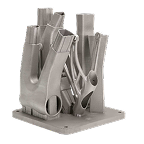
This combination of processes builds near-net shapes, then CNC-finishes critical surfaces. These preforms can be delivered by additive manufacturing processes.
Options such as forging and casting are also used to substitute in preform production, where more appropriate.
Advanced tooling & coatings
Improved tooling outcomes in wear, heat tolerance, and precision can be achieved through carbide and PVD coatings that increase productivity.
Digital twins & simulation
This predictive, analytical toolkit is used to model toolpaths, heat generation, and distortion. Machine learning and AI algorithms are used to evolve functional digital models that closely simulate the production reality. This grows into a tool to derive predictions of quality issues and failure modes, and run correction scenarios to test the projected efficacy of operational alterations.
How to source custom parts for aerospace companies
Connecting with reliable CNC manufacturing vendors is often challenging because this task set combines technical evaluation, risk management, and relationship building. Engineers and sourcing officers must navigate inconsistent and overlapping quality standards that can be variable in application; opaque and often deceptive pricing; variable and unreliable lead times; and opacity as to supplier’s true capabilities.
Many vendors look good on paper but struggle with complex geometries, tight tolerances, or more exotic or less tractable materials. Communication barriers, unclear DFM feedback, and limited traceability further complicate supplier selection.
A strong approach blends structured vetting with iterative evaluation of outcomes as go-no-go gates. Assess certifications, inspect past work, request sample parts, audit quality systems, and evaluate responsiveness during early interactions (and ongoing). Using multi-supplier quoting, with small pilot runs across the better suppliers, and clear documentation, helps filter out weakness before committing to full production.
Most aerospace teams still source cnc parts by blasting RFQs to a few shops, tracking quotes in spreadsheets, and chasing updates in messy email threads. To streamline this process, Jiga lets engineers upload files once, review quotes from vetted manufacturers in a single workspace, and talk directly to the shop cutting their parts so they can make the right engineering calls.
To source aerospace-grade components through a vetted network of global manufacturers, get your first quote here.
Summary
Aerospace CNC machining is a primary keystone of modern aviation and space vehicle/equipment engineering. With extreme tolerances, certified materials, and rigorous documentation requirements, this family of techniques delivers the reliability essential for flight-critical systems.
From Aluminum housings to Nickel-superalloy based turbine components, CNC machining enables precision, repeatability, and ultimately device safety, across the aerospace sector.