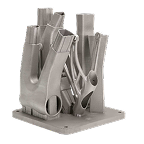
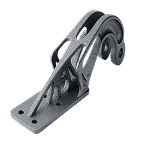
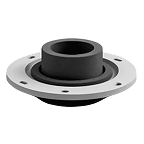

Steel is one of the most widely serving material families in CNC machining. It is ubiquitous because it offers an unmatched spectrum of strong options – from low-cost, free-machining Carbon steels; to corrosion-resistant stainless; and more exotic near-superalloys, steel-adjacent materials; and ultra-hard tool steels built for extreme wear.
The right steel isn’t just a strength decision; choice directly affects machinability, cycle time, achievable tolerances, surface finish, cost, and a whole lot of processing and operational/functional specifics. This guide breaks down steel families and common grades, explains which CNC processes are optimal in each use case, and provides practical selection and sourcing guidance to specify steel CNC parts that meet performance targets, without overpaying for unnecessary complexity.

Key takeaways
- Steel grades range from highly machinable (e.g., 1018, 303 stainless) to challenging (e.g., 2507 super duplex stainless, basic 316 stainless, hardened tool steels), many requiring grade-specific strategies.
- Stainless steels offer corrosion resistance but high Nickel grades work-harden, demanding (and degrading) the sharpest tooling, stable engagement, and conservative cutting parameters.
- Carbon steels are typically the lowest cost and easiest to machine, but need corrosion protection in most uses.
- Alloy steels like 4140 balance strength, machinability, and cost for demanding mechanical components.
- Superalloy-adjacent steels such as A-286 or Greek Ascoloy (Nickel Tungsten stainless alloy 418) for high temperature applications, Incoloy 909 for restrained thermal expansion coefficient, or duplex stainless steels for high strength and extreme corrosion resistance.
- Standard CNC tolerances around ±0.005″ (±0.127 mm) are achievable across most steel grades; tighter tolerances require the right process plan, supplier/equipment capability, and higher-effort inspection.
What Is Steel CNC Machining?
Steel CNC machining encompasses the production of steel components using computer-controlled subtractive ablation processes such as milling, turning, drilling/tapping, grinding, and wire or sinker EDM.
Steel remains dominant in precision manufacturing, as it provides broad performance coverage: strength, toughness, fatigue resistance, wear resistance, and in some cases corrosion resistance – often at a favorable cost compared with Titanium or Nickel superalloys.
Steel is a broad church, rather than one material – it encompasses a spectrum from mild steel to extreme performance. A shop that machines 1018 brackets all day may struggle with 316 stainless or hardened tool steel inserts. Material selection dictates:
- Tool type and coatings
- Cutting strategy (chip control, engagement, rigidity)
- Coolant approach
- Finishing requirements
- Inspection effort and achievable tolerances

Types and grades of steel for CNC machining
Most machined steel falls into four practical families. Each behaves differently under the cutting tool.
Carbon steel
Carbon steels are generally cost-effective and often highly machinable, when in their annealed/normalized state. They’re commonly used for structural and general mechanical parts, but typically require corrosion protection unless used in very benign environments.
Common CNC grades:
- 1018 (low carbon, good general machinability).
- 1045 (medium carbon, stronger, more demanding than 1018).
Basic alloy steels
Alloy steels add elements like Chromium, Molybdenum, and Nickel to increase strength and enable heat-treatment for control of microstructure, to increase hardness and toughness. They’re common in power transmission, gears, and a wide range of high-stress components.
Common CNC grades:
- 4140 (classic strength/machinability balance; widely used).
- 4340 (higher toughness/strength; more demanding to machine than 4140).
Stainless steels
Stainless steels bring corrosion resistance but often sacrifice machinability. Austenitic grades (like 304/316) can suffer considerable work-hardening, making stable cutting engagement critical.
Common CNC grades:
- 303 (free-machining stainless; excellent for turned parts).
- 304 (general purpose stainless; tougher machining).
- 316 (better corrosion resistance; often the toughest to machine of these three).
- 17-4 PH (strong, heat treatable stainless; widely used in aerospace/industrial).
Tool steel and high-speed steel
Tool steels are chosen for wear resistance, dimensional stability, and hardness. They can be machined annealed, then heat treated, with finishing by grinding or EDM if needed.
Common CNC grades:
- P20 (mold steel; machinable, good for tooling bases).
- H13 (hot-work tool steel; more demanding).
- D2 (high wear resistance; often finished by grinding/EDM).
| Steel Category | Example Grades | Strength / Wear | Corrosion Resistance | Machinability (Typical) | Common Uses |
|---|---|---|---|---|---|
| Carbon | 1018, 1045 | Medium | Low | High (1018), Medium (1045) | Brackets, shafts, general parts |
| Alloy | 4140, 4340 | High | Low | Medium | Shafts, gears, mechanical components |
| Stainless | 303, 304, 316, 17-4 | Medium–High | High | High (303) → Low (316) | Fittings, housings, corrosive environments |
| Tool steels | P20, H13, D2 | Very high | Low–Medium | Low (especially hardened) | Dies, molds, wear parts |
What are the advantages of steel CNC machined parts?
Strength and durability
Steels cover a wide range of strength and toughness, supporting load-bearing components and fatigue-sensitive designs.
Corrosion resistance options
Stainless steels (especially 316 and passivated grades) are excellent for moisture, moderate chemical (acid and alkaline) exposure, and outdoor environment. Chloride sensitivity differentiates grades, defining marine environment suitability.
Versatility across applications
From shafts and brackets to tooling inserts and high-temperature fixtures, steel can be tailored to application needs by alloy and heat treatment selection.
Cost-effectiveness
Carbon steels are often the lowest-cost route for strong, functional parts, and alloy steels provide high performance without exotic-material pricing.
Heat treatment capability
Many steels can be heat treated for strength and wear resistance – this is often central to performance requirements in mechanical systems.
What are the challenges of steel CNC machining?
Work hardening in stainless steels
Austenitic stainless (304/316) typically work harden when poor-condition tools rub while cutting. This increases forces, accelerates tool wear, and generally results in poor surface finish.
Tool wear and replacement costs
Harder steels and alloyed grades increase tool wear, requiring better tooling/coatings and more conservative machining parameters.
Thermal expansion considerations
Heat generated during machining can alter dimensions during machining, leading to over-cutting and undersize results, which is especially relevant for tight tolerances and thin-walled features.
Grade-specific machining difficulty
Steels vary dramatically in levels of machinability and free-cutting: 303 cuts very cleanly; 316 demands careful chip control and stable engagement; hardened tool steels may require wire/sinker EDM or grinding.
Cost variations by grade
Material cost, tool wear, and cycle time compound, enhanced properties from 1018 to 316 to tool steel can multiply total cost.


CNC machining process steel
| Process | Best For | Steel Considerations |
|---|---|---|
| CNC Milling | 3D geometries, pockets, contours | Rigidity is critical for stainless; tool engagement strategy matters |
| CNC Turning | Shafts, fittings, rotational parts | Chip control is a major issue for stainless steels |
| Drilling / Tapping | Holes and threads | Peck drilling for deep holes in stainless; tapping strategy matters |
| Grinding | Tight tolerances, fine finishes | Often required for hardened tool steels and bearing surfaces |
| EDM (Wire/Sinker) | Sharp corners, hardened materials | Excellent post-heat treat; no cutting forces |
| Swiss CNC | Small precision parts | Strong for stainless fittings and high-volume small parts |
Machining considerations and best practices
Tooling selection and wear management
- Carbide tooling with appropriate coatings is appropriate for machining most steels.
- Stainless in particular benefits from the sharpest tools and stable cutting engagement – even more so for the advanced, high Nickel, Titanium, or Tungsten bearing grades.
- Hardened steels generally push processing toward EDM and grinding to enable effective material removal.
Cutting speeds and feeds by grade
As steels get tougher, or harder, or more work-hardening at-risk, material removal typically drops and tool strategy becomes more conservative. This drives up processing costs for these already high-value materials.
Coolant and lubrication requirements
Flooding coolant, usually soluble oils, is common; more challenging stainless steels, harder alloys and higher stress tapping operations usually require enhanced lubrication or EP additives.
Strategies to improve machinability
- Choose more machinable grades when function allows (e.g., 303 vs 304 for non-welded parts).
- Control chip formation and evacuation.
- Avoid blunted-tool rubbing (especially in stainless).
- Use stable workholding and tool clamping to minimize chatter and tool deflection
Grade-specific machining tips
- 1018/1045: generally forgiving; watch burrs and edge finishing.
- 4140: great strength balance; hardened states increase wear rapidly.
- 303: excellent for turning; sulfides improve chip break but reduce weldability/corrosion vs 304/316.
- 304/316: keep tools sharp, maintain constant engagement, avoid dwell.
- Tool steels: often machine annealed, then heat treat, then finish by grinding/EDM to alleviate distortions resulting from heat.
| Steel Type | Cutting Speed (SFM) | Feed Rate | Coolant |
|---|---|---|---|
| Low Carbon (1018) | 300–500 | Standard | Flood or mist |
| Medium Carbon (1045) | 200–400 | Standard | Flood |
| 4140 Annealed | 250–400 | Standard | Flood |
| 4140 Hardened | 120–200 | Reduced | Flood |
| 303 Stainless | 200–300 | Higher | Flood |
| 304 Stainless | 150–250 | Higher | Flood |
| 316 Stainless | 100–150 | Higher | Flood + EP |
| Tool Steel (annealed) | 100–200 | Reduced | Flood |
Tolerances in steel CNC machining
Steel components commonly achieve ±0.005″ (±0.127 mm) with standard CNC equipment and stable setups. Tighter tolerances require attention to:
- Geometry issues such as thin walls, deep pockets, long tools.
- Process choice – turning vs milling vs grinding.
- Heat buildup and dimensional stability.
- Inspection method and repeatability in processing.

| Tolerance Level | Range | Achievability |
|---|---|---|
| Standard | ±0.005" (±0.127 mm) | All grades, standard equipment |
| Precision | ±0.002" (±0.05 mm) | Most grades with experienced suppliers |
| High-Precision | ±0.001" (±0.025 mm) | Requires grade and process expertise |
| Ultra-Precision | ±0.0005" (±0.0127 mm) | Grinding or specialized processes |
Design considerations for steel CNC parts
Wall thickness and rigidity
Thin walls deflect, especially in stainless steels. Where a design requires thin sections, plan finishing strategies and fixturing accordingly.
Internal corner radii
Use the largest internal radius that function allows; small radii increase tool length/deflection and processing cost.
Feature depth and tool access
Deep pockets and long reach tools increase chatter, deflection, and tolerance risk, particularly in higher strength/toughness grades.
Thread and hole specifications
Call out critical threads and hole tolerances clearly; consider thread forming vs cutting where appropriate – but remember that this is more challenging in highly work-hardenable grades.
Surface finish callouts
Only specify high grade finishes where they are functionally necessary. ‘Flat’ is sufficient in many cases, elevated finish requirements directly and heavily influence cycle time and cost.
Surface finishes and post-processing
| Finish | Applicable Steels | Purpose |
|---|---|---|
| As-machined | All | Cost-effective functional surfaces |
| Heat treatment | Carbon, alloy, tool | Increase hardness and strength |
| Zinc plating | Carbon, alloy | Corrosion protection |
| Black oxide | Carbon, alloy | Mild corrosion resistance, appearance |
| Powder coating | All (with prep) | Corrosion protection, color |
| Passivation | Stainless | Enhances corrosion resistance |
| Electropolishing | Stainless | Smooth/mirror finish, improved corrosion resistance |
Cost considerations
Steel part cost is driven by both material price and machinability – cycle time, tool wear, tool changes, finishing, inspection.
| Steel Type | Material Cost | Machining Cost | Total Relative Cost |
|---|---|---|---|
| 1018 Carbon | Low | Low | 1× (baseline) |
| 4140 Alloy | Moderate | Moderate | 1.5–2× |
| 303 Stainless | Moderate–High | Moderate | 2–2.5× |
| 304 Stainless | Moderate–High | High | 2.5–3× |
| 316 Stainless | High | Very High | 3–4× |
| Tool Steel | High | Very High | 4–5× |
Sourcing steel CNC machining: Supplier selection
Steel sourcing problems often come from a failure to understand the grade-differentiators and specializations in the various supply chains. Grade-specific capability matters.
Key evaluation points:
- Supplier experience of the planned grade – Carbon steel vs 316 vs tool steel present very different challenges.
- Process capability – 5-axis, mill-turn, grinding, EDM – must be aligned to feature need in the design, to avoid processing challenges such as increased setups leading to reduced precision.
- Inspection capability – CMM, calibrated gauges, surface finish measurement, hardness testing suited to the end result.
- Consistency across orders – repeatability matters for steel process plans and unsecured Jobbing supply chains often fail in this regard.
- DFM communication – for example, design revisions related to tight tolerances in stainless can deliver simplification/cost benefits from early feedback.
Automated quoting platforms such as Xometry (see our Jiga vs Xometry comparison here) typically miss nuance for challenging grades, taking a steel is steel approach that requires correcting down stream and builds false expectations. The most appropriate machining approach greatly influences quality and lead time. A platform model that prioritizes capability-based matching and direct communication reduces these early stage risks.
Why platform choice matters for steel machining
Jiga helps route steel CNC machining projects to suppliers with proven grade-specific capability and appropriate inspection, while enabling direct technical communication to resolve nuanced material and tolerance requirements early.
Summary
Successful CNC machining of steel components depends on matching the right steel grade to the application and choosing a supplier with the correct grade-specific expertise.
- Carbon steels offer low cost and good machinability.
- Alloy steels like 4140 provide strength and versatility.
- Stainless steels deliver corrosion resistance but often demand careful machining strategy.
- High Nickel and Tungsten bearing steels pose extreme challenges, proportional to their end-use performance benefits.
- Tool steels enable extreme wear performance but frequently require EDM and grinding.
Jiga supports steel projects by connecting buyers to vetted manufacturers across steel categories, enabling direct communication, and providing quality assurance for demanding requirements.