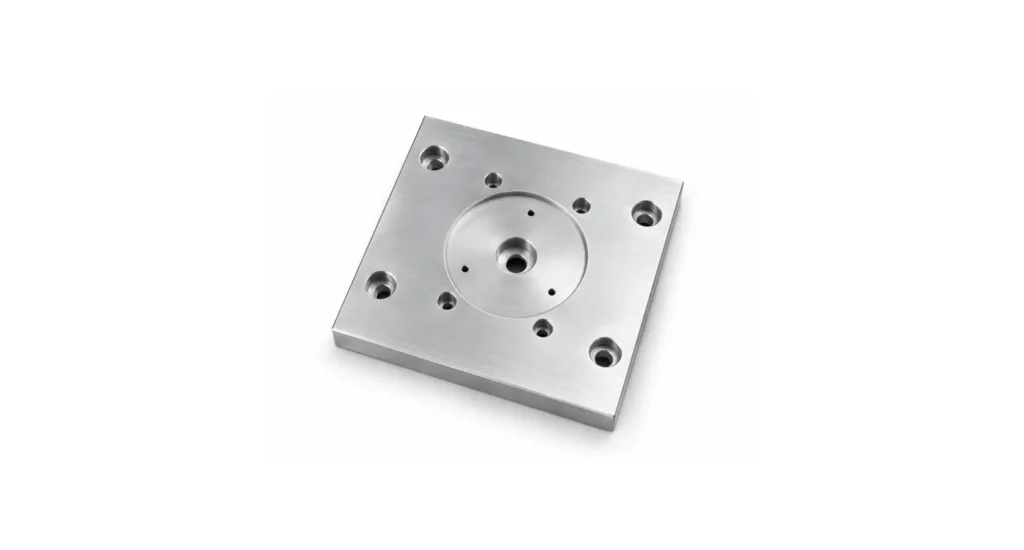

Both CNC routing and CNC milling are subtractive manufacturing processes that use rotating cutting tools to extract a net-shape from a solid workpiece. On first examination, they can appear very similar, but in detail of equipment and practice, they are optimized for very different tasks. Choosing the wrong process can lead to avoidable costs, missed opportunities in quality and tolerance, longer lead times, or inconsistent and/or degraded part quality.
This guide is written for engineers and procurement decision-makers evaluating CNC routing vs milling for custom parts. Rather than focusing on machine theory, it provides practical guidance based on material, precision requirements, part size, production volume, and budget, assisting in selecting the most appropriate CNC machining process with confidence.
Key takeaways
- CNC milling delivers high precision (typically ±0.001″ to ±0.005″) and is ideal for hard metals, complex geometries, and tight-tolerance parts
- CNC routing prioritizes speed and large work envelopes, making it cost-effective for soft materials, sheet goods, and large-format (relatively thin) components
- Mills rely on rigid frame construction with high torque and lower spindle speeds, while routers more commonly use lower-stiffness gantry layouts and very high RPM for fast processing
- Material hardness is the primary driver of process selection: hard metals require milling, softer materials can often be routed
- For most precision metal parts, CNC milling is the appropriate and predictable choice
What is CNC milling?
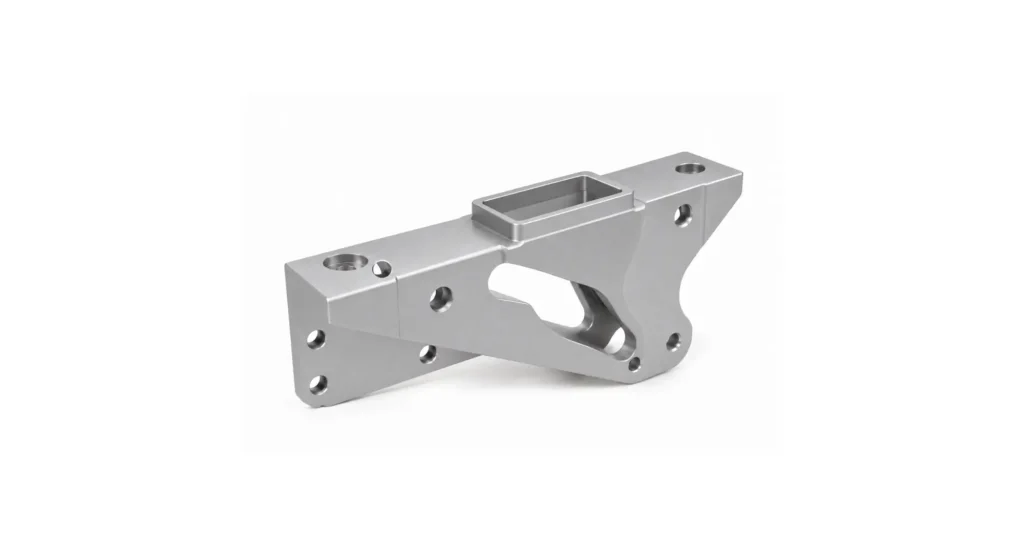
CNC milling is a precision machining process that ablates material using rotating multi-point cutting tools guided by computer numerical control. This can involve cutters in controlled axis motion; similar movement of the part being cut; or more commonly a combination of the two. Milling machines are designed to handle high cutting forces, maintain tight tolerances, and produce complex geometries in hard materials.
How CNC mills work
Most CNC mills use a C-frame or bridge-style architecture. The table typically moves in the X and Y axes, while the spindle moves vertically in Z. This compact, heavy construction provides high rigidity and vibration resistance, critical for accuracy when cutting metals.
Key characteristics include:
- Lower spindle speeds (commonly under 12,000 RPM, though high-speed mills may reach 18,000-30,000 RPM)
- High torque for deep cuts and hard materials
- Support for 3-axis, 4-axis, and 5-axis machining
Benefits of CNC milling
CNC milling offers broad, versatile manufacturing capability for producing precise, repeatable parts across a wide range of materials.
- Its rigid machine structures and high cutting forces enable accurate machining of metals, plastics, and composites, including complex 3D geometries and tight-tolerance features.
- Multi-axis CNC mills reduce setups, improve dimensional consistency, and support intricate contours and angled features.
- CNC milling integrates well with secondary operations such as drilling, tapping, and finishing, allowing complete parts in one workflow.
The process delivers consistent quality, excellent surface finishes, scalable production volumes, and good design flexibility, making it a foundational manufacturing method in aerospace, medical, industrial, and automotive applications.
Downsides of CNC milling
| Downside of CNC Milling | Why It Matters |
|---|---|
| Higher capital and operating cost | CNC mills, tooling, and skilled programming increase part cost compared to simpler processes |
| Tool wear in hard materials | Cutting forces accelerate tool wear in hardened steels and superalloys, increasing tooling expense |
| Cutting forces cause deflection | Thin walls and delicate features can distort under load, affecting accuracy |
| Burr formation | Mechanical cutting often creates burrs that require secondary deburring |
| Limited internal corner sharpness | Tool diameter sets minimum internal radius, restricting sharp corners |
| Multiple setups for complex parts | Re-fixturing increases cycle time and tolerance stack-up |
| Thermal effects during cutting | Heat generation can affect dimensional stability on tight-tolerance features |
| Slower for high-volume simple parts | For flat profiles or thin sheets, laser or waterjet is often faster and cheaper |
| Fixturing complexity | Complex geometries may require custom fixtures, adding cost and lead time |
| Not ideal for extremely hard or brittle materials | Materials like carbides or ceramics are difficult or impractical to mill |
Materials best suited for CNC milling
CNC milling offers wide material compatibility, with certain class-specific constraints and limitations:
| Material Family | Common Examples | Why it is Suited to CNC Milling | Key Considerations |
|---|---|---|---|
| Aluminum alloys | 6061, 7075, 5052 | Excellent machinability, high material removal rates, good surface finish | Avoid thin-wall deflection; manage chip evacuation on deep pockets |
| Carbon and alloy steels | 1018, 1045, 4140 | Good strength-to-cost balance, predictable machining behavior | Tool wear increases with hardness; heat control for tight tolerances |
| Stainless steels | 304, 316, 17-4 PH | Corrosion resistance with manageable machinability (grade dependent) | Work hardening requires sharp tools and proper feeds |
| Tool steels (pre-hardened) | P20, H13 | Stable dimensions for tooling, molds, dies | Increased tool wear; may need finishing or grinding |
| Titanium alloys | Ti-6Al-4V | High strength-to-weight, critical aerospace/medical applications | Low thermal conductivity; use conservative feeds, sharp tools |
| Nickel superalloys | Inconel 718, Hastelloy | Maintains strength at temperature | Slow cutting speeds; high tool wear and cost |
| Brass | C360 | Excellent machinability, clean surface finish | Chip control easy; softer—avoid over-tight tolerances |
| Copper | C110 | High conductivity, good for electrical components | Gummy material; tool sharpness critical |
| Engineering plastics | PEEK, Delrin, Nylon | Lightweight, corrosion-resistant, easy to machine | Manage heat buildup and creep; fixturing for flexibility |
| Composites (limited applicability) | G10, carbon laminate | Structural applications with controlled geometry | Abrasive—tool wear and dust control required |
What is CNC routing?
CNC routing is a rotating, multi edge-tool machining process optimized for processing speed, large-format work, and efficient cutting of softer materials. While it also uses rotating tools, the machine architecture and cutting strategy differ significantly from milling.
How CNC routers work
Routers typically employ a gantry-style machine format, where the spindle moves in X, Y, and Z over a stationary table. This architecture allows for very large work envelopes in X and Y – often 4′×8′, 5′×10′, or larger – ideal for sheet goods. This implies limited capacity in the Z axis, which is typical of CNC routers.
Key characteristics include:
- Very high spindle speeds (15,000-30,000 RPM)
- Lower torque compared to mills
- Lightweight construction optimized for speed rather than cutting force
Benefits of CNC routing
| Benefit of CNC Routing | Why It Matters |
|---|---|
| High cutting speeds | High spindle RPM enables fast material removal and short cycle times |
| Large work envelopes | Gantry-style machines accommodate large sheets and oversized parts |
| Cost-effective for soft materials | Lower machine forces and tooling costs reduce part price |
| Efficient sheet processing | Ideal for nested cutting of flat panels and profiles |
| Minimal setup time | Vacuum tables and simple fixturing speed production |
| Good surface finish on soft materials | Clean edges in plastics, wood, and aluminum sheet |
| Flexible design changes | Quick program updates support rapid prototyping |
| Low tooling complexity | Standard router bits are widely available and inexpensive |
| Scalable for high-volume production | Efficient for repetitive cutting of sheet goods |
| Suitable for lightweight structures | Avoids unnecessary overprocessing of soft materials |
Downsides of CNC routing
In various regards, CNC routing is a specialist and capability-limited machining system:
- Reduced equipment rigidity limits tight tolerances
- It offers less effectiveness in machining hard materials
- There is greater risk of vibration and surface finish issues on deep cut or more dense and harder materials
Materials best suited for CNC routing
| Material Family | Why Suited to CNC Routing | Special Considerations |
|---|---|---|
| Wood and wood composites - plywood, MDF | Excellent machinability at high speeds; ideal for large panels | Tool wear varies with glue/resin content; dust extraction required |
| General thermoplastics | Clean cutting, good edge quality, fast cycle times | Manage heat buildup to avoid melting or edge fusion |
| Engineering plastics | Good dimensional stability for routed profiles | Fixturing needed to prevent vibration or movement |
| Foams | Extremely easy to cut; high feed rates possible | Requires sharp tools and effective debris control |
| Aluminum | Efficient for thin sheet profiles and panels | Limited tolerance control; chip evacuation and chatter management important |
| Brass (thin sheet) | Clean cutting with minimal burrs in thin gauges | Not suitable for thick or tight-tolerance features |
| Composites | Capable of cutting flat composite sheets | Highly abrasive; requires special tooling and dust control |
| Paper and fabric reinforced phenolic laminates | Stable and easy to route | Tool wear higher than wood due to resin content |
| Sign and display materials - ACM and ACP | Fast, accurate cutting for large formats | Edge finishing may be required for cosmetic parts |
CNC Routing vs Milling: Key differences
There are a variety of key differentiators that define the applications for the two processes, with some overlap:
| Factor | CNC Milling | CNC Routing | Why It Matters |
|---|---|---|---|
| Precision and tolerances | High precision, typically ±0.002" to ±0.005" (±0.05–0.13 mm); tighter possible with finishing | Moderate precision, typically ±0.01" to ±0.03" (±0.25–0.75 mm) | Determines suitability for tight fits, assemblies, and critical features |
| Speed and spindle performance | Lower spindle speeds (≤12,000 RPM typical), optimized for controlled cutting | Very high spindle speeds (15,000–30,000 RPM) for fast removal | Impacts cycle time and surface quality by material |
| Torque and cutting force | High torque for deep cuts in hard materials | Lower torque, designed for light cuts at speed | Defines ability to machine hard metals vs soft materials |
| Work envelope and part size | Smaller, more compact work envelopes | Large-format beds (4’×8’, 5’×10’ common) | Determines maximum part size and sheet processing |
| Machine architecture and rigidity | Rigid C-frame or bridge design | Gantry-style spanning large areas | Rigidity drives accuracy and vibration control |
| Material capability | Hard metals, alloys, precision aluminum, plastics | Wood, plastics, foams, composites, thin aluminum | Primary factor in process selection |
| Internal feature capability | Smaller internal radii, complex 3D geometry | Larger internal radii, primarily 2.5D profiles | Limits achievable detail |
| Setup and fixturing | Requires robust fixturing and multiple setups for complex parts | Vacuum tables and simple fixturing common | Affects changeover time and consistency |
| Typical applications | Aerospace, medical, automotive, tooling | Signage, furniture, enclosures, panels | Helps align process to industry use case |
| Cost profile | Higher machine and operating cost | Lower operating cost per part for large sheets | Influences unit economics |
Material considerations: Routing vs Milling
Material choice often decides the process selection before geometry is even considered:
| Material Category | CNC Milling Compatibility | CNC Routing Compatibility | Key Selection Considerations |
|---|---|---|---|
| Hard metals (steel, Titanium, stainless steels, superalloys) | Excellent - designed for high cutting forces and tight tolerances | Poor - insufficient rigidity and torque for hard alloys | Milling required to control tool wear, heat, and accuracy |
| Soft metals (Aluminum, brass, Copper) | Excellent - precise features and thicker sections | Good (limited) - effective for thin sheets and moderate tolerances | Routing viable for panels; milling preferred for tight fits |
| Plastics and engineering polymers | Good-excellent - precise features, small tolerances | Excellent - fast, clean cutting in large formats | Heat management and fixturing are critical |
| Composites (G10, fiberglass, carbon sheet) | Limited-good - abrasive, tool wear concerns | Good-excellent - common for flat composite panels | Specialized tooling and dust control required |
| Wood and wood composites | Limited - overkill and inefficient | Excellent - primary routing application | Routing delivers speed and low cost |
| Foams (PU, EPS, modeling foam) | Poor-limited - lacks rigidity benefit | Excellent - very high feed rates possible | Chip/debris evacuation needed |
| Laminates and panels (ACM, phenolic) | Limited-good - used for machined features | Excellent - optimized for sheet processing | Routing dominates large-format cutting |
| Thick plate stock | Excellent - deep cuts with precision | Poor-limited - chatter and deflection risk | Milling offers stability and accuracy |
| Precision functional parts | Excellent | Poor-limited | Milling supports tolerances and 3D geometry |
Applications by industry
Each industry sector makes greater use of one or other process, rarely using both in similar proportions:
| Industry Sector | CNC Routing Applications | CNC Milling Applications | Usage |
|---|---|---|---|
| Aerospace and Defense | Composite panels, interior structures, non-structural fairings | Precision metal components, brackets, housings, engine parts | Both – routing for composites, milling for metal structures |
| Automotive and Motorsport | Interior panels, trim, lightweight composite panels | Engine components, suspension parts, fixtures, tooling | Both – routing for panels, milling for performance-critical parts |
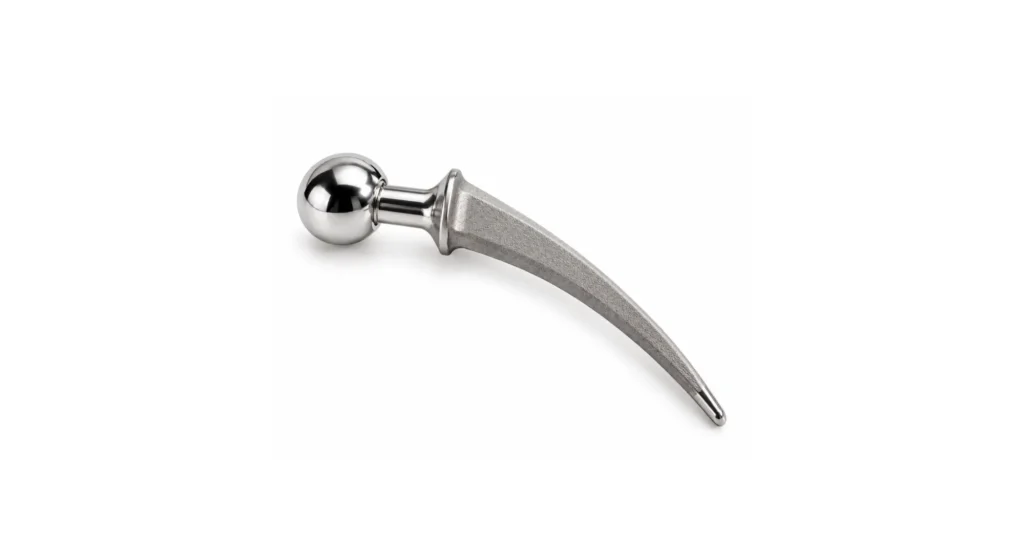
| Medical Devices | Disposable plastic components, enclosures | Implants, surgical instruments, tight-tolerance housings | Both – routing for plastics, milling for precision metal parts |
| Electronics and Electrical | Insulating panels, plastic enclosures, PCB backers | Heat sinks, machined housings, precision mounts | Both – routing for panels, milling for thermal/mechanical parts |
| Furniture and Cabinetry | Wood panels, MDF, plywood, laminates | Hardware, connectors, jigs, fixtures | Primarily routing |
| Signage and Displays | ACM panels, plastics, wood signs | Precision mounts, brackets, frames | Primarily routing |
| Industrial Equipment | Guards, covers, plastic panels | Structural components, precision assemblies | Both |
| Energy and Power | Insulating panels, composite covers | Valve bodies, flanges, turbine components | Both |
| Mold and Die | Pattern boards, mold bases (rough profiling) | Mold cores, cavities, precision inserts | Both – routing for roughing, milling for precision |
| Architecture and Construction | Decorative panels, façade elements | Custom metal connectors, brackets | Primarily routing |
| Prototyping and R&D | Fast mockups, large-format models | Functional prototypes, metal test parts | Both |
Cost considerations: Milling vs Routing
Equipment, machine time, setup/programming and rarity all influence the cost differentials between the two processes.
Machine and tooling costs
Equipment costs for CNC routing and CNC milling differ significantly due to machine design, rigidity, and capability.
- CNC routers typically have lower capital costs, reflecting lighter gantry-style construction, high-speed spindles, and simpler tooling systems. This makes routers economical for large-format cutting of soft materials.
- CNC milling machines require heavier cast frames, higher torque spindles, precision guideways, and thermal control, resulting in higher purchase and maintenance costs.
- Mills also demand more expensive tooling, fixturing, and programming expertise.
While routers offer lower upfront investment, milling provides broader material capability, tighter tolerances, and greater long-term versatility for precision manufacturing.
Cycle time and production efficiency
Cycle times and production efficiency differ substantially between CNC routing and CNC milling due to machine speed, cutting forces, and application focus.
- CNC routing excels in high-speed material removal, especially for large sheets and soft materials, delivering very short cycle times and high throughput with minimal setup.
- CNC milling operates at lower spindle speeds and feed rates, prioritizing accuracy and control over speed. As a result, milling cycle times are longer, particularly for hard metals and complex 3D geometries.
Milling achieves higher precision and repeatability, reducing rework and scrap. Routing maximizes efficiency for volume panel work, while milling optimizes efficiency for precision-critical components.
When routing offers cost advantages
Routing is beneficial in working on large, essentially 2D (sheet) components, soft materials, and when only moderate tolerances are required.
When milling is worth the investment
Milling excels in processing hard materials, extracting complex geometries, and delivering tight tolerance requirements.
Design considerations for CNC routing and milling
| Design Consideration | CNC Milling | CNC Routing |
|---|---|---|
| Wall thickness | Supports thinner walls due to high rigidity and controlled cutting forces | Thicker walls preferred to avoid vibration and deflection |
| Feature size | Suitable for small features and fine details | Best for larger features and profiles |
| Corner radii and internal features | Smaller internal radii achievable (tool-diameter limited) | Larger radii typically required |
| Depth-to-width ratios | Handles deep pockets and tall features more reliably | Shallow cuts preferred; deep slots risk chatter |
| Fixturing and workholding | Rigid fixtures, vises, and custom tooling common | Vacuum tables and simple clamps typical |
| Surface finish expectations | Consistent, fine finishes possible on metals | Good finishes on soft materials; variable on metals |
| Multi-axis capability | 3-, 4-, and 5-axis options support complex 3D geometry | Primarily 3-axis, limited indexing |
| Burr formation | Burrs likely; deburring often required | Minimal burrs on soft materials |
| Thermal effects | Heat from cutting can affect tight tolerances | Heat buildup can melt plastics if unmanaged |
| Tolerance capability | Tight tolerances achievable | Moderate tolerances typical |
How to choose the right process for your CNC project
Selecting between routing vs milling is a systematic process, typically simple in nature but sometimes more complex at the overlap of capabilities.
Start with material hardness
Hard materials favor milling, where soft materials lend themselves to routing.
Evaluate precision requirements
Tight tolerances demand milling, to impose higher levels of control.
Consider part size and work envelope
Large, relatively thin sheet materials require routing, as milling machining envelopes are typically limited.
Factor in production volume
High-volume sheet parts require routing, where low-to-mid volume precision parts can only result from milling.
Decision checklist
- Hard metal + tight tolerances >> CNC Milling
- Soft material + large format >> CNC Routing
- Aluminum sheet + moderate tolerances >> Either (cost-based selection favors routing)
- Complex 3D metal geometry >> CNC Milling (multi-axis)
Sourcing CNC milled and routed parts
Choosing suppliers is often harder than choosing the process. This is where Jiga can help, offering targeted introductions and concierge support in engaging with the most suitable suppliers.
Finding the right supplier capabilities
Finding the right machine shop for CNC routing or CNC milling starts with matching part requirements to actual shop capabilities. Evaluate machine types, work envelope size, spindle speed, and torque to ensure compatibility with your material and geometry – for either process group.
- For milling, confirm multi-axis capability, rigidity, and experience with task-appropriate tolerances and hard alloys.
- For routing, assess large-format capacity, vacuum workholding, and production throughput.
- Beyond equipment, review inspection capability, quality systems, and evidence of similar past work.
Direct communication with the machinist enables early DFM feedback and ensures the chosen process, setup, and tooling align with functional and cost requirements. It’s impossible to overstate the value in this early iteration, in avoiding downstream costs and problems.
Communicating process requirements
Clear communication of process requirements is critical for CNC routing and milling. Direct discussion with the machine shop ensures drawings, tolerances, materials, and finishes are correctly interpreted, prevents incorrect process selection, and enables early DFM feedback to optimize manufacturability, cost, and quality.
Quality consistency across orders
Black-box platforms can vary suppliers between orders, creating inconsistency. It is considerably safer to retain a direct relationship with the actual machine shop undertaking the work.
It is in this that the Jiga concierge service puts sourcing personnel and engineers in a strong position.
DFM feedback before production
Suppliers guidance in the early stages can have significant cost impacts – both in selection of process/platform and in design iterations to simplify and improve production.
Prototype to production continuity
Using the same supplier and process prevents quality drift and disjoint.
Platforms relying solely on algorithmic matching (such as Xometry or Protolabs) can miss nuance. Jiga emphasizes capability-based matching and direct supplier interaction.
Questions to ask a supplier:
- What tolerances can you hold consistently?
- Do you have both routing and milling capability?
- How do you inspect parts?
- Can you support production scaling?
Summary
The selection decision between CNC routing and milling depends on four fundamentals: material, precision, size, and cost.
- Routing excels in speed and large-format soft materials
- Milling remains the standard for precision metal parts and complex geometries.
Jiga helps engineers navigate this decision by connecting projects to vetted suppliers with the right equipment, experience, and quality systems, ensuring the chosen process delivers reliable results.