Home / Resource Center / What is Spot Welding? Process, applications & key advantages

What is Spot Welding? Process, applications & key advantages

Table of Contents

Whitepaper

The complete guide to
Design for Manufacturing and Assembly

Whitepaper

The complete guide to
Design for Manufacturing and Assembly

dfm whitepaper preview

Tips to simplify designs

Practical steps to early DFM integration

Strategies to choosing suppliers

Actionable advice from industry leaders

Spot welding, also referred to as resistance spot welding (RSW), is a high-speed, high-volume joining process used to fuse overlapping sheet or machined metal parts through localised electrical resistance and pressure applied via Copper alloy electrodes. Unlike other welding methods, spot welding does not require filler materials, flux, or shielding gas, making it clean, cost-effective, and highly automatable.

The process is particularly highly utilized in automotive manufacturing, where a typical passenger car can contain several thousand spot welds integrating its individual body panels into a high-functioning monocoque. It is also required in battery pack manufacturing, electronics assembly, and consumer appliances. Engineers, designers, and procurement professionals rely on spot welding for thin-gauge metal attachment, repetitive production, and joints where a visible seam is undesirable.

Key takeaways

  • Spot welding is a resistance welding process that joins overlapping metal parts using electrical current and Copper alloy electrodes that apply current and joint pressure.


  • The process requires no filler materials or shielding gases, reducing operational cost and minimizing cleanup.


  • It is ideal for thin metals (0.5 to 3 mm), especially low-Carbon steel and stainless steel, while Aluminium requires careful parameter control.


  • Automotive assembly and battery tab welding are the most prominent applications.


  • Robotic spot welding enables high-volume, repeatable production with minimal operator involvement.
A green spot welding electronic device attached to a gray metal frame with an adjustable arm and a flat base, set against a white background.
Spot welding equipment comes in many shapes, sizes and power ratings but has the general features of a high-force clamping mechanism, two Copper electrodes, a power supply and an actuator mechanism
A man smiling while sitting on a bench on the brooklyn bridge.
Alan B.
trustpilot Jiga
Mechanical Engineer
"Hands-Down the Best Platform and Partner for Fast, Quality Parts"
I am continually impressed not just by the parts we have received but the incredible level of support. Our team has received 100s of parts, all at an incredible price. Because you have a direct line of communication with the teams making the parts, there is an added level of ownership that you don’t see with other platforms. We are actively switching to have more parts made on Jiga to further drive down costs and have reliable delivery dates.
Get your first quote from verified suppliers. No cost, no commitment.

What is Spot Welding?

Spot welding is a subset of resistance welding, a process where heat is generated internally by electrical resistance rather than external flames or arcs. Two Copper alloy electrodes clamp the overlapping metal parts, conducting electricity through the contact point to induce local melting, and applying pressure to maintain contact and induce fusion at the melt-point.

The weld nugget, a small molten pool, forms between the sheets and solidifies into a permanent metallurgical and unifying bond. Spot welding is preferred for mass production because it is extremely fast, highly repeatable, and easy to automate.

Key characteristics:

  • No consumables (filler, flux, or gas).


  • High-speed cycle – fractions of a second per weld is typical.


  • Suitable for lap joints only.


RSW is therefore a standard in automotive and electronics manufacturing, offering consistent quality and efficiency for repetitive sheet metal joining.

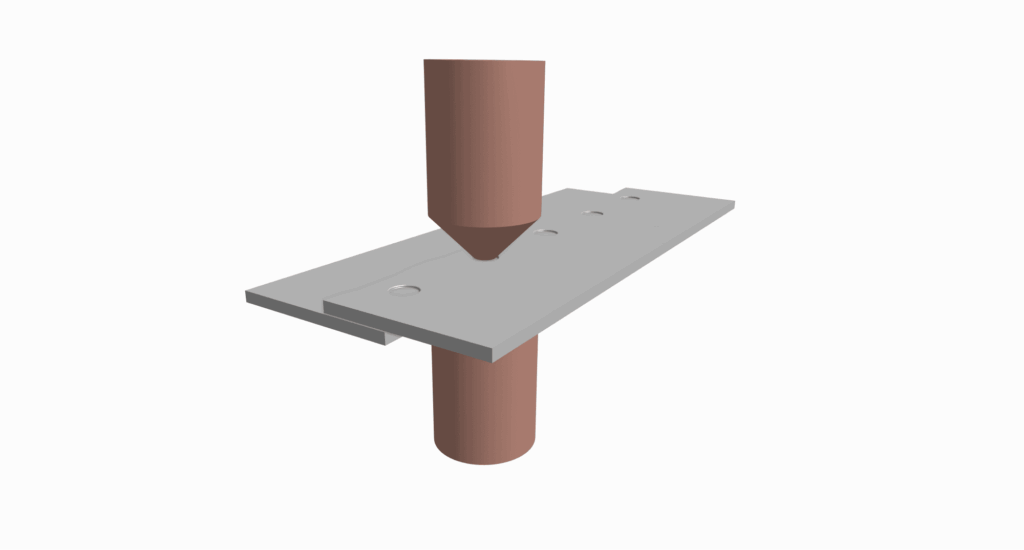
A brown vertical cylinder passes through a hole in a flat gray rectangular plate, which features additional holes—suggesting the plate may be prepared for spot welding applications.
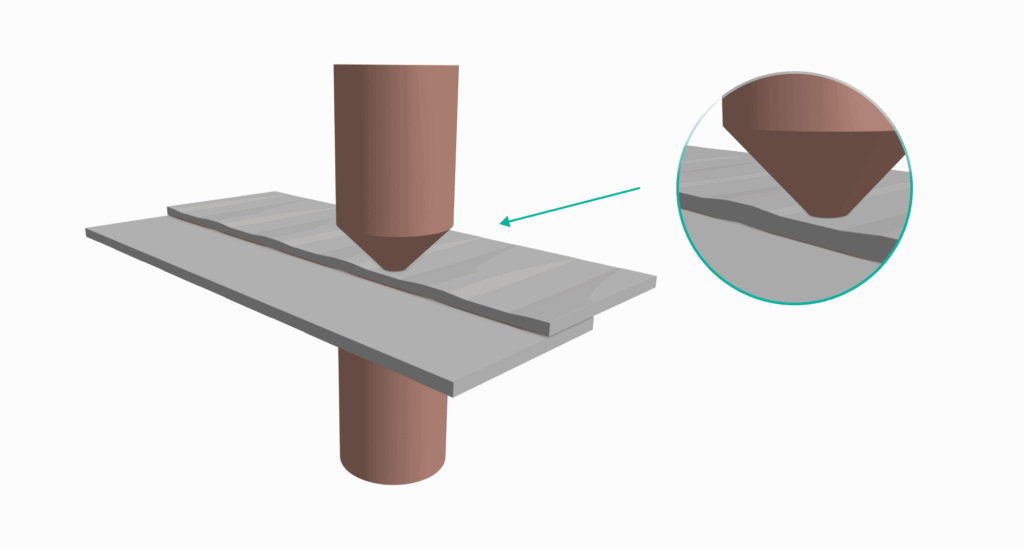
Removing all operational aspects except the electrode, the above illustrates the clamping/high current heating of spots that fuse these two lapped, sheet metal parts. This also illustrates the tendency for a local melt-marking at the electrode contact points (often a small indentation) and the distortion between welds, where clamping forces are not applied (exaggerated)

How Spot Welding works

The spot welding process is managed by the spot welding machine, which applies precisely controlled electrical current, pressure, and timing. The cycle consists of four principal  stages:

Squeeze time

During squeeze time, the electrodes clamp the sheets together, ensuring intimate conductive contact. Adequate electrode force is critical: too little force results in poor electrical contact; too much can deform the sheets. Squeeze time typically lasts 50 to 150 milliseconds depending on material thickness.

Weld time

In the weld stage, a high-current pulse passes through the electrodes and workpieces, generating heat at the interface due to electrical resistance. This melts the local metal to form the nugget. Weld time is extremely short, often 100 to 300 milliseconds for automotive sheet steel, but longer for thicker gauges or Aluminium.

Hold time

Hold time maintains electrode pressure after the current stops, to allow the molten nugget to solidify under compression. This prevents shrinkage cracks and ensures a strong coupling.

Off time

During off time, electrodes retract, and the machine prepares for the next weld. In automated lines, this is often combined with workpiece or weld-head indexing, allowing rapid progression through multiple weld locations.

A cone-shaped tool presses into a metal sheet, with a magnified view showing the point of contact and indentation—similar to the process seen in spot welding applications.
This close view shows the welding distortions that result from local clamping and wider regional softening - minimized by good possess control

Key parameters of spot welding

A matrix effect of several interdependent variables must be controlled for consistent, high-quality spot welds:

  • Welding current: Too low, and the nugget fails; too high, and expulsion occurs. Aluminium typically requires higher currents than steel, to overcome the oxide-induced initial resistance at the junction.


  • Electrode force: Maintains contact and controls nugget size; insufficient force causes irregularities, excessive force can deform sheets.


  • Weld time: Longer for thicker materials; shorter for thin-gauge sheets. Automated systems adjust timing based on material type, and increasingly according to process-reactive analytics and local machine-learning decision making.


  • Electrode geometry and material: Copper alloy electrodes are standard. Cap shape (dome, flat, pointed) influences current density, cosmetics, and nugget formation. Worn electrodes must be dressed or replaced regularly.


Automated machines manage these parameters via pre-programmed weld schedules, while manual operators require experience to adjust settings correctly. Industry 4.0 executions devolve optimization decisions to the local level, acting adaptively on a weld-by-weld and holistic parameter/outcome analysis cycle.

Materials suitable for spot welding

Spot welding works best with thin metal sheets. Material selection heavily influences weld quality, electrode wear, weld parameters, and heat management.

Material Suitability Notes Typical Applications
Low-Carbon / Mild Steel Excellent weldability, high nugget strength Automotive panels, appliance housings
Stainless Steel Good weldability, slightly higher current needed Kitchen appliances, medical devices
Aluminum Alloys High thermal conductivity requires high current, careful electrode maintenance Battery tabs, lightweight automotive parts
Zinc-Coated / Galvanised Steel Requires moderate adjustments to avoid electrode sticking Automotive body panels
Copper, Brass, Nickel Alloys Poor due to high conductivity; specialized settings required Electrical connectors, microelectronics
Materials Not Suitable Titanium, magnesium, thick sections (>3mm) Avoid for spot welding due to low weld quality
Materials considered suitable and unsuitable for spot welding
A man in a maroon shirt standing in front of a city.
Sam H
trustpilot Jiga
Manufacturing Business Consultant
"Excellent platform for prototyping & manufacturing"
Jiga is an excellent platform. It makes it easy to operate and manage projects and keep track of everything. The platform offers excellent prices and customer service, providing the ability to easily communicate with their support team when needed.
Get your first quote from verified suppliers. No cost, no commitment.

Applications of Spot Welding

Spot welding is highly versatile and widely applied in high-volume manufacturing. While it is clearly evident in larger sheet metal assemblies – such as automotive bodies – it finds significant niche application in a wide variety of more exotic and less widely visible contexts:

Automotive manufacturing

Spot welding dominates vehicle body and chassis assembly, joining doors, roofs, floors, chassis rails, and structural panels. A typical sedan may contain 1,200 to 2,000 welds, each taking ~0.3 seconds. Robotic spot welders ensure precision and speed.

Battery tab welding

Spot welding is widely used to connect Nickel and plated tabs to individual cells in battery packs for EVs, drones, and power tools and single button cells for memory backup and other low power applications. Cells come in a wide spectrum of forms – metal packages or pouch types.

  • The weld joins very thin Nickel strips (≈0.1 to 0.3 mm) to plated steel battery cans.

  • Heat input must be extremely controlled to avoid damaging the cell chemistry. Note that battery cells are typically generic in form and mass produced, customized to applications by the form and interconnection of the welded tabs

  • Micro-spot welding equipment with millisecond pulses is used.


This is one of a range of high-volume applications where spot welding is performed on highly heat-sensitive electrical components.

A CR1220 coin cell battery with attached metal tabs for mounting, created using spot welding, shown on a plain white background.
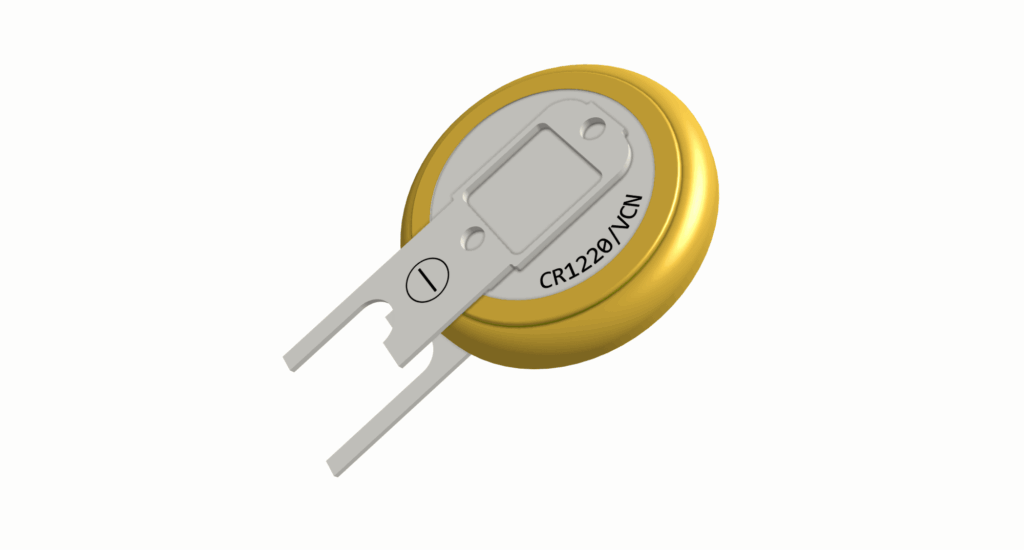
This typical memory backup button cell has PTH (plated through hole) PCB pins welded to its faces, for insertion and soldering. The elevated heat sensitivity of the battery cell is protected by spot welding the tabs, the solder heat input is sufficiently remote to not affect the cell.
Black plastic battery pack case with visible green cylindrical batteries inside; inset circle shows a close-up of the battery terminals, highlighting neat spot welding on the connections.
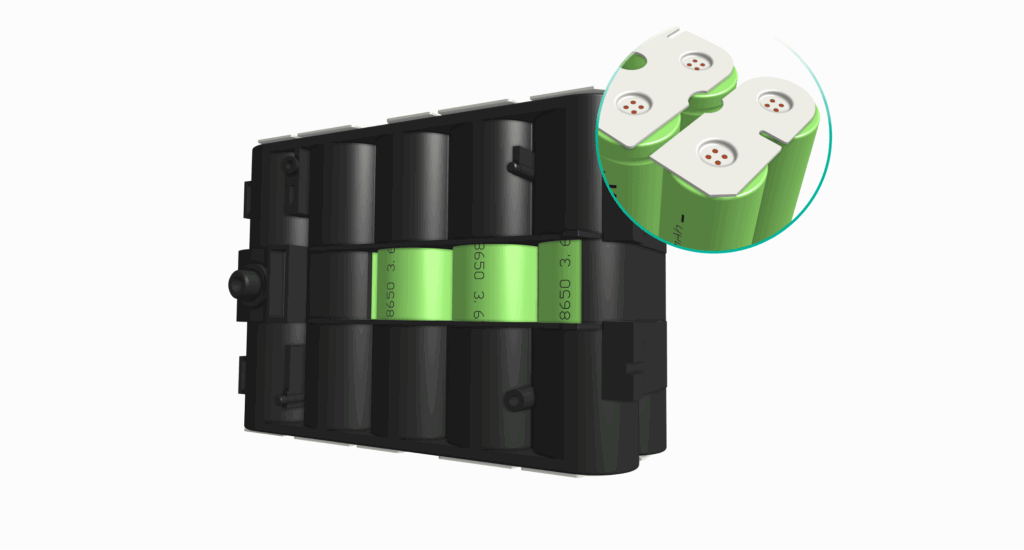
A typical LiPo battery pack, used in a hand power tool - equally representative of EV battery packs. Interconnects are extensive in multi-cell packs and each represents a potential failure point, so spot welding offers a highly repeatable and reliable option in attaching electrodes to form the network

Aerospace honeycomb structures

Many aerospace panels use metal honeycomb cores sandwiched between thin skins. These offer extreme stiffness/rigidity with very low weight.

  • Spot welds can be used to tack internal honeycomb cells during fabrication.

  • Titanium or stainless steel honeycomb structures sometimes rely on resistance spot welding before final bonding or brazing.


This is unusual because the welds occur on ultra-thin foil structures rather than more typical sheet materials.

A 3D geometric structure reminiscent of spot welding techniques, made of interconnected hexagons and elongated shapes in dark gray, set against a plain white background.
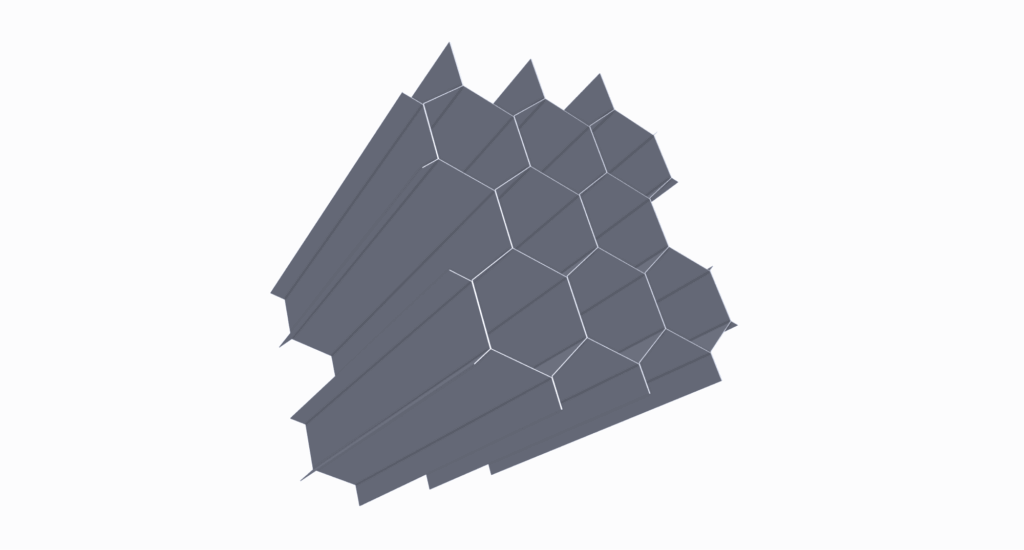
The thin foils that form the honeycomb core of aviation panel/floor materials are typically made by spot welding using progressive layering to build up large cores.

Medical device components

Spot welding appears in implantable and surgical devices where extremely small metal components must be joined without filler metals.

Examples include:

  • Pacemaker battery tab connections

  • Miniature surgical instrument assemblies

  • Catheter electrode components


Often these use micro-resistance spot welding on stainless steel or Platinum alloys.

Jewelry, spectacles and precious metal fabrication

High-end jewelry workshops sometimes use precision spot welders for:

  • Attaching delicate Gold or Platinum findings

  • Link-closing thin chains without solder flow

  • Positioning stones retainer prongs before final soldering


The advantage is that spot welding produces very localized heat, preventing thermal damage to surrounding gemstones.

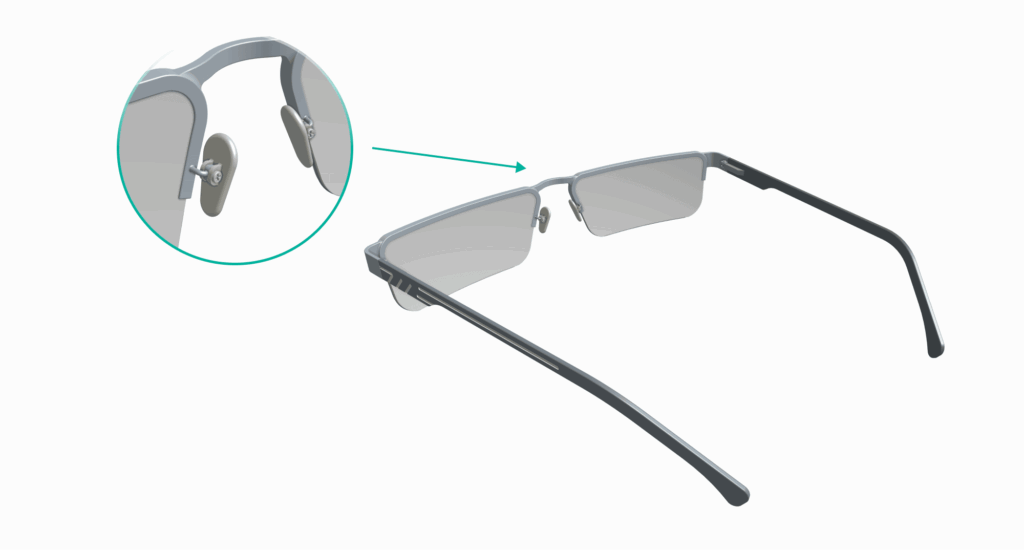
A pair of eyeglasses with a close-up inset showing the nose pad detail and spot welding, highlighted by an arrow.
Spectacle frames are a perfect embodiment of the precision electrical-resistive welding process (the larger family that spot welding belongs to, in that they tend to be small and require small area, cosmetic welds that can be automated for mass production. Frame and nose piece attachment points represent this well. The same principles apply to jewelry finding attachments in costume and precious metal.

Spacecraft thermal shielding

Certain spacecraft and satellite structures use spot welding to attach thin thermal blankets or multilayer insulation supports.

Because spot welds require no filler material and can be automated, they are applicable in environments where:

  • Contamination must be minimized

  • Extremely thin metallic films must be joined without generalized heat that would destroy them.

This has appeared in satellite radiator panels and internal structural brackets of orbital and lander equipment from the earliest launches.

Oil/Pharma/Water filter cartridges

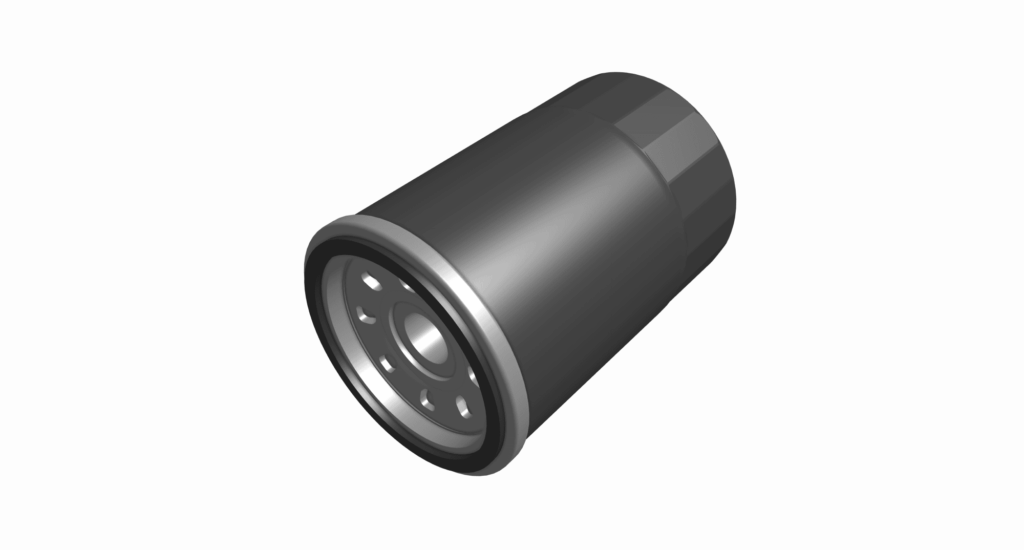
Automotive oil filters, and multiple other filter types, typically house a wire mesh or paper filter element in a deep drawn can with an end cap spot welded (with integrated seal) to complete the assembly. Spotwelding offers low distortion, no residues to contaminate the filtered medium, and a fast, precise assembly process. Many other disposable filter elements are produced for diverse applications

High value examples include:

  • Aerospace hydraulic filters

  • Pharmaceutical sterile filtration housings

  • High-temperature gas filtration cartridges


Spot welding prevents blockage of the mesh openings, which could occur with brazing or adhesive bonding.

A 3D rendering of a cylindrical automotive oil filter with a metal base and multiple holes—spot welding details are visible—shown on a white background.
A typical cartridge filter construction, with sheep metal can and end cap and the central threaded mounting point all spot welded in a precise, low cost and volume-suitable process

Electrical contact manufacturing

Spot welding is used in switchgear and relay manufacturing to attach electrical contact materials.

Common combinations include:

  • Silver/Copper alloy contacts welded to copper carriers

  • Tungsten contacts spot welded onto steel arms


The process allows joining dissimilar conductive materials without filler.

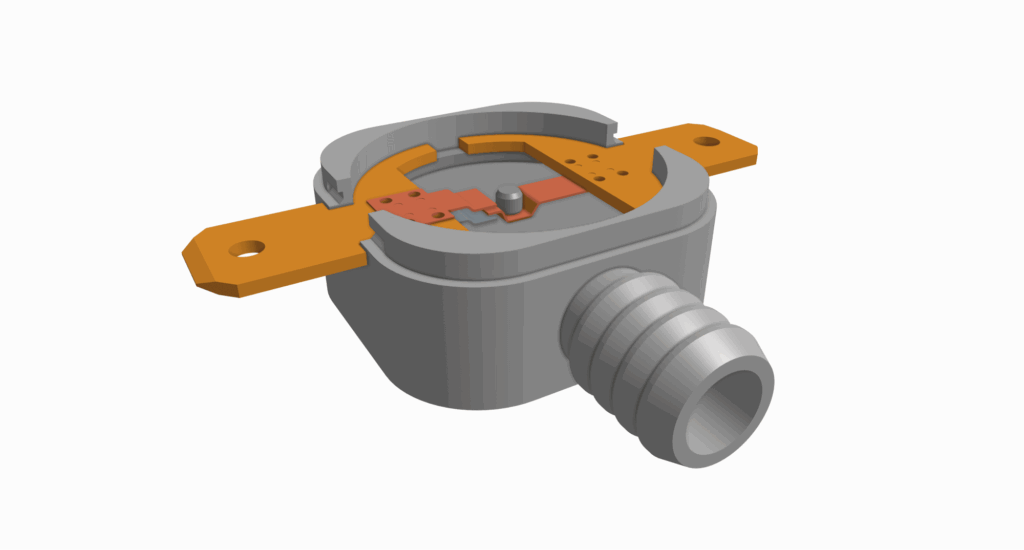
3D rendering of a cutaway view of an automotive sensor, showing internal electronic components, connection terminals, and areas where spot welding ensures secure assembly.
This diaphragm pressure switch exemplifies the use of spot welding to create small, high precision assemblies in switch gear, where 3 Berrylium Copper contactor elements are spot welded to two Copper spade terminals to make a small, precise and repeatable action.

Musical instrument components

Certain percussion instruments and metal reed assemblies use spot welding.

Examples include:

  • Stainless steel percussion frames

  • Metal reed clamps/supports in harmonicas or accordions


The welds provide strong joints without adding mass that could affect acoustic behavior.

Nuclear fuel assembly components

Some fuel rod spacer grids and structural supports in nuclear reactors use spot welding during fabrication.

  • Thin Zirconium or stainless components are welded before final assembly.

  • Precise heat control prevents altering material properties critical for radiation resistance.

Spot welding equipment and machine types

Spot welding machines vary in scale and automation:

Stationary/Pedestal spot welders

High-current, floor-mounted machines for industrial assembly lines, often automated and robot-integrated. Common in jobbing sheet metal fabrication shops and robot automotive plants

Portable / Gun-type spot welders

Handheld devices for field repair or assembly, offering moderate control over weld parameters.

Robotic spot welders

Fully robot-integrated and automated, high-speed solutions for consistent production, integrated with vision and sensor feedback for quality assurance.

Bench/Micro spot welders

Compact units for electronics or hobbyist use, capable of microscale welds with low currents.

Advantages and disadvantages of spot welding

Advantages Disadvantages
Extremely fast - fractions of a second per weld Limited to lap joints
No filler material or shielding gas needed Not suitable for thick or highly conductive metals
Easily automated and repeatable Electrode wear requires maintenance
Clean process with minimal spatter Cannot produce continuous seams
Cost-effective for high-volume production Equipment has higher upfront cost
Advantages and disadvantages of spot welding

Spot welding vs Other welding methods

Factor Spot Welding MIG Welding Seam Welding
Joint Type Lap Butt, lap, fillet Continuous lap
Speed Very fast Moderate Fast (continuous)
Automation Highly automatable Automatable Automatable
Filler No Yes No
Best For Thin sheet, high-volume Thick/complex sections Pressure-tight continuous seams
Strength Point load Continuous bead Continuous bead
Comparison of spot welding to alternative methods

Spot welding cost considerations

Spot welding is capital intensive initially (bench vs robotic cells), but per-weld costs are low due to no consumables and short cycle times. Labour costs are minimized in robotic setups, with skilled electrode maintenance as the primary ongoing expense. For thin sheet, high-volume production, spot welding offers superior value vs alternatives, but MIG/TIG welding may be preferred for thicker or structural joints.

How to find the right spot welding supplier

When sourcing spot welding services, engineers and procurement professionals should:

  • Define capability requirements upfront: thickness, material(s), production volume.


  • Evaluate consistency across multiple runs, not just cost.


  • Expect inspection documentation as standard to verify nugget size, weld strength, and location.


  • Account for preferred supplier onboarding to ensure long-term repeatability.


Selecting the right supplier saves rework and/or process revisions, reduces lead time, and ensures high-quality welds.

Summary

Spot welding is a resistance-based joining process for overlapping metal sheets, ideal for thin-gauge, high-volume applications like automotive panels and battery tabs. Its fast cycle times, repeatability, and automation potential make it a cost-effective choice where continuous seams are unnecessary or impractical. Key considerations include material type, electrode selection, and proper parameter control, and suppliers must be evaluated for capability, communication, and consistency.

Jiga connects its clients with the most appropriate suppliers from an extensive pool, and supports the relationship as a right-hand assistant and concierge, not getting in the way of developing great supplier relations.

Frequently Asked Questions

How strong is a spot weld?
A well-executed spot weld pattern can withstand the shear and tensile loads typical for thin-gauge assemblies, with strength depending on nugget size, material, and electrode pressure.
Titanium, Magnesium, very thick sections (>3 mm), and highly conductive metals (Copper, brass) are generally unsuitable.
A standard passenger car has approximately 1,500 to 2,000 spot welds in assembling its body panels into a monocoque structure.
Yes, small bench and micro spot welders allow hobbyists to work on electronics and thin sheet metal, but safety precautions and proper equipment are essential.
Action successful
Picture of Jon
Jon
Jon is a dynamic and accomplished professional with a rich and diverse background. He is an engineer, scientist, team leader, and writer with expertise in several fields. His educational background includes degrees in Mechanical Engineering and Smart Materials. With a career spanning over 30 years, Jon has worked in various sectors such as robotics, audio technology, marine instruments, machine tools, advanced sensors, and medical devices. His professional journey also includes experiences in oil and gas exploration and a stint as a high school teacher. Jon is actively involved in the growth of technology businesses and currently leads a family investment office. In addition to his business pursuits, he is a writer who shares his knowledge on engineering topics. Balancing his professional achievements, Jon is also a dedicated father to a young child. His story is a remarkable blend of passion, versatility, and a constant pursuit of new challenges.
Picture of Jon
Jon
Jon is a dynamic and accomplished professional with a rich and diverse background. He is an engineer, scientist, team leader, and writer with expertise in several fields. His educational background includes degrees in Mechanical Engineering and Smart Materials. With a career spanning over 30 years, Jon has worked in various sectors such as robotics, audio technology, marine instruments, machine tools, advanced sensors, and medical devices. His professional journey also includes experiences in oil and gas exploration and a stint as a high school teacher. Jon is actively involved in the growth of technology businesses and currently leads a family investment office. In addition to his business pursuits, he is a writer who shares his knowledge on engineering topics. Balancing his professional achievements, Jon is also a dedicated father to a young child. His story is a remarkable blend of passion, versatility, and a constant pursuit of new challenges.

Actionable bits of content on procurement and supply chains, straight to your inbox

Related content

Jiga is free to use instantly. Pay only for parts you source.