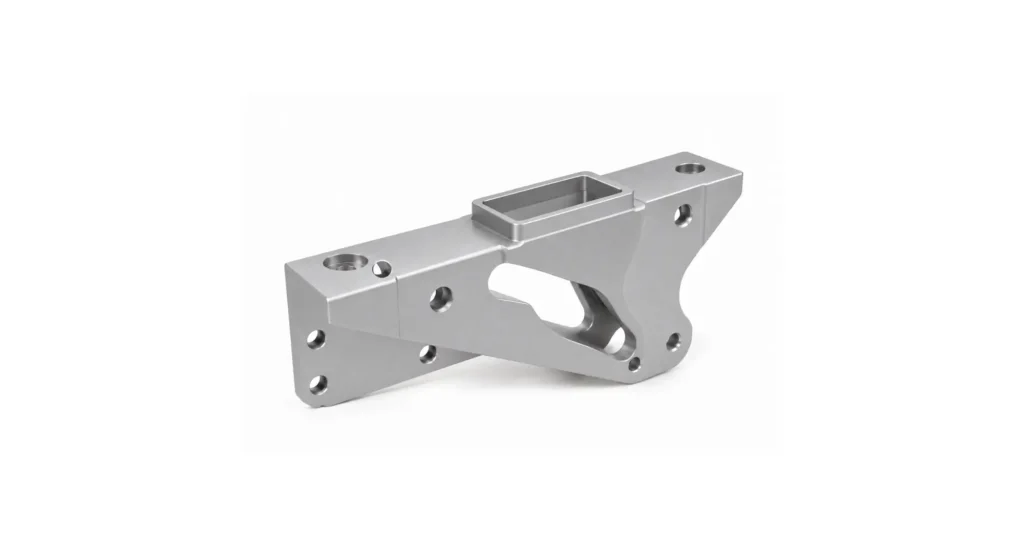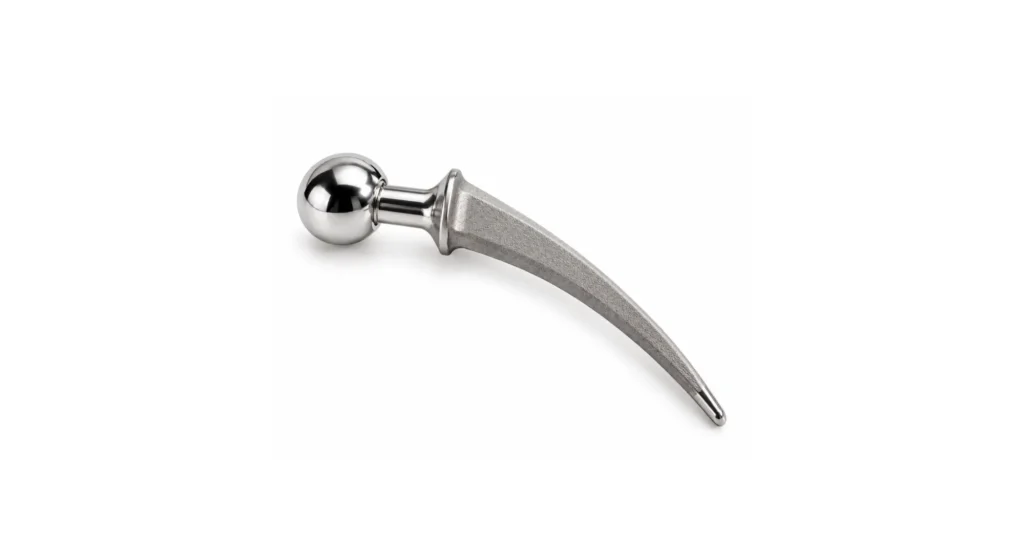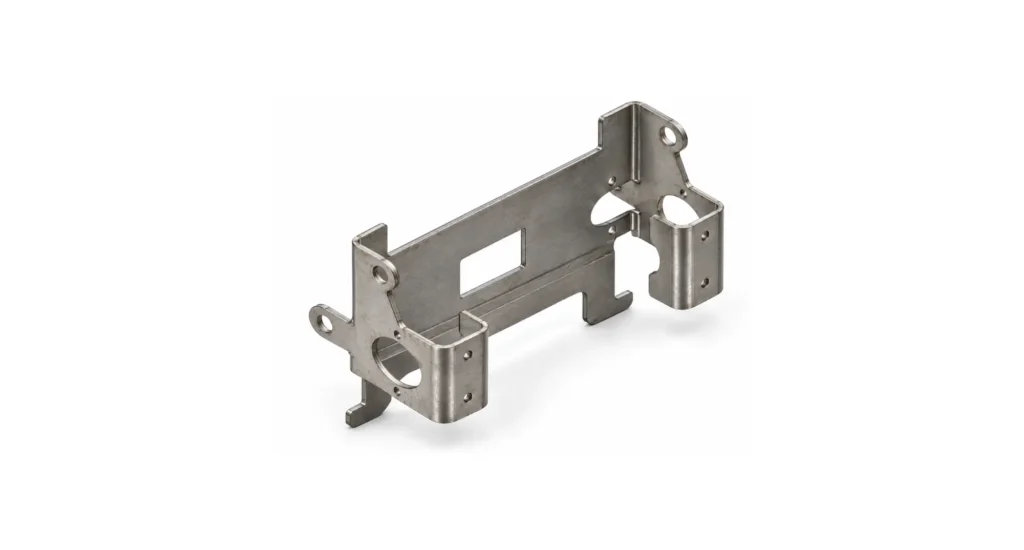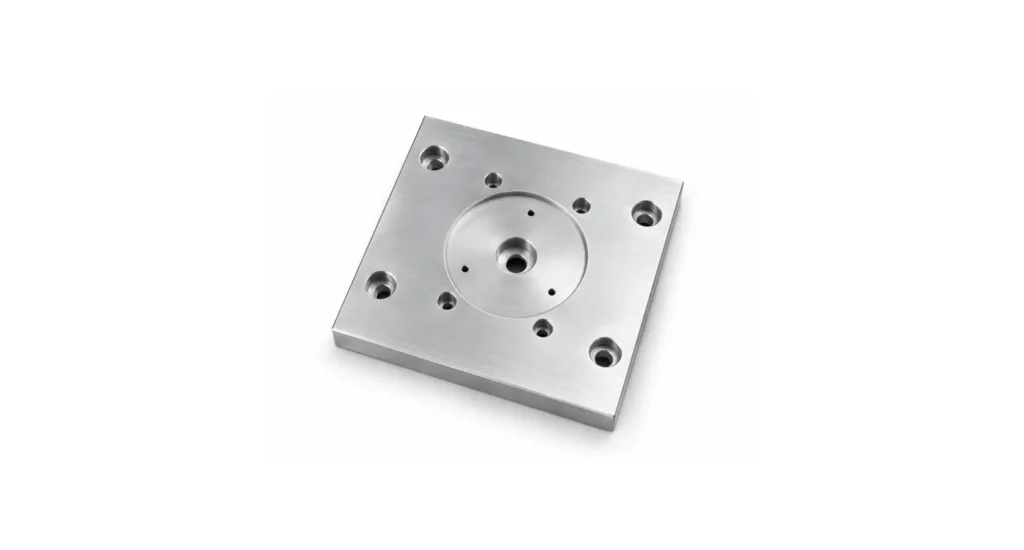

Swiss CNC machining is a high-precision subtractive manufacturing process designed for producing small, high length:diameter ratio, and complex components with extremely tight tolerances. In this method, bar stock is fed through a guide bushing while a sliding headstock moves the workpiece axially. Cutting tools operate close to the bushing’s support point, dramatically reducing deflection and enabling tolerances as tight as ±0.0002 inches (±5 microns). Unlike conventional CNC lathes, in Swiss CNC machining the workpiece moves to traverse the component axis, not the tool carriage, allowing long, thin and low-stability parts to be machined with precision that would otherwise be impossible.
Typically used in medical devices, aerospace, electronics, defense, and automotive industries, Swiss CNC machines often handle multi-axis turning, milling, and drilling simultaneously in a single setup, reducing the need for secondary operations. For engineers and product designers, understanding Swiss CNC machining is essential for making sourcing, design, and tolerance decisions that save time, reduce rework, and optimize part quality.
Key takeaways
- Swiss CNC machining uses a sliding headstock and guide bushing to produce small, slender parts with tolerances as tight as ±0.0002 inches.
- Unlike conventional CNC lathes, the workpiece moves axially while cutting tools remain stationary near the support point, minimizing deflection.
- Modern Swiss CNC machines operate on 7 to 13 axes, enabling turning, milling, and drilling in a single setup.
- The process is ideal for high-volume, high-precision components in medical, aerospace, electronics, defense, and automotive sectors.
How Swiss CNC machining works
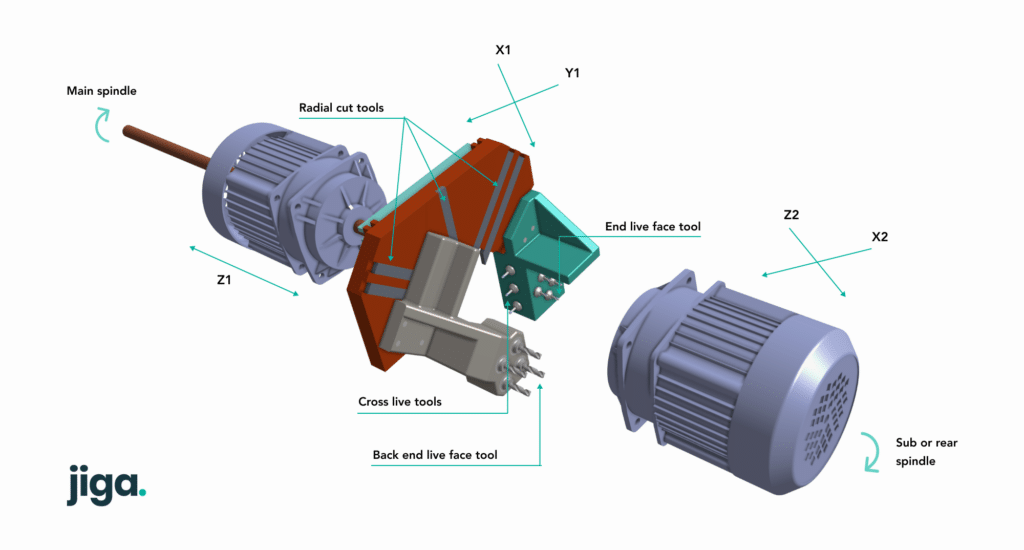
Swiss CNC machining begins with bar stock loaded into an automated feeder, which feeds material through a guide bushing. The sliding headstock moves the bar axially along the Z-axis, while multiple stationary cutting tools perform turning, milling, and drilling operations simultaneously. Because the workpiece is supported at the point of cut, long, slender parts experience minimal deflection.
Once the part is complete, it exits the machine finished, often with no need for secondary machining or finishing operations. This combination of support and simultaneous multi-axis operations allows Swiss CNC machining to produce extremely precise geometries and tight, repeatable tolerances, even for complex features like threads, tapers, and micro-holes.
The guide bushing: Support at the point of cut
The guide bushing stabilizes the workpiece at the cutting point, reducing vibration and deflection. For long, slender parts, this support is critical: a standard chuck-only setup would allow bending or chatter, making these tight tolerances impossible.
The sliding headstock and z-axis movement
The sliding headstock advances the bar axially during cutting, while the tools remain stationary. This configuration allows the machine to maintain control over long parts with high L:D ratios, often exceeding 4:1.
Simultaneous multi-axis operations
Modern Swiss CNC machines feature 7 to 13 distinct axes and multiple spindles. This enables turning, drilling, milling, and threading in a single setup, significantly reducing cycle times and eliminating many secondary processes and the associated loss of precision.
Swiss CNC machine vs Lathe with live tooling: What's the difference?
While live tooling lathes allow milling and drilling alongside turning, Swiss CNC machines are fundamentally different. In the case of Swiss lathe live tooling, the tool moves along with the spindle and the workpiece is supported only at one end, making long, thin parts prone to deflection.
Swiss CNC machines, by contrast, use workpiece movement combined with guide bushing support. This allows the same part geometries to be machined with tolerances that would be difficult or impossible on a live-tooling lathe. Additionally, Swiss machines are designed for high-volume, lights-out production, whereas live tooling lathes are typically more flexible for small to medium runs.
Swiss CNC machining vs Conventional CNC machining
Swiss CNC machining distinguishes itself from conventional CNC lathes through workpiece movement, guide bushing support, and extreme precision. The table below summarizes the differences:
| Factor | Swiss CNC Machining | Conventional CNC Lathe |
|---|---|---|
| Headstock | Sliding (workpiece moves) | Fixed (tool moves) |
| Workpiece support | Guide bushing at cut point | Chuck at one end only |
| Tolerances | ±0.0002" (±5 microns) | ~±0.001" typical |
| Best part geometry | Long, slender, small-diameter (L:D > 4:1) | Short to medium, larger diameter |
| Axes | 7–13 | 2–5 typically |
| Production volume | High-volume, lights-out | Prototype to medium volume |
| Setup cost | Higher | Lower |
| Secondary operations | Often none | May be required |
Engineers should choose Swiss CNC for slender, precision-critical parts, high-volume runs, or complex multi-feature components. Conventional CNC remains more cost-effective for short, thick, or low-volume parts.
Benefits and advantages of Swiss CNC machining
High precision and tight tolerances
Swiss CNC machines achieve micron-level accuracy, making them ideal for parts such as surgical screws, fuel injector nozzles, or micro-connectors.
Speed, throughput, and reduced cycle times
Multi-axis operations and lights-out automation reduce cycle times and allow long unattended production runs, enhancing throughput for high-volume components.
Reduced waste and cost efficiency
Because most parts are finished in a single setup, there is less material scrap and fewer secondary operations, reducing both cost and production time.
Applications of Swiss CNC machining
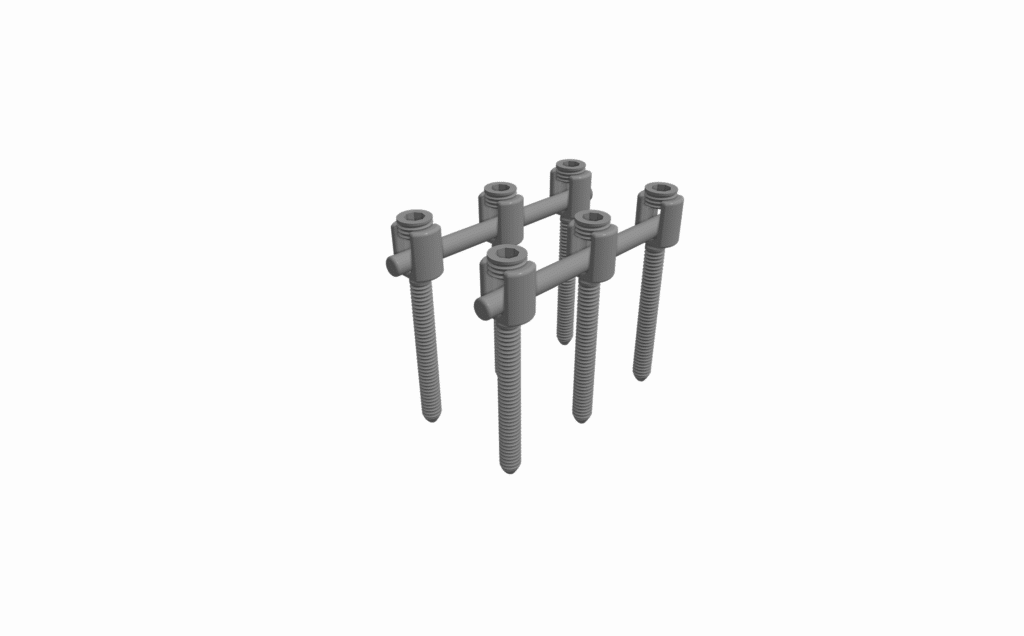
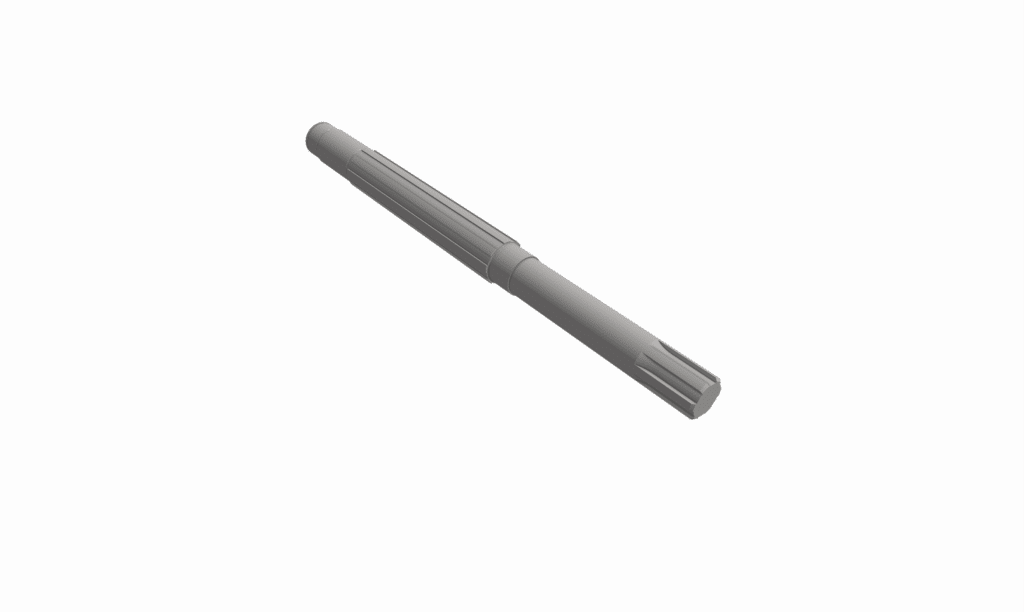
Swiss CNC machining excels in manufacture of very small parts for industries requiring high precision components of high aspect ratio. The table below highlights typical applications:
| Industry | Typical Components |
|---|---|
| Medical | Surgical screws, dental implants, catheter parts, spinal plates |
| Aerospace | Fasteners, hydraulic fittings, fuel system components |
| Automotive | Fuel injector nozzles, precision valves, sensor fittings |
| Electronics | Micro-connectors, contact probes, sockets, micro-switches |
| Defense | Firing pins, trigger components, guidance system parts |
Materials used in Swiss CNC machining
Swiss CNC machines can work with a wide range of metals and plastics. Common families include:
- Stainless steels (e.g., 316, 17-4PH): Corrosion resistance and strength; requires sharp tooling and appropriate coolant.
- Titanium: Lightweight, high-strength; slower spindle speeds and specialized tooling needed.
- Aluminum: Easy to machine, excellent for prototypes or lightweight components; low wear on cutting tools.
- Brass and Copper alloys: Excellent machinability, high precision, minimal chatter.
- Exotic alloys (Inconel, CoCr): Require robust tooling and slower feeds; used in aerospace/medical applications.
Material selection has a direct and often underestimated influence on Swiss CNC machining outcomes. Varied materials behave very differently under cutting forces, which in turn affects tool life, coolant strategy, achievable tolerances, and production scheduling.
In high-precision machining environments, bar stock specification is as critical as the part drawing itself, because the raw material characteristics determine the machining process details.
Tool wear and cutting stability
The hardness, abrasiveness, and work-hardening characteristics of a material strongly influence tool wear. Titanium alloys, hardened steels, and nickel superalloys generate higher cutting temperatures and place greater stress on carbide tooling. If the bar stock contains inclusions, inconsistent grain structures, or excessive hardness variation, tools may chip or dull unpredictably.
Coolant requirements
Some materials require aggressive coolant strategies to control heat and chip formation. Stainless steels and high-strength alloys benefit from high-pressure coolant delivery to prevent work hardening and improve cutting. Aluminum alloys require specialized coolant formulations to prevent chip welding to the tool edge.
Achievable tolerances
Material stability directly affects dimensional accuracy. Stress-relieved or precision ground bar stock often improves dimensional stability and allows tighter tolerances. Grain structure and hardness influence surface finish quality, typically critical for high-precision parts.
Lead times and manufacturing efficiency
Material choice also affects production lead time. Difficult-to-machine alloys require slower cutting speeds, additional finishing passes, and more frequent tool changes. Certain grades may also require specialized tooling or heat-treatment steps before or after machining. Free machining materials reduce cycle times and machining costs.
| Material | Typical Applications | Machining Considerations Affecting Leadtime |
|---|---|---|
| Stainless Steel (316, 17-4PH) | Medical devices, aerospace fittings | Requires sharp tooling and proper coolant to maintain tight tolerances |
| Aluminum | Prototypes, lightweight components | High machinability, low tool wear, fast cycle times |
| Brass & Copper Alloys | Connectors, precision fittings | Excellent machinability, minimal chatter, high precision |
| Exotic Alloys (Inconel, CoCr) | Aerospace, defense | Slower feeds, robust tooling, careful heat management |
Limitations of Swiss CNC machining
- Swiss CNC processing requires higher setup cost than conventional CNC, rendering it not cost-effective for low-volume runs.
- Bar diameter is constrained to typically ≤32 mm, making the process unsuitable for large parts.
- The method is not ideal for short or thick parts; conventional CNC is faster and cheaper for these geometries.
- Programming complexity renders multi-axis operations reliant on skilled operators and requiring longer programming times.
Design for Manufacturability (DFM) in Swiss CNC machining
| DFM Principle | Description | Time / Cost Impact |
|---|---|---|
| Simplify Geometry | Reduce complex curves, unnecessary features, and deep grooves that require extra tool changes | Fewer setups, reduced cycle time, lower programming effort |
| Minimize Unsupported Slender Features | Avoid long, thin sections unsupported outside the guide bushing | Reduces risk of deflection and scrap |
| Specify Critical Tolerances Only | Apply tight tolerances only where functional | Avoids unnecessary rework and reduces tool wear |
| Material & Heat Treatment Clarity | Specify bar stock type and pre/post-heat treatment | Prevents delays due to tool selection or machining strategy |
| Seek Early DFM Feedback | Engage suppliers before programming or cutting | Reduces iteration cycles, speeds up first-part approval |
Key DFM considerations for Swiss machined parts
In Swiss CNC machining, simplifying part geometries through DFMA delivers improved efficiency, reduced part and setup costs, and enhances repeatability. Complexity of features increases required tool changes, slowing production and increasing the risk of errors. Specifying unnecessarily tight tolerances on non-critical areas adds machining time and inspection burden.
By streamlining designs – minimizing intricate features, ensuring adequate support, and limiting tight tolerances to critical dimensions – designers help suppliers achieve faster cycle times, reduce tool wear, and deliver consistent, high-precision parts.
Tolerances: Specify what you need, not what's possible
Over-specifying tolerances can significantly increase machining cost and lead time, without delivering meaningful performance benefits. Extremely tight tolerances require slower cutting speeds, additional finishing passes, specialized tooling, and more intensive inspection.
Swiss CNC machining costs are greatly affected by unnecessary micron-level tolerances, as they dramatically extend cycle times. Designers should focus on identifying functionally critical dimensions, such as sealing surfaces, bearing fits, or mating features, while allowing more relaxed tolerances on non-critical areas. A balanced approach maintains part performance while improving manufacturability, reducing scrap risk, streamlining production, and improving results across larger production runs.
Getting DFM feedback before you cut
Engage with Swiss CNC machining suppliers early in the design process, to pte-define toolpath options and use them to inform design, part orientation, and material selection before production begins. Swiss machines operate differently from conventional CNC lathes, relying on guide bushings, sliding headstocks, and long bar stock, which can influence how parts should be oriented and supported during machining.
Early collaboration allows machinists to recommend optimized toolpaths, more stable machining strategies, and materials that perform well in Swiss processes. This feedback can reveal opportunities to simplify features, reduce cycle time, or improve surface finish.
History of Swiss CNC machining
Swiss CNC machining traces back to Jakob Schweizer in the late 19th century, who developed precise screw making machines, required for the increasingly competitive watchmaking sector. Over the following decades, the technology evolved to handle complex, high-volume parts with lights-out CNC automation, becoming critical in medical, aerospace, and electronics manufacturing.
Is Swiss CNC machining right for your project?
Choose Swiss CNC if your part is:
- Small, slender, or has L:D ratio > 4:1
- Tolerance-critical (±0.0002″)
- Requires multi-feature operations in one setup
- High-volume or automated production preferred
Conventional CNC machining may be better for:
- Short, thick, or very large-diameter parts
- Low-volume or one-off prototypes
- Less critical tolerances
Material, part aspect ratio, tolerance requirements, and expected volume are the main drivers of your process selection decision.
How to choose a Swiss CNC machining supplier
Verified capability, not just a list
Ensure the supplier has experience with similar L:D ratios, materials, and multi-axis operations. Confidence in this can be derived from site visits, cylinder recommendations, or the making of trial parts to validate capability.
High-volume projects require repeatable quality; a single qualified supplier reduces variability and rework, so identifying broad capability is a good future-proofing tool.
Communication and DFM responsiveness
Direct, real-time communication ensures your critical tolerances and features are understood before machining begins.
Quality documentation as standard
When selecting Swiss CNC suppliers, prioritize those that provide inspection reports and full process traceability. Reliable suppliers typically provide first article inspection (FAI), in-process checks, and final inspection reports, using tools such as CMMs, optical comparators, or laser micrometers.
A capable shop should maintain records of material heat numbers, bar stock lots, tooling used, machine parameters, and batch identifiers throughout production. This allows any issue to be traced back to a specific material batch or manufacturing step.
Summary
Swiss CNC machining enables engineers to produce small, slender, and complex components with micron-level tolerances and minimal secondary operations. Its advantages in speed, precision, and lights-out production make it ideal for high-volume medical, aerospace, automotive, electronics, and defense components. Understanding machine mechanics, materials, DFM considerations, and supplier selection ensures the right process choice and predictable outcomes.
Platforms like Jiga streamline sourcing, DFM feedback, and supplier verification, helping engineers translate design intent into high-quality parts quickly and reliably.